
How to Avoid Getting Ripped Off by Fitout Companies
Date Published

A cheap fitout quote can look like an easy win. However, its total may not cover the complete project.
One Melbourne retailer might receive quotes of $140,000, $158,000, and $176,000. The lowest quote appears attractive. It later proves to exclude electrical upgrades, permits, demolition, and waste removal.
The final cost then rises above the other quotes. The opening date also moves because the contractor never allowed enough time.
Compare each contractor’s scope, assumptions, exclusions, and risk allowances. Do not compare only the bottom line.
Warning signs include:
🔸 A single total without a detailed cost breakdown
🔸 Large provisional sums or vaguely described allowances
🔸 Missing product brands, models, quantities, or finish levels
🔸 No clear allowance for permits, demolition, services, or waste
🔸 Pressure to sign or pay a deposit immediately
🔸 Promises that important details can be resolved later
Ask the contractor to explain every gap before you sign. A clear answer should identify the cost owner and likely timing effect.
Fast Facts
- Verify the contractor: Check the company’s ABN, registration, insurance and recent commercial references.
- Compare matching scopes: Make every bidder price the same drawings, specifications, allowances and exclusions.
- Control extra costs: Approve every variation’s price and timing impact in writing before work proceeds.
- Pay for progress: Link payments to clear milestones and inspect completed work before releasing funds.
- Protect the handover: Resolve defects and collect approvals, certificates, warranties, manuals and final drawings.
Verify the Company Before Discussing Price
Start by confirming who will receive your money. A brand name may differ from the legal entity signing the contract.
Check the company’s ABN, entity name, GST status, and trading details. Search company records if the contractor uses a proprietary limited company.
Next, confirm whether the builder holds the registration required for your work. Victorian commercial builder registrations include different classes and limits.
A registration for one type of work may not cover another. Check the exact entity and practitioner named in your proposal.
Request current certificates for public liability and relevant construction insurance. Confirm their expiry dates and coverage with the insurer when necessary.
Then speak with at least two recent clients. Choose projects with a similar size, building type, and level of complexity.
Ask each client:
🔸 Did the final price remain close to the accepted contract?
🔸 Were variations explained before the work proceeded?
🔸 Did the contractor meet the agreed programme?
🔸 How quickly did the team correct defects?
🔸 Would you appoint the same company again?
Also visit a completed project where possible. Photos cannot show finish quality, service coordination, or how defects were handled.
Make Every Contractor Price the Same Scope
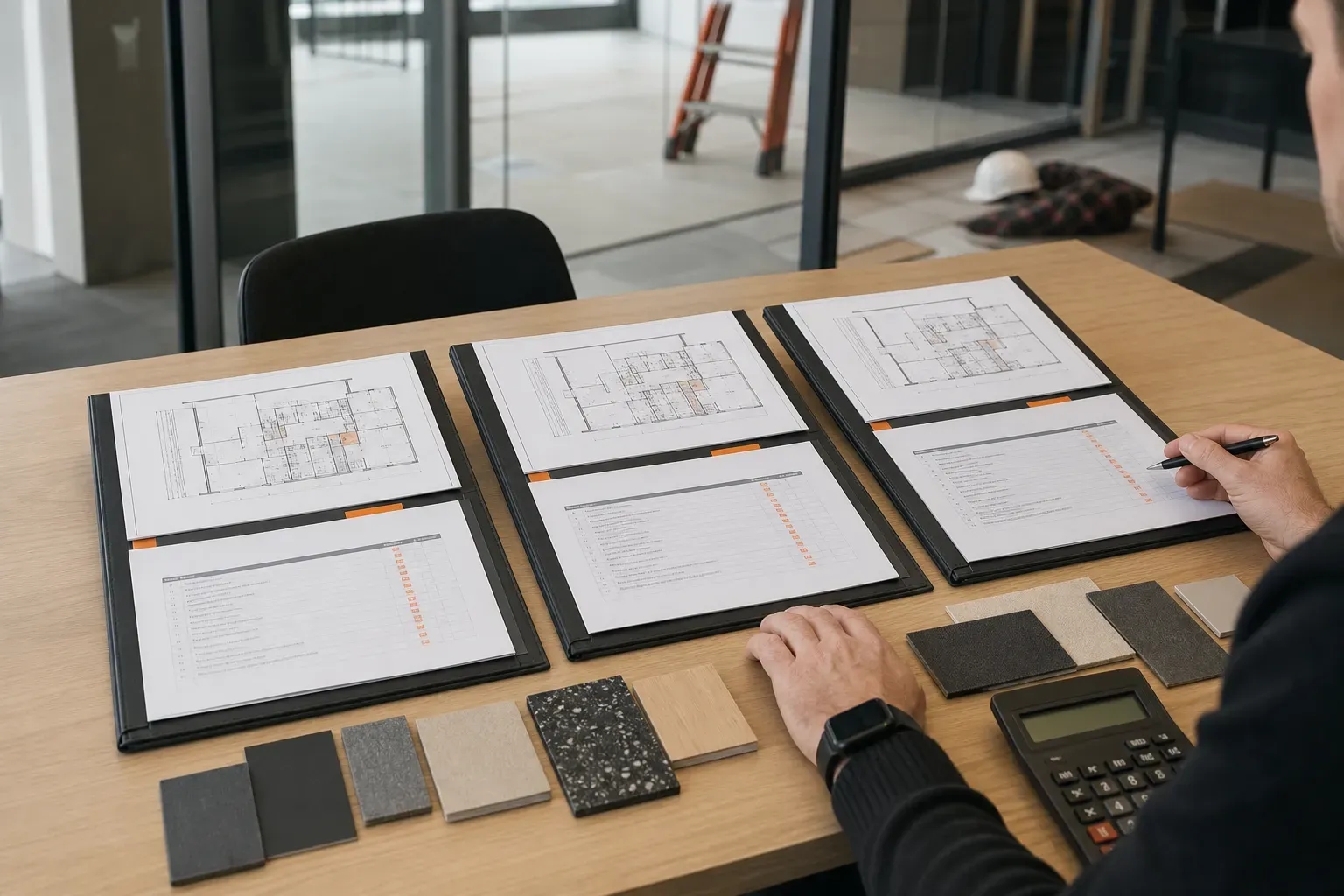
Comparing every contractor against the same plans and specifications helps reveal missing costs, exclusions and unrealistic allowances.
Three quotes are useful only when all three price the same work. Give each contractor identical tender information.
That information should include drawings, specifications, finishes, equipment requirements, working hours, access limits, and the target completion date.
Ask every bidder to separate:
🔸 Fixed-price work
🔸 Provisional sums and allowances
🔸 Optional items
🔸 Client-supplied items
🔸 Exclusions
🔸 Permit and consultant costs
Check whether the price includes demolition, temporary protection, rubbish removal, cleaning, testing, and after-hours work. Also review electrical, data, fire, hydraulic, mechanical, and accessibility requirements.
Ask why one quote is much lower than the others. The contractor may have found an efficient method. However, they may have missed part of the scope.
Do not assume an allowance represents the final cost. Request the basis, quantity, rate, and product standard behind every allowance.
Put Every Promise and Price Rule in the Contract
A friendly meeting does not replace a complete written contract. Record every important promise in the signed documents.
The contract should identify the parties, scope, drawings, specifications, price, payment milestones, and programme. It should also explain extensions, delays, defects, termination, and dispute procedures.
Define how variations will work. A sound process records the requested change, its cost, and its timing effect.
Authorise each variation in writing before the contractor proceeds. This prevents arguments about whether a conversation approved extra work.
The contract should also allocate responsibility for:
🔸 Planning and building permits
🔸 Building surveyor and consultant fees
🔸 Landlord approvals and building rules
🔸 Service upgrades and authority charges
🔸 Unknown site conditions
🔸 Testing, certification, and final approvals
Commercial contracts can allocate substantial risk. Ask a construction lawyer to review unclear or one-sided terms before signing.
Control the Project Until Handover
Good checks should continue after construction begins. Link progress payments to defined and measurable milestones.
Before paying, confirm that the claimed work is complete. Request supporting records for stored materials or major off-site purchases.
Keep one written decision register. Record instructions, selections, variations, access issues, delays, and revised completion dates.
Older Melbourne buildings may contain asbestos or other hidden materials. Review the asbestos register before refurbishment or demolition begins.
Stop work if suspected material appears unexpectedly. The responsible parties should arrange assessment and licensed removal where required.
Plan around business disruption as carefully as construction. Confirm noisy work periods, service shutdowns, deliveries, dust controls, and staff access.
Before final payment, inspect the completed space and issue a written defects list. Agree on correction dates and confirm the work after repairs.
Collect all handover information, including:
🔸 Required occupancy or completion documents
🔸 Trade certificates and test results
🔸 Product warranties
🔸 Operation and maintenance manuals
🔸 Approved drawings and service information
🔸 Keys, access credentials, and equipment training
Do not treat practical completion as an informal walk-through. Make the completion requirements clear before construction starts.
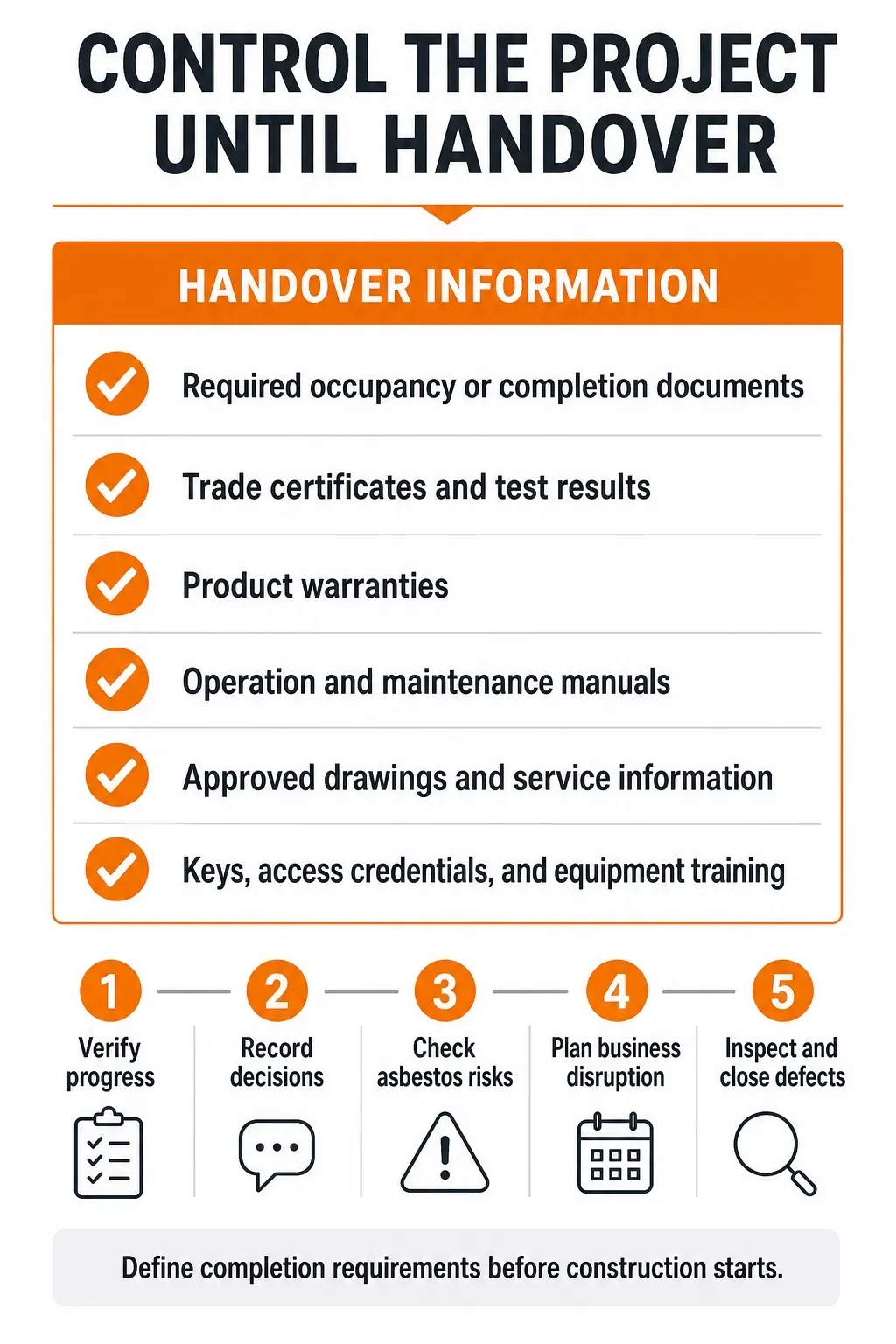
Confirm every handover document and close outstanding defects before making the final fitout payment.
Choose a Fitout Partner Who Makes Risk Visible
A trustworthy fitout company will not hide uncertainty. It will explain assumptions, exclusions, approvals, and cost risks early.
Before appointing a contractor, confirm five things. Verify the legal entity and registration. Align the quote with a detailed scope. Use a clear contract. Control variations and payments. Define handover requirements.
Finex Fitouts can help Melbourne businesses review these issues during early planning. A clear scope and delivery plan can reduce surprises before construction begins.
What should a commercial fitout contract include?
The contract should define the scope, price, drawings, programme, payment milestones, approvals, delays, variations, defects and handover requirements.
Confirm the legal entity, insurance and Victorian registration before signing. Check the contractor’s permitted work through the Building and Plumbing Commission.
What should I check before making the final fitout payment?
Inspect the completed space, document every defect and confirm agreed repairs. Do not rely on an informal final walk-through.
Collect completion approvals, trade certificates, test results, warranties, manuals, approved drawings, access credentials and equipment training before releasing final payment.
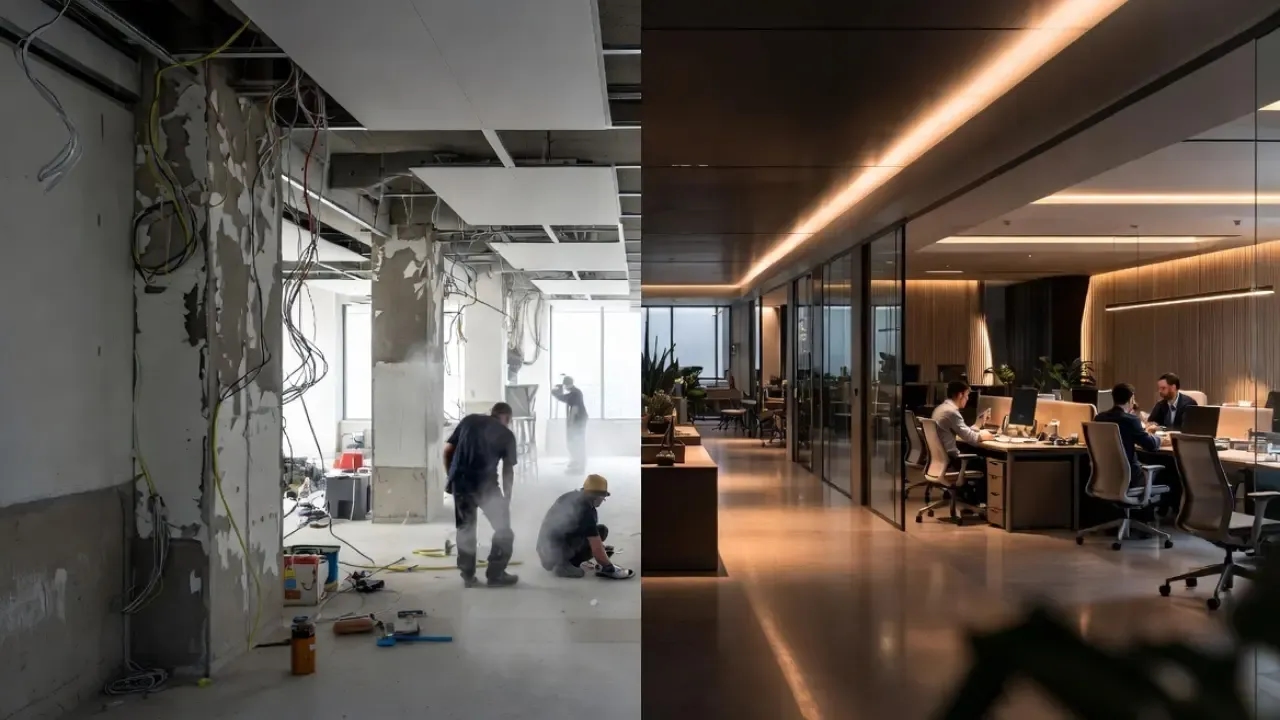
Confused about office renovation vs fitout? Learn costs, timelines, and how to choose the right option for your business.

Learn what a turnkey fitout includes, Melbourne costs, timelines, risks, and how to avoid delays and budget blowouts.