
What Is a Turnkey Fitout? Melbourne Guide to Costs, Timelines, and Common Mistakes
Author
Shawn Vandersay
Date Published
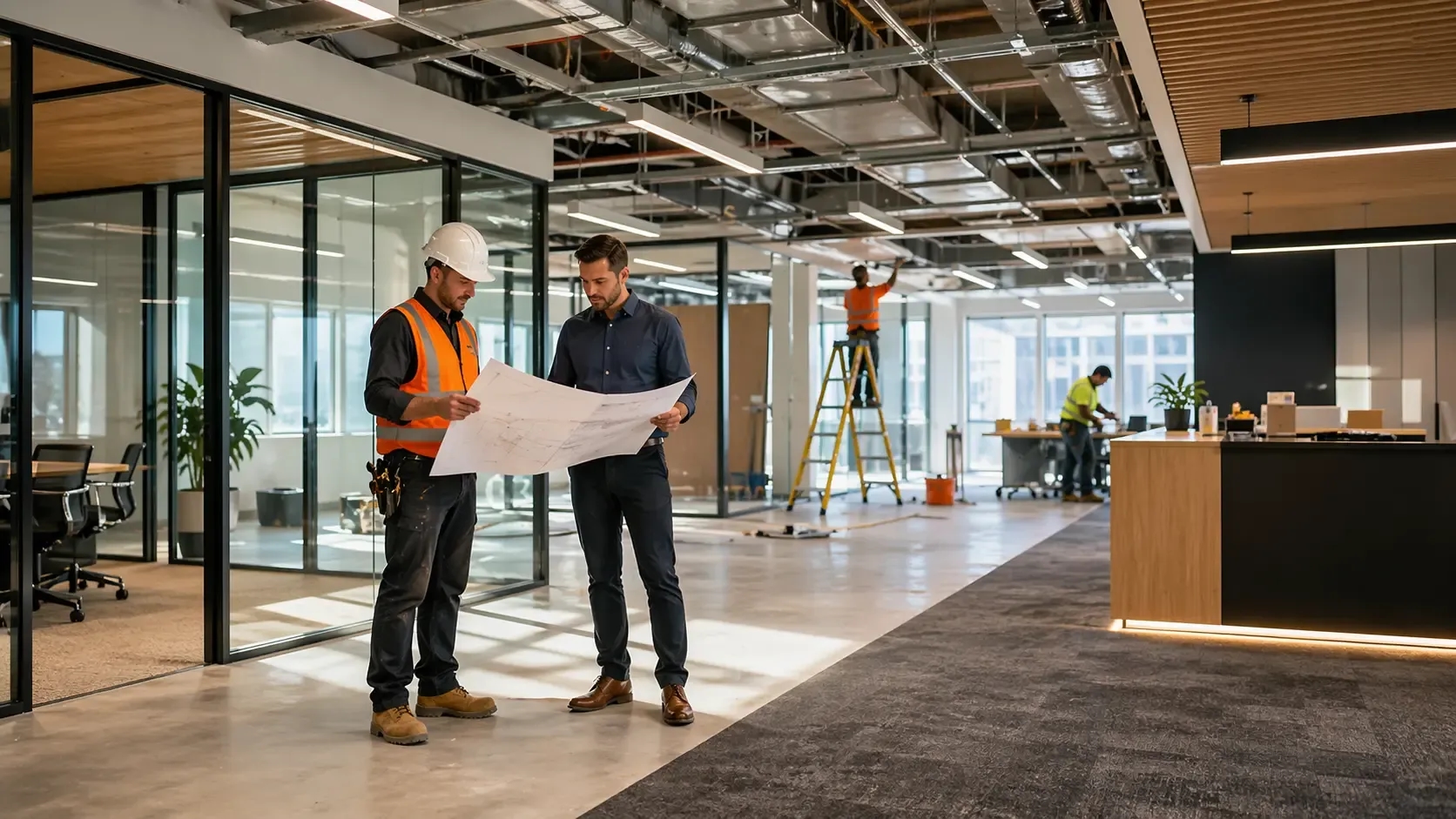
Many Melbourne businesses start a fitout expecting a clear cost and smooth timeline. They approve a budget, set a deadline, and assume everything will stay on track. However, most projects face delays, hidden costs, and unexpected issues during construction.
This usually happens because too many contractors work without proper coordination. Each trade focuses on its own tasks, which creates gaps in communication. As a result, mistakes happen, timelines shift, and costs increase quickly.
A turnkey fitout is designed to reduce these problems by offering a fully managed solution. One provider takes responsibility for the entire process from start to finish. This guide explains how it works and how to avoid common mistakes in Melbourne.
Fast Facts
- Turnkey fitouts: One provider manages design, approvals, construction, and handover.
- Melbourne costs: Pricing depends on size, building condition, finishes, and compliance needs.
- Common risks: Hidden costs, permit delays, poor planning, and contractor confusion can affect the project.
- Best approach: Start with a clear scope, early site checks, and one accountable project team.
What Is a Turnkey Fitout?
A turnkey fitout is a complete service where one company manages design, approvals, and construction. The goal is to deliver a finished space that is ready to use immediately. You do not need to coordinate multiple contractors or manage the project yourself.
Instead of dealing with separate designers, builders, and consultants, everything runs under one contract. This creates a clear structure and reduces confusion during the project. It also improves accountability because one team is responsible for the outcome.
In simple terms, you receive a ready-to-use space without managing the entire process. This is why many Melbourne businesses prefer turnkey delivery for commercial projects. It simplifies decision-making and reduces overall project risk.
Why Melbourne Businesses Choose Turnkey Fitouts
Commercial fitouts in Melbourne often involve complex planning and strict compliance requirements. Projects must meet building regulations, safety standards, and sometimes heritage conditions. These factors can slow down progress if not managed properly.
At the same time, labour costs continue to rise across the construction industry. Even small delays can increase project costs significantly. This creates pressure for businesses to control both time and budget carefully.
Many business owners also lack the time to manage multiple contractors. They need a solution that reduces stress and keeps the project organised. Turnkey fitouts provide this by offering one point of control for the entire process.
What Does a Turnkey Fitout Include?
A turnkey fitout includes every stage required to complete a commercial space. This ensures the project runs smoothly from initial planning to final handover. Each stage plays a key role in avoiding delays and cost overruns.
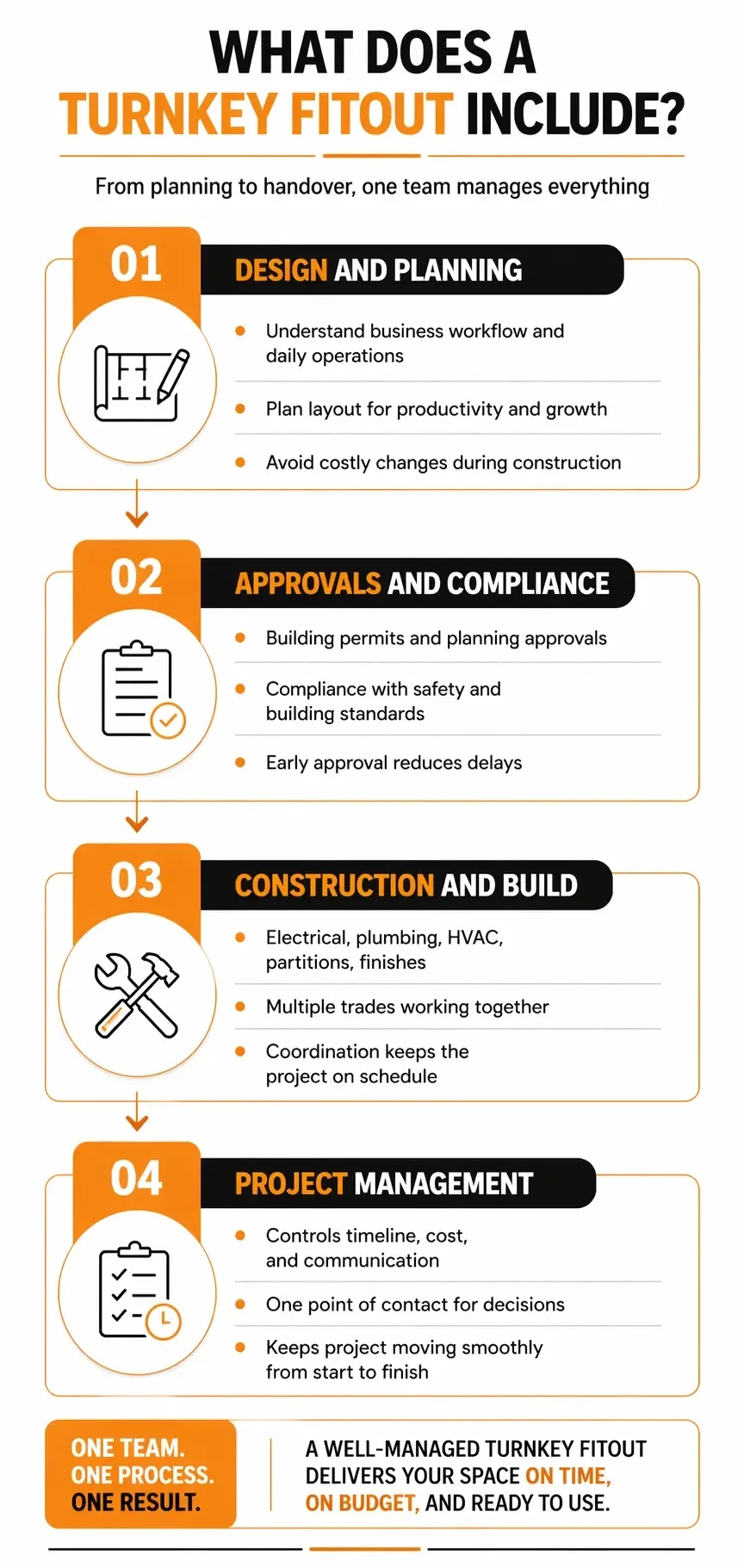
A clear step-by-step breakdown of a turnkey fitout, from planning and approvals to construction and final delivery
Design And Planning
The project starts with understanding how your business operates daily. Designers focus on workflow, staff movement, and future growth needs. This helps create a space that supports productivity rather than just looking good.
Poor planning often leads to changes during construction, which can be expensive. Moving walls or services later can add thousands of dollars in rework. A clear design process helps avoid these issues early.
Approvals And Compliance
Most fitouts in Melbourne require building permits before construction begins. Some projects also need planning permits, especially when the use of the space changes. Heritage buildings may require additional approvals, which can extend timelines.
Approval delays are common when requirements are not identified early. This can push projects back by weeks or even months. A turnkey provider manages these approvals to reduce delays and risk.
Construction And Build
During construction, multiple trades work together to complete the space. This includes electrical, plumbing, HVAC, partitions, and finishes. Coordination between these trades is critical to keep the project on schedule.
If one trade is delayed, others cannot continue their work. This creates downtime and increases labour costs. A coordinated team helps ensure all tasks move forward efficiently.
Project Management
Project management controls timelines, costs, and communication throughout the fitout. It ensures every stage is completed in the correct order. Without proper management, small issues can quickly become major problems.
A single point of contact also improves decision-making speed. This reduces delays caused by unclear instructions or waiting for approvals. It keeps the project moving consistently from start to finish.
Turnkey Fitout Cost In Melbourne
Cost is one of the biggest concerns for businesses planning a fitout. In Melbourne, pricing varies depending on size, finishes, and building condition. Understanding realistic cost ranges helps avoid budget surprises later.
Basic office fitouts usually range from $800 to $1,500 per square metre. Mid-range fitouts often cost between $2,000 and $2,700 per square metre. High-end or specialised spaces can exceed $5,000 per square metre.
CBD locations often cost more due to building complexity and compliance requirements. Older buildings may require upgrades to meet current standards. These factors can increase the total project cost significantly.
The main problem is not always high pricing but unclear scope. Many quotes exclude important items such as permits or service upgrades. This leads to unexpected costs during construction.
Also Read
For a deeper look at pricing, read this turnkey fitout cost guide before planning your budget.
Hidden Costs You Need To Watch
Hidden costs are a major reason why fitout budgets exceed expectations. They usually appear after construction has already started. This makes them difficult to manage without proper planning.
Common hidden costs include electrical upgrades, HVAC improvements, and fire compliance work. Data systems, lighting, and certification fees are also often overlooked. These costs can quickly add up if not included in the initial quote.
Older Melbourne buildings carry higher risk for hidden issues. They may require upgrades to meet modern safety and accessibility standards. For older properties, a contingency of 15 to 20 percent is often recommended.
How Long Does A Turnkey Fitout Take?
Fitout timelines depend on project size and complexity. Small projects may take four to eight weeks to complete. Medium projects usually require eight to sixteen weeks.
Larger commercial fitouts can take three to six months or longer. Full projects, including planning and approvals, may take up to thirty weeks. Approvals are often the biggest factor affecting timelines.
Delays usually occur due to permit approvals, material shortages, or late design changes. Turnkey fitouts help reduce delays by improving coordination. However, they still depend on proper planning and approvals.
Conclusion
A turnkey fitout offers a structured way to manage a complex commercial project. It reduces coordination issues, improves cost control, and helps manage timelines more effectively. However, success depends on clear planning and detailed scope from the beginning.
Melbourne projects often involve unique challenges such as compliance requirements and older buildings. Understanding these factors helps reduce risk and avoid costly mistakes. It also ensures the final space meets your business needs.
If you are planning a commercial fitout, working with an experienced team can make a big difference. Finex Fitouts helps Melbourne businesses plan and deliver projects with clear structure and reliable execution. This approach reduces delays and keeps your project on track from start to finish.
Frequently Asked Questions
What is included in a turnkey fitout?
A turnkey fitout usually includes design, planning, approvals, construction, trade coordination, project management, and final handover. The exact inclusions should be confirmed in the written scope before work begins.
How much does a turnkey fitout cost in Melbourne?
Turnkey fitout costs in Melbourne depend on project size, building condition, finishes, services, and compliance needs. Basic office fitouts may cost less, while medical, retail, or CBD projects often cost more.
How long does a turnkey fitout take?
A small turnkey fitout may take four to eight weeks, while larger projects can take several months. Planning approvals, material delays, site conditions, and design changes can affect the final timeline.
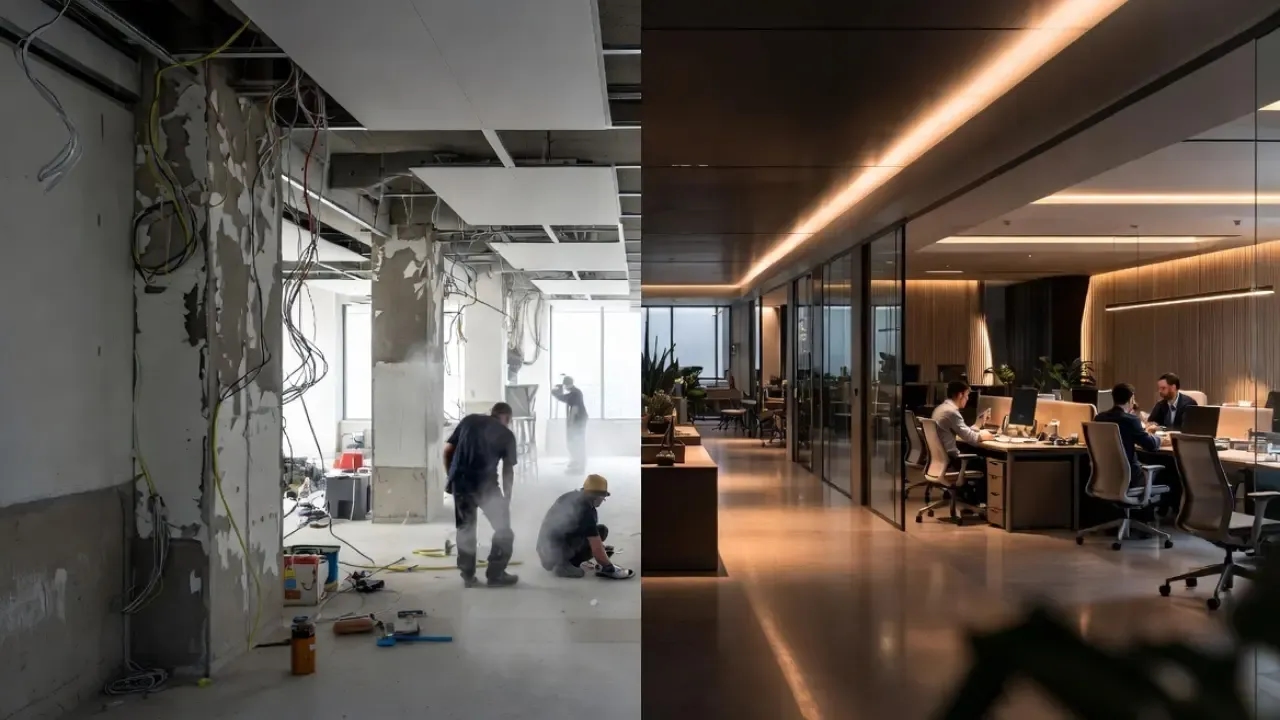
Confused about office renovation vs fitout? Learn costs, timelines, and how to choose the right option for your business.
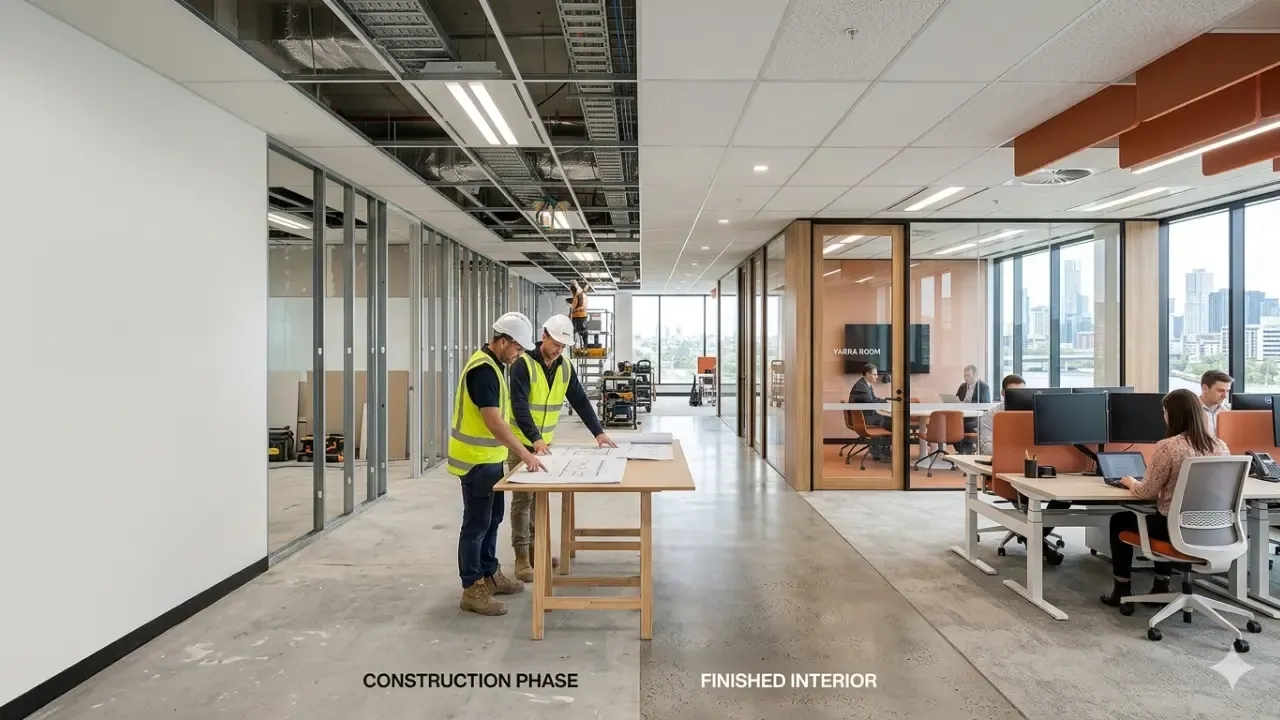
Learn turnkey fitout costs in Australia 2026. Melbourne pricing, timelines, hidden costs, and how to avoid budget blowouts.