
Category A vs Category B Fitout: Key Differences Explained
Author
Shawn Vandersay
Date Published
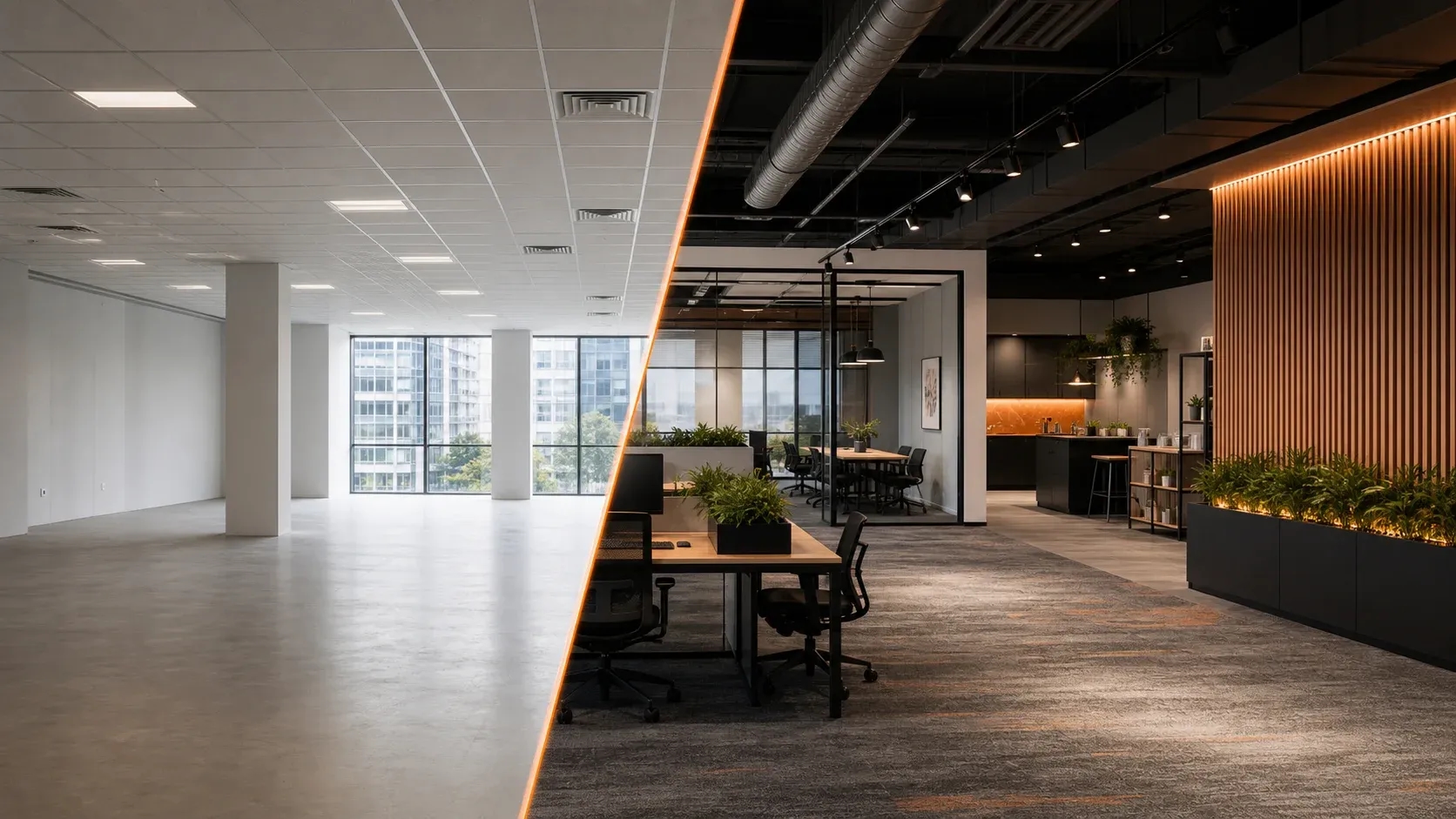
Category A and Category B fitouts sound technical, but the idea is simple. Category A is the base level of finish. Category B is the business-ready fitout.
These terms often appear in office leases and commercial property talks. They can also apply to retail, clinics, showrooms, and warehouse offices.
🔸 Category A prepares the tenancy for future use
🔸 Category B makes the tenancy suit your business
🔸 Category A is often landlord-led
🔸 Category B is usually tenant-led
They are not the same as Australian building-code classes. The NCC building classification system uses classes based on building use.
Fast Facts
- Category A: The base fitout that prepares a tenancy with core services and finishes.
- Category B: The business-ready fitout with rooms, furniture, branding, signage, and workflow details.
- Main risk: Tenants often assume the space includes more than the lease provides.
- Melbourne check: Confirm landlord rules, permits, building classification, and safety duties before work starts.
- Planning tip: Define the Category B scope before requesting quotes or signing a lease.
What Is Included In a Category A Fitout?
A Category A fitout creates a clean and functional base. It gives the space the basic services needed before a tenant adds their own layout.
The exact scope can change between buildings. Always check the lease, landlord fitout guide, and handover condition.
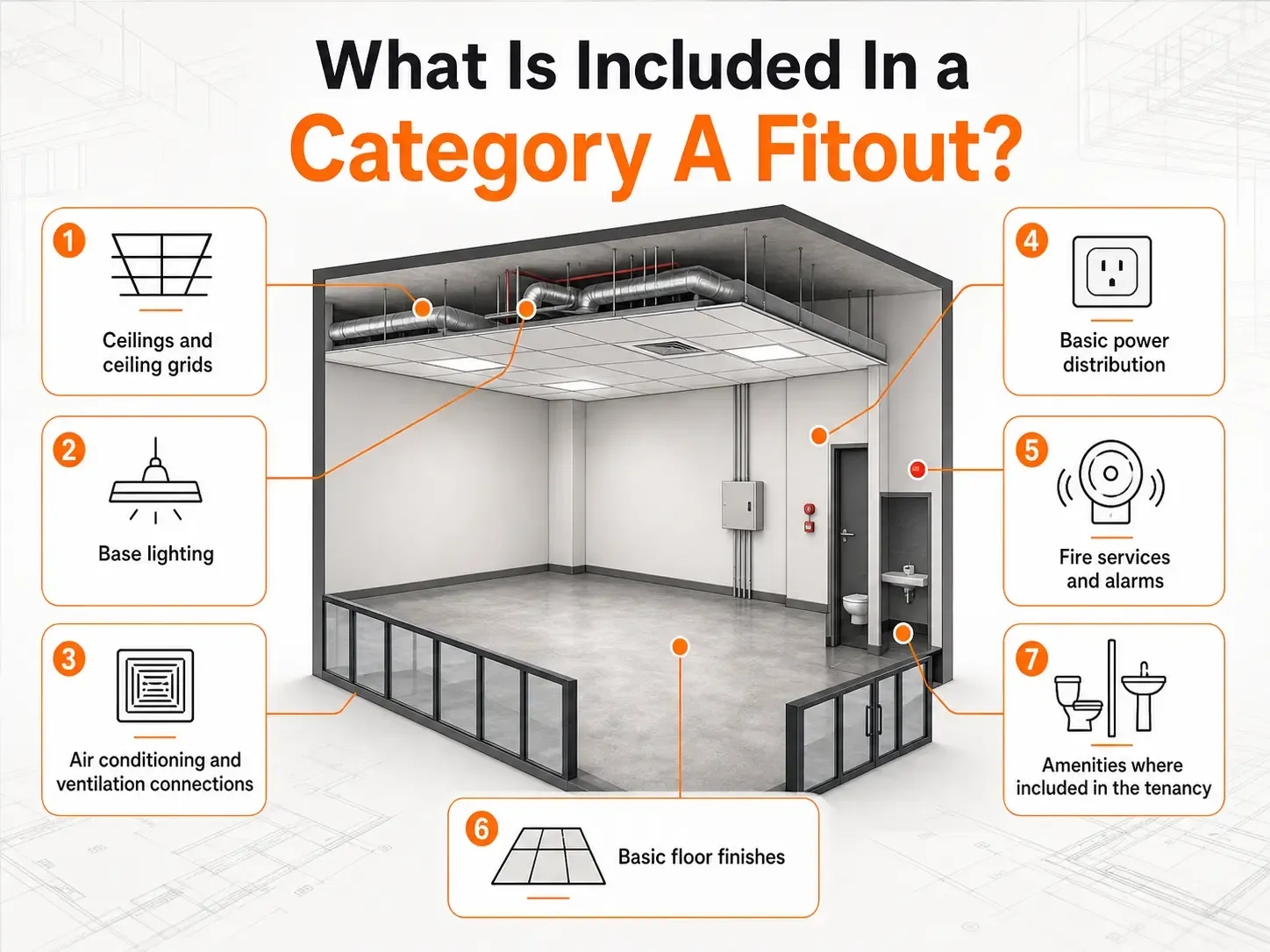
Key items commonly included in a Category A fitout, from ceilings and lighting to fire services and basic floor finishes.
In simple terms, Category A makes the space usable at a base level. It does not usually make it ready for your team, customers, or daily operations.
What Is Included In a Category B Fitout?
A Category B fitout turns the base space into a working business environment. This is where the tenancy starts to match your brand, workflow, and staff needs.
For an office, this may include workstations, meeting rooms, reception, kitchen areas, and acoustic spaces. For retail, it may include counters, displays, lighting, and signage.
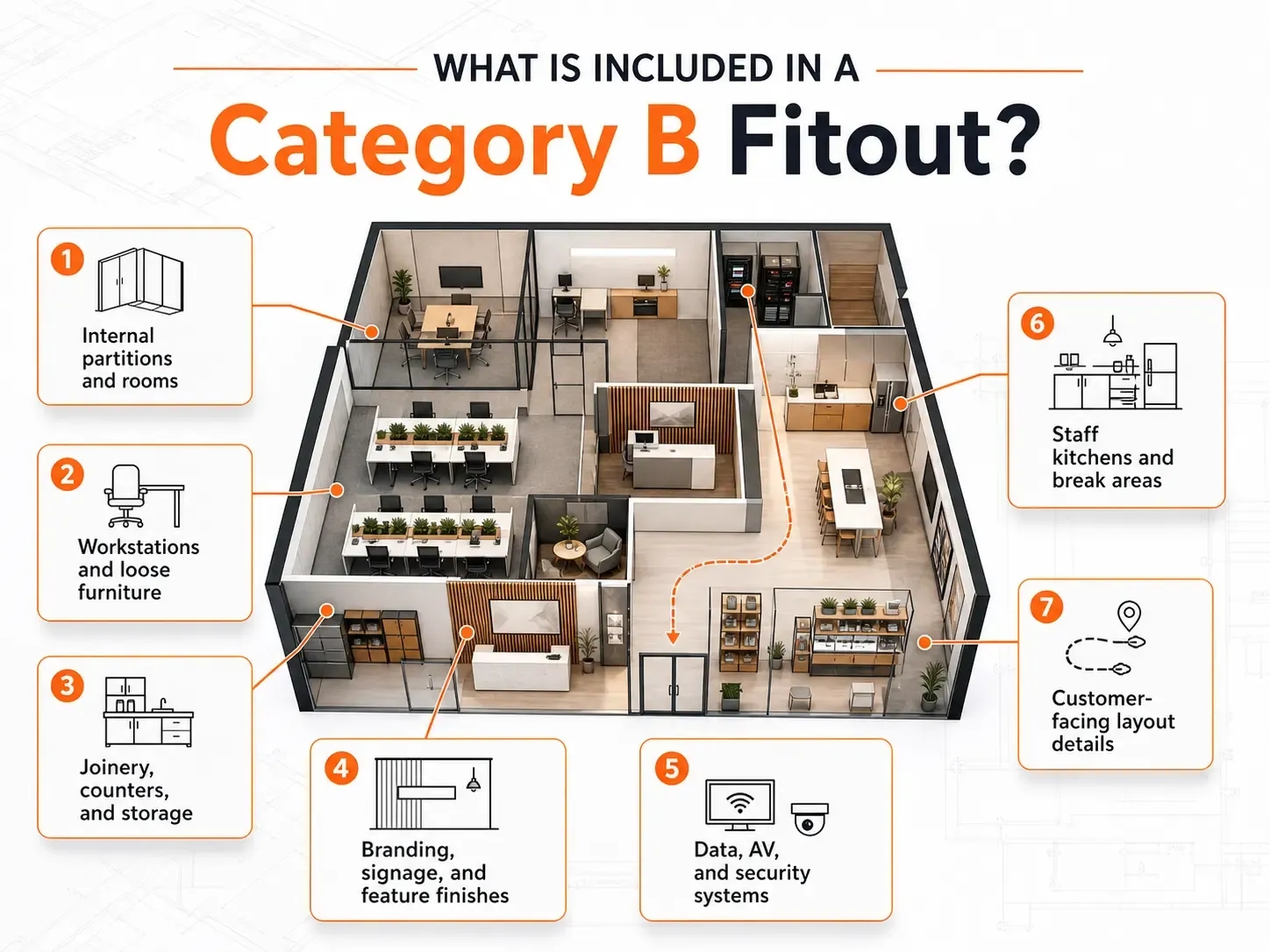
Key items commonly included in a Category B fitout, from partitions and workstations to branding, data systems, and customer-facing layout details.
For clinics, Category B works may include treatment rooms, privacy details, handwashing points, and patient flow. For warehouses, it may include office areas, staff zones, racking support spaces, or mezzanine planning.
Main Differences Between Category A and Category B
The main difference is purpose. Category A prepares the tenancy. Category B personalises it for the business that will occupy it.
Cost responsibility can also differ. A landlord may provide some Category A works. The tenant usually pays for Category B works, unless the lease includes a clear incentive.
🔸 Category A focuses on the base building condition
🔸 Category B focuses on business use and daily workflow
🔸 Category A is usually less customised
🔸 Category B includes more design and coordination
🔸 Category B often has more impact on move-in timing
The risk appears when people assume too much. A tenancy may have lights and air conditioning, but still need rooms, data, furniture, signage, access changes, or extra services.
Why The Difference Matters In Melbourne
In Melbourne, the difference can affect your lease, budget, approvals, and opening date. It is worth checking the scope before signing or starting work.
Some fitouts may need landlord approval, building manager approval, a building permit, or planning input. This depends on the building, location, use, and scope.
🔸 Offices commonly relate to Class 5 building use under the NCC
🔸 Shops and showrooms may relate to Class 6 use
🔸 Warehouses often relate to Class 7b use
🔸 Clinics may need extra care around access, privacy, and services
Before starting works, check whether your project needs a building permit in Melbourne or planning advice. For construction work in Victoria, check WorkSafe Victoria White Card requirements.
Related Insight
Before you start planning works, it can help to understand fitout permits and approvals in Melbourne so your project scope is clear from the start.
How To Plan The Right Fitout Scope
A good planning process starts before pricing. First, confirm what the landlord will deliver. Then list what your business needs before opening.
This helps your fitout contractor price the missing items more accurately. It also reduces the chance of delays during handover.
🔸 Review the lease and make-good clauses
🔸 Ask for the landlord fitout guide
🔸 Inspect existing services before design starts
🔸 Confirm fire, access, plumbing, and electrical needs
🔸 Check if the use matches the current building classification
🔸 Build a clear Category B scope before requesting quotes
If the use may change, seek early advice. You may also need to understand the planning permit application process before committing to a site.
Talk To Finex Fitouts Before You Commit
The practical question is not only Category A or Category B. The better question is what condition the space will be in at handover.
Finex Fitouts helps Melbourne businesses clarify fitout scope before work begins. If you are comparing tenancies or planning a new space, a clear scope review can help reduce cost surprises, delays, and downtime.
Category A vs Category B Fitout FAQs
What is the main difference between a Category A and Category B fitout?
A Category A fitout prepares the tenancy with base services and finishes. A Category B fitout customises the space for the tenant with partitions, furniture, branding, signage, and business-specific layout details.
Who usually pays for Category A and Category B fitout works?
The landlord often provides some Category A works before lease handover. The tenant usually pays for Category B works, although lease incentives may cover part of the cost if the scope is clearly agreed in writing.
Do Category A or Category B fitouts need permits in Melbourne?
Some fitouts may need permits or approvals, especially if they affect fire services, access, plumbing, structure, or building use. Melbourne tenants should check landlord rules, building manager requirements, and permit needs before starting work.
Confused about office renovation vs fitout? Learn costs, timelines, and how to choose the right option for your business.
Retail fitout cost Australia guide for 2026. Learn real prices, timelines, risks, and how Melbourne businesses can avoid costly mistakes.