
Accessibility Requirements for Medical Fitouts: A Practical Guide for Safer, Compliant Healthcare Spaces
Date Published
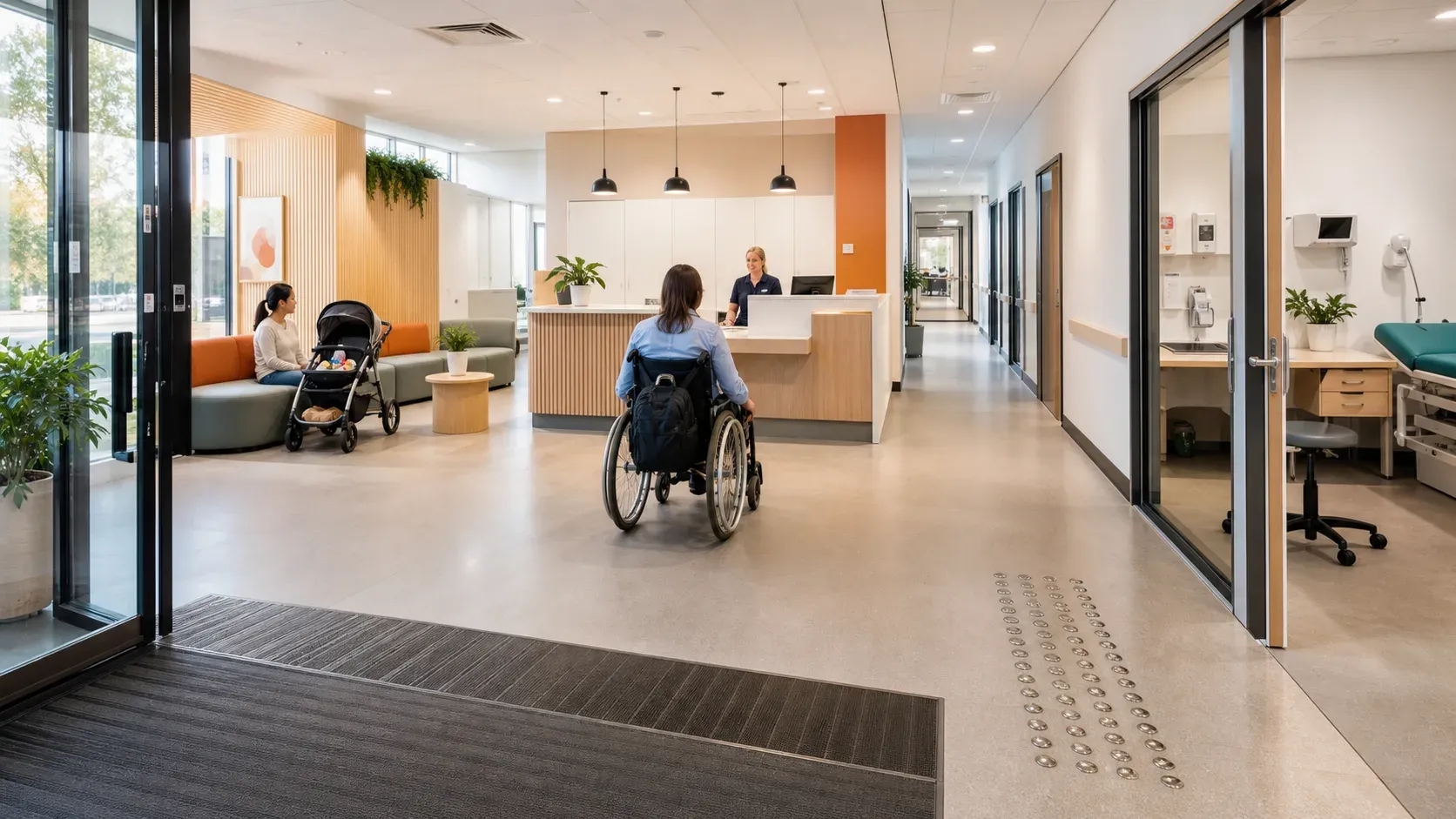
Accessibility requirements for medical fitouts depend on the building use, layout, and scope of works. In Australia, clinic owners should consider the National Construction Code, the Disability Discrimination Act, and the Disability Access to Premises Standards.
The NCC building classification rules are a good starting point. Some consulting suites may sit within a Class 5 office building. Other healthcare spaces, such as day procedure units, may fall under Class 9a requirements.
A building surveyor should confirm the correct classification before design work goes too far. This matters because access, sanitary facilities, fire safety, and services can change based on the building class.
🔸 Confirm the building classification early
🔸 Check whether the tenancy is new, existing, or changing use
🔸 Review landlord and base-building access limits
🔸 Allow space for accessible paths, doors, toilets, and waiting areas
Fast Facts
- Key rule: Accessibility requirements for medical fitouts depend on the building class, layout, and scope of works.
- Main areas: Entries, paths of travel, doors, toilets, reception, signage, and patient circulation need early review.
- Common risk: Late access changes can affect plumbing, walls, permits, landlord approvals, and opening dates.
- Melbourne context: Existing tenancies often need careful checks before lease signing or construction starts.
- Next step: Confirm access needs with the designer, builder, landlord, and building surveyor before finalising the layout.
Core Design Requirements for Accessible Clinic Spaces
Medical clinics need more than a compliant front door. Patients may arrive with mobility aids, prams, injuries, vision impairment, or temporary health issues. Staff also need safe and practical access through the workplace.
The NCC access provisions require access to and within areas normally used by occupants in many commercial and healthcare buildings. For a clinic, this can affect reception, waiting areas, consulting rooms, corridors, toilets, and shared spaces.
🔸 Step-free entry from the main pedestrian approach where required
🔸 Accessible doorways with suitable circulation space
🔸 Clear paths of travel through patient and staff areas
🔸 Ramps, stairs, and lifts designed to relevant standards
🔸 Turning and passing space in key accessways
🔸 Accessible fixtures, controls, and door hardware
Good planning also improves patient flow. A person should not need to move through staff-only areas to reach a consulting room. A patient using a mobility aid should not have to reverse down a long corridor because the layout has no turning space.
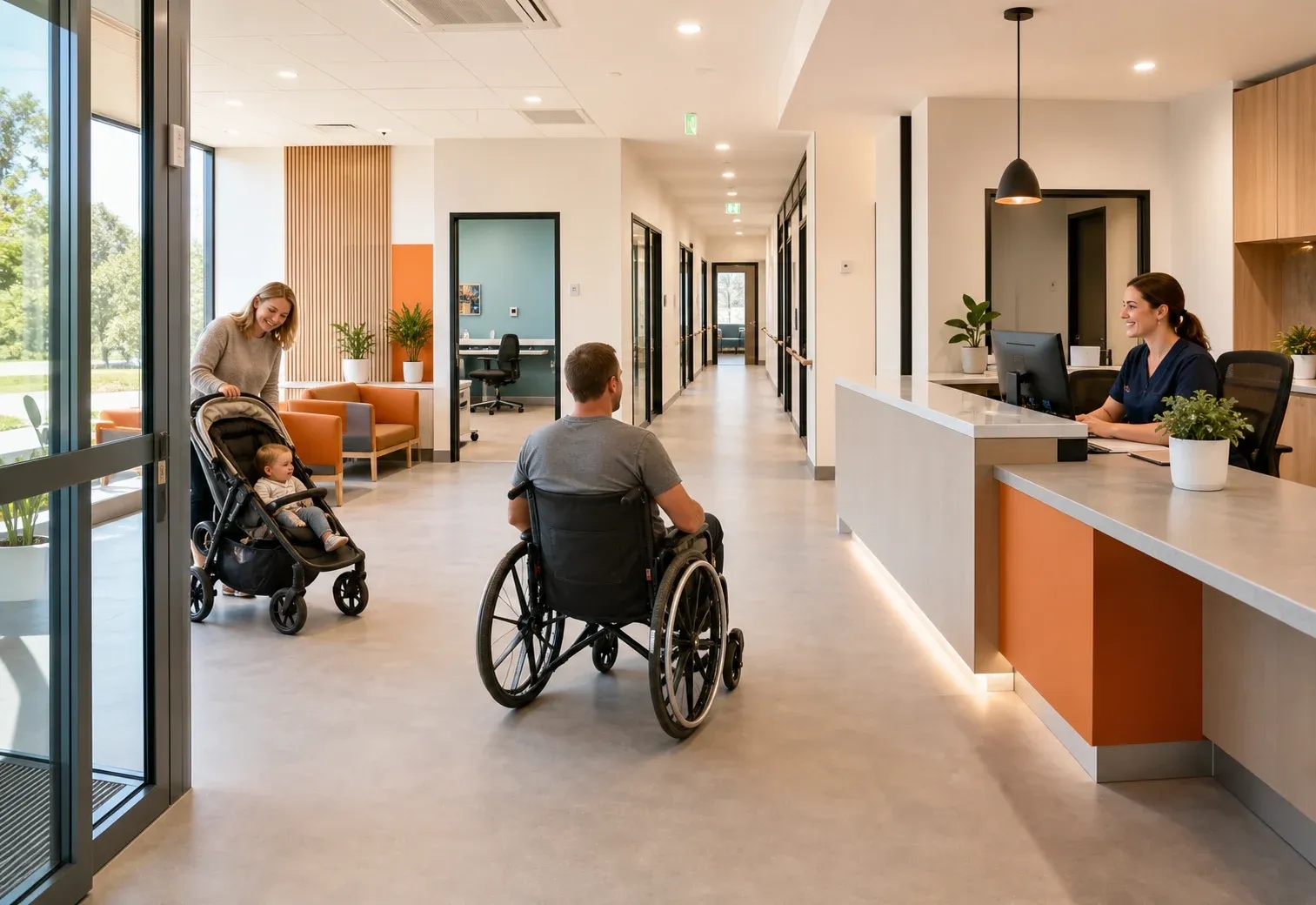
Accessible clinic design supports clear patient flow through reception, waiting areas, corridors, and consulting rooms.
Accessibility Areas That Medical Clinics Often Miss
Many accessibility problems appear in small details. These details can affect approvals, patient comfort, and daily clinic operations.
Accessible sanitary facilities are one common issue. The NCC sanitary facility provisions set out requirements for accessible toilets, showers where required, and ambulant facilities in certain cases.
🔸 Reception counters that are too high for seated visitors
🔸 Waiting rooms with poor wheelchair circulation
🔸 Consulting rooms that fit furniture but not patient movement
🔸 Accessible toilets placed too far from patient areas
🔸 Signage that does not clearly guide patients
🔸 Door hardware that is hard to grip or operate
🔸 Floor finishes that create trip risks or movement issues
Signage also matters. Accessible toilets, non-accessible entries, hearing augmentation systems, and exits may need clear signs. Tactile ground surface indicators may also be required near certain hazards, ramps, stairs, or vehicle areas.
How Accessibility Affects Cost, Timing, and Permits
Accessibility works can affect the fitout budget, but late changes usually cost more. It is easier to plan the right door widths, toilet locations, and circulation zones before walls, plumbing, and joinery are locked in.
The Disability Access to Premises Standards 2010 connect access requirements with building work. They help align building compliance with disability discrimination law for relevant buildings.
In Melbourne, a medical fitout may involve building permits, landlord approvals, services upgrades, fire safety checks, and health-related design needs. Access requirements should be reviewed with these items, not after them.
🔸 A new accessible toilet can affect plumbing and wall layouts
🔸 Door widening can affect partitions, services, and fire ratings
🔸 Ramp changes can affect entry design and lease boundaries
🔸 Signage and tactile indicators should be included before handover
🔸 Base-building limits may need landlord or building surveyor input
Early coordination reduces risk. It also helps clinic owners avoid opening delays caused by missing documentation, unclear responsibilities, or incomplete access items.
Practical Checklist Before Starting a Medical Fitout
A practical checklist helps clinic owners make better decisions before construction starts. It also gives designers, builders, landlords, and certifiers a clearer path to follow.
The Disability Discrimination Act 1992 makes it unlawful to discriminate in access to public premises, goods, services, and facilities. This is why access should be treated as part of the clinic experience, not only as a building approval task.
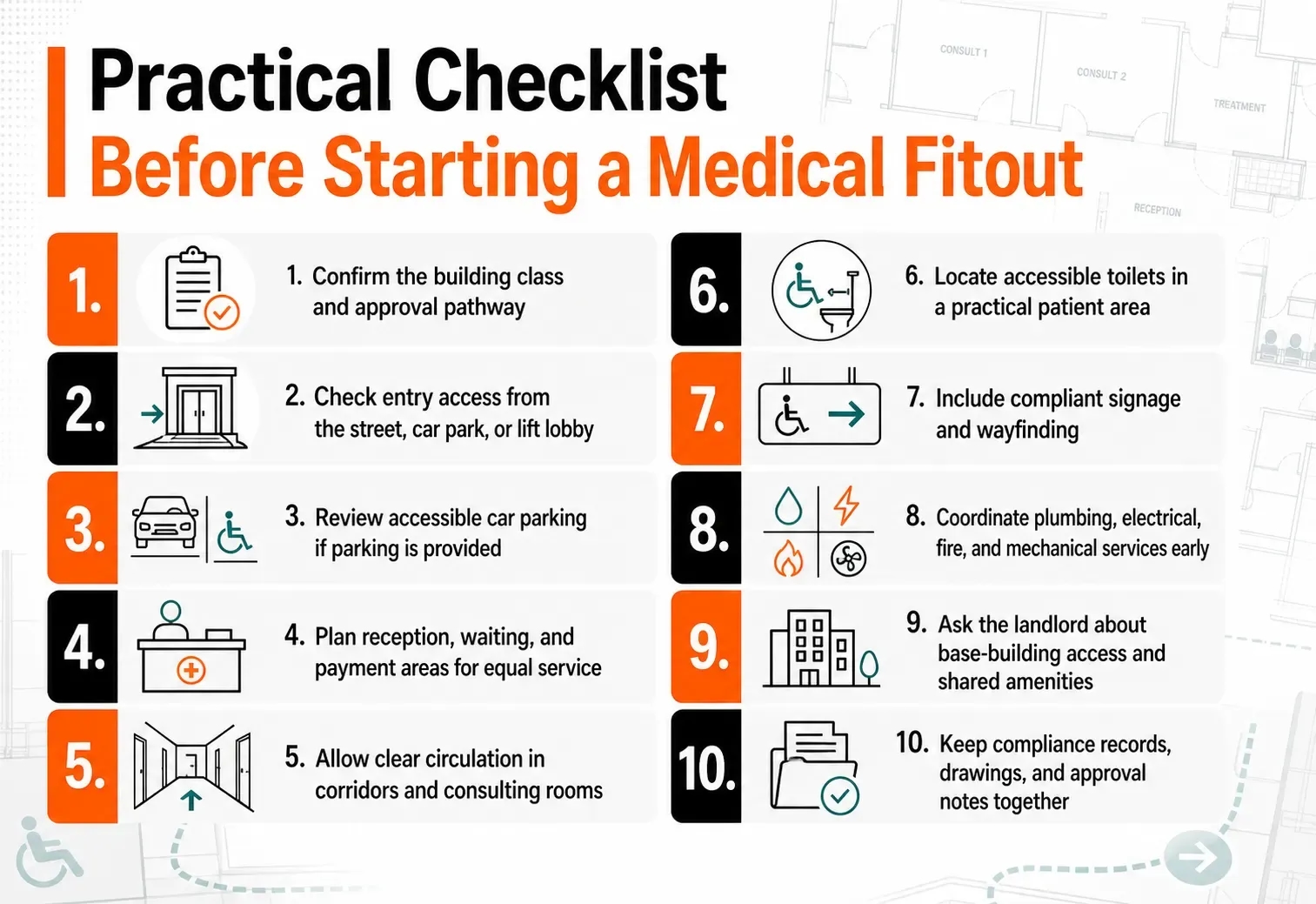
A practical medical fitout checklist to help clinic owners plan access, compliance, services, and patient flow before construction begins.
This checklist does not replace advice from a building surveyor, access consultant, or designer. It gives clinic owners a clear starting point before they commit to a lease, layout, or construction budget.
Plan Your Medical Fitout With Accessibility in Mind
Accessible design helps patients feel welcome, protects staff workflow, and supports a smoother approval process. It also reduces the chance of expensive layout changes once construction starts.
Finex Fitouts works with Melbourne businesses on practical commercial, office, retail, warehouse, and medical fitout projects. If you are planning a clinic upgrade or new healthcare space, start with access, patient flow, and compliance from the first layout discussion.
A well-planned medical fitout should be safe, clear, and easy to use for the people who rely on it every day.
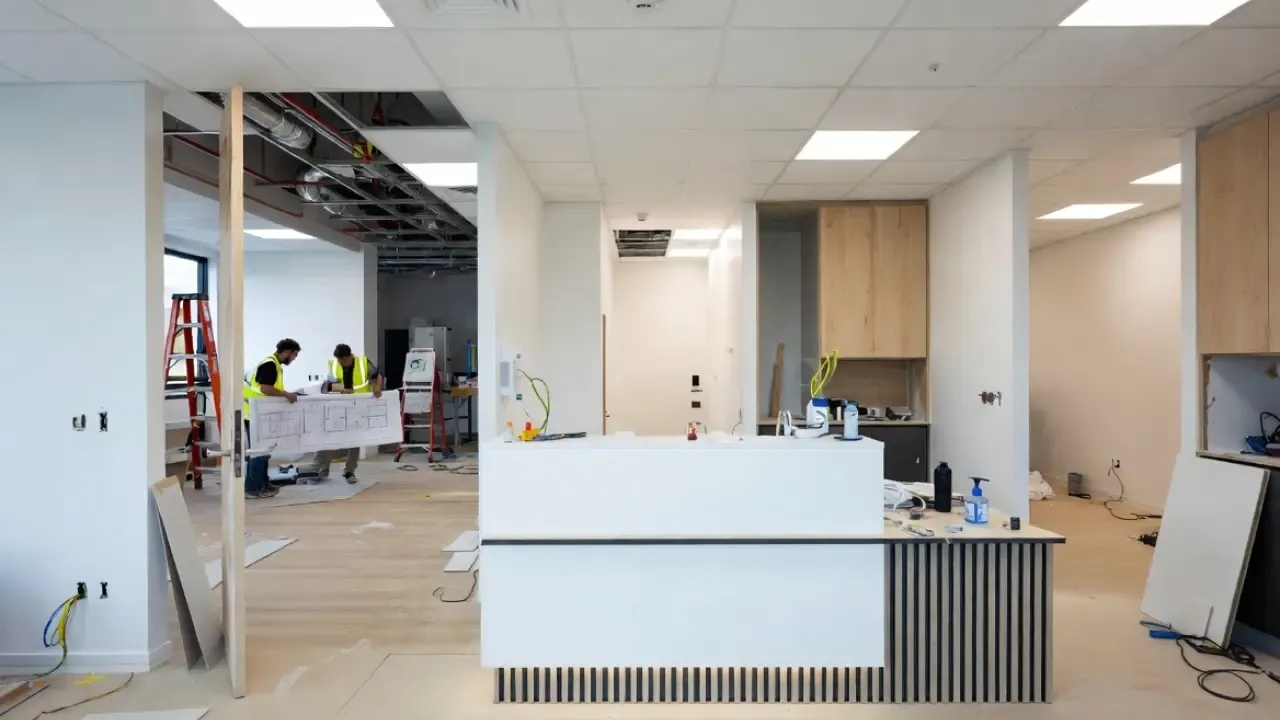
Learn real medical clinic fit-out costs in Melbourne, including timelines, hidden expenses, and compliance risks for 2026.
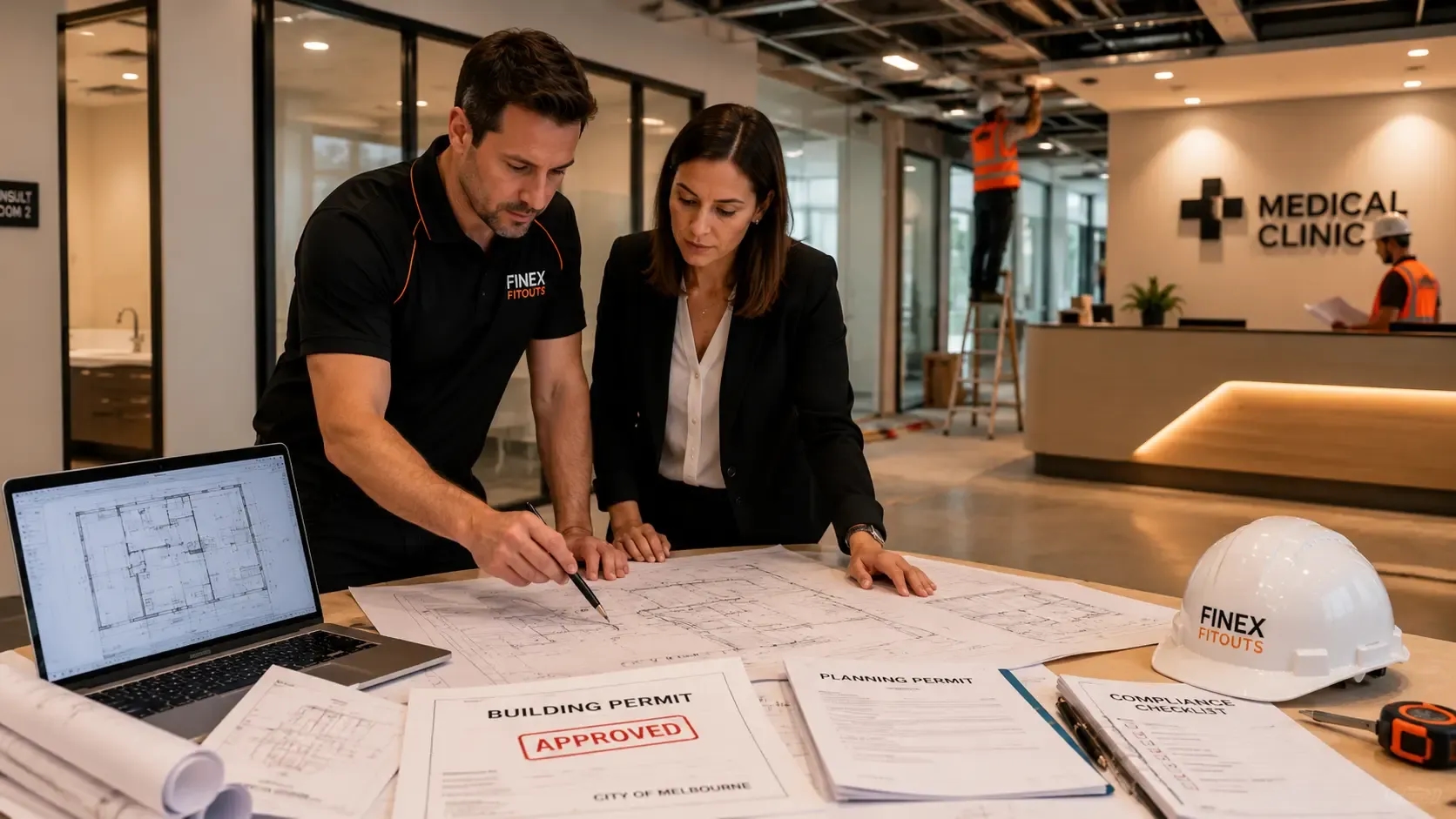
Learn which permits medical fitouts need in Melbourne, approval timelines, hidden costs, and how to avoid delays.