
Medical Clinic Fit-Out Cost Per Square Meter in Melbourne (2026 Guide)
Author
Shawn Vandersay
Date Published
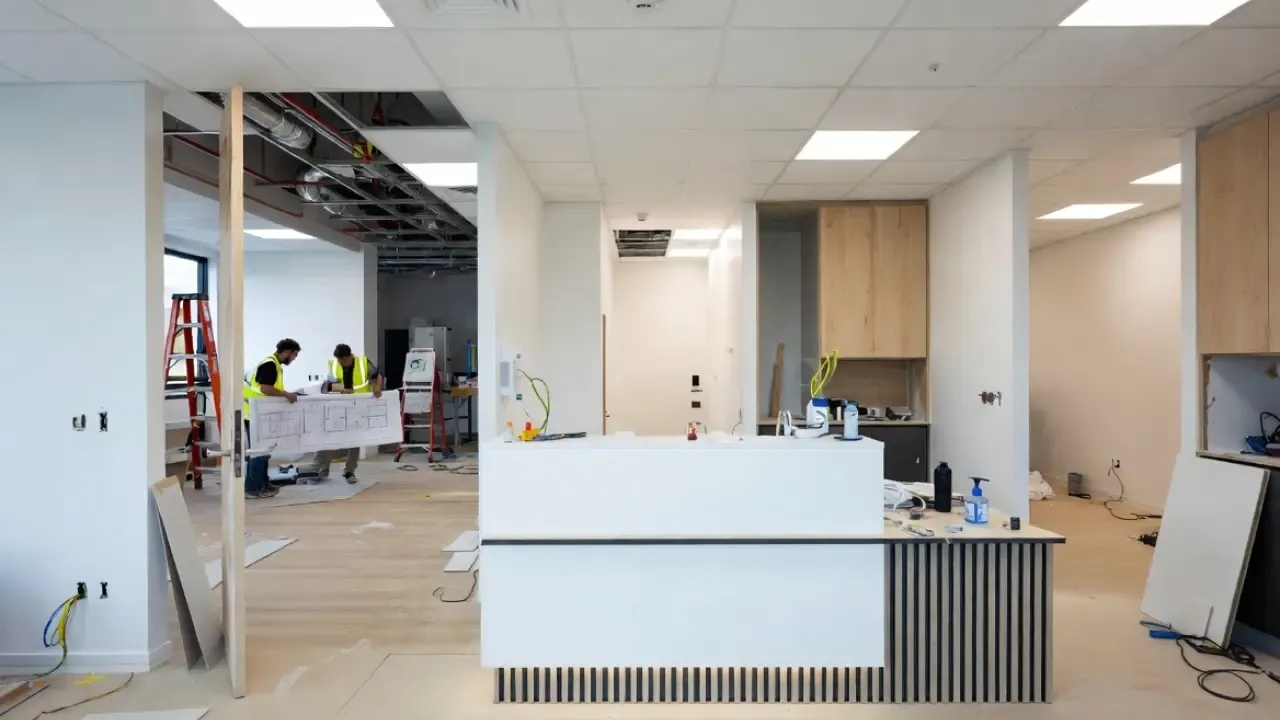
Many business owners expect medical clinic fit-outs to cost the same as office renovations. That mistake often leads to budget blowouts and delayed opening dates.
Medical spaces require stricter compliance, better ventilation, patient-focused layouts, and infection control measures. Older Melbourne buildings can also create expensive surprises during construction.
In 2026, standard medical clinic fit-outs in Melbourne usually range from $1,200 to $1,800+ per square metre for basic to mid-range spaces. More complex healthcare facilities can exceed $3,000 per square metre.
The final cost depends on the clinic type, building condition, compliance level, and service upgrades required.
Fast Facts
- Medical clinic fit-outs in Melbourne usually cost more than standard office renovations.
- Compliance, permits, HVAC, plumbing, and accessibility upgrades can increase the final budget.
- Most clinic fit-outs take four to six months from planning to opening.
- Older Melbourne buildings often need extra checks before construction starts.
- Early planning helps reduce delays, variations, and business disruption.
Average Medical Clinic Fit-Out Cost Per Square Meter in Melbourne
Medical clinic fit-out pricing in Melbourne varies widely because every healthcare space has different operational and compliance requirements. A simple allied health clinic costs far less than a radiology or procedure-based facility. Understanding what drives these costs helps business owners create more realistic budgets and avoid unexpected expenses later.
Medical clinic fit-out costs vary significantly depending on the type of healthcare space.
Typical Cost Ranges By Clinic Type
| Clinic Type | Estimated Melbourne Cost |
|---|---|
| GP Clinic | $1,200 to $1,800+ per sqm |
| Allied Health Clinic | $1,200 to $2,000 per sqm |
| Dental Clinic | $2,000 to $3,000+ per sqm |
| Specialist Clinic | $2,500+ per sqm |
| Day Surgery or Radiology | $3,000+ per sqm |
Dental clinics cost more because they require additional plumbing, suction systems, cabinetry, and specialist equipment infrastructure.
Radiology and procedure-based clinics often require shielding, advanced HVAC systems, medical gases, and stricter NCC Class 9a healthcare classifications.
What Impacts Medical Fit-Out Costs Most?
Several factors influence pricing in Melbourne.
These include:
🔸 Existing building condition
🔸 HVAC upgrades
🔸 Fire compliance
🔸 Accessibility upgrades
🔸 Plumbing relocations
🔸 Acoustic treatment
🔸 Custom joinery
🔸 Electrical capacity
🔸 Infection control requirements
Warm shell spaces usually cost less because some services already exist. Cold shell sites require complete mechanical, electrical, and plumbing installation.
Older commercial buildings across Melbourne suburbs often increase costs due to asbestos removal, outdated fire systems, and structural upgrades.
Hidden Costs That Cause Budget Blowouts
Many clinic owners focus only on construction pricing during the early planning stage. However, medical fit-outs often involve hidden compliance, service, and approval costs that appear later. These unexpected expenses can quickly increase the final budget and delay project completion if they are not identified early.
Hidden expenses are one of the biggest frustrations for clinic owners.
Many projects begin with a basic builder quote. Then additional costs appear once approvals, demolition, and compliance checks start.
Compliance And Permit Costs
Medical clinics may require:
🔸 Building permits
🔸 Fire engineering assessments
🔸 Accessibility upgrades
🔸 Change-of-use approvals
🔸 Council reviews
🔸 Building surveyor inspections
Planning permit delays are common when parking, accessibility, or zoning issues arise.
In Melbourne, older properties often need expensive upgrades before approval is granted.
HVAC And Ventilation Upgrades
Ventilation systems are a major cost driver in healthcare spaces.
Many medical clinics require:
🔸 Improved air circulation
🔸 Infection control ventilation
🔸 Additional cooling capacity
🔸 Zoned air conditioning systems
Poor ventilation planning can create major redesign costs later.
Contract Variations During Construction
Late design changes frequently increase project costs.
Common variation triggers include:
🔸 Moving plumbing
🔸 Changing layouts
🔸 Adding extra consultation rooms
🔸 Landlord requirements
🔸 Hidden structural issues
Many Melbourne healthcare projects require a contingency budget of 15% to 30% to cover unexpected conditions.
How Long Does A Medical Clinic Fit-Out Take In Melbourne?
Medical clinic fit-outs usually take longer than standard office renovations because healthcare projects involve more approvals, consultants, and specialised trades. Timelines can also shift due to council reviews, equipment lead times, and design changes. Understanding realistic project durations helps clinic owners plan leases, staffing, and opening schedules properly.
Most medical clinic fit-outs take between four and six months from concept to opening.
The timeline depends on approvals, project complexity, and equipment lead times.
Typical Timeline Breakdown
| Stage | Estimated Duration |
|---|---|
| Design and documentation | 4 to 8 weeks |
| Permits and approvals | 2 to 12 weeks |
| Construction | 6 to 12 weeks |
| Equipment installation and handover | 1 to 4 weeks |
Straightforward GP clinics move faster. Specialist clinics often require longer approval and installation periods.
Biggest Causes Of Delays
The most common delay risks include:
🔸 Council approval delays
🔸 Late layout changes
🔸 Long equipment lead times
🔸 Trade shortages
🔸 Incomplete documentation
🔸 Unexpected site conditions
Melbourne’s commercial construction market remains busy, which can affect trade availability and supplier timelines.
Business owners should ideally begin planning at least three to six months before their desired opening date.
Common Medical Clinic Layout Mistakes
A well-designed clinic improves patient experience, staff efficiency, and long-term business performance. Unfortunately, many healthcare spaces suffer from poor workflow planning, undersized rooms, and privacy problems. These layout mistakes often create operational frustration and expensive renovation changes after the clinic becomes fully operational.
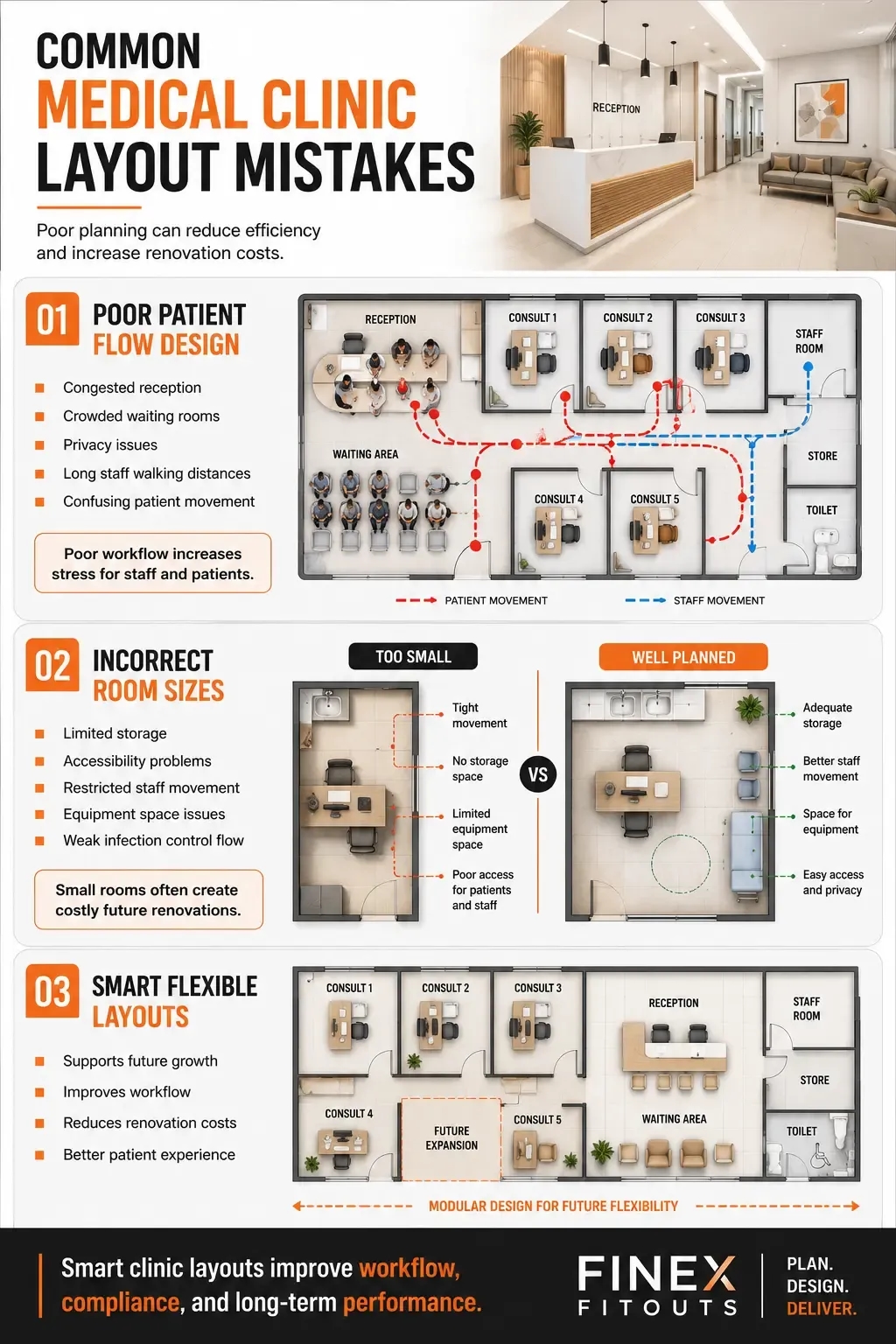
AI-generated infographic explaining common medical clinic layout mistakes that affect workflow, patient experience, and long-term fit-out efficiency in Melbourne healthcare spaces.
Poor layout planning affects both patient experience and staff productivity.
Many clinics focus heavily on appearance while ignoring operational workflow.
Poor Patient Flow Design
Poor layouts often create:
🔸 Congested reception areas
🔸 Crowded waiting rooms
🔸 Privacy issues
🔸 Long walking distances for staff
🔸 Confusing patient movement
These problems reduce efficiency and increase stress for both staff and patients.
Incorrect Room Sizes
Consultation rooms that are too small create long-term operational issues.
Medical clinics also need enough space for:
🔸 Storage
🔸 Accessibility access
🔸 Staff movement
🔸 Medical equipment
🔸 Infection control workflows
Future expansion should also influence the initial layout design.
Flexible room planning can reduce future renovation costs.
Regulations And Compliance Requirements In Victoria
Medical clinics in Melbourne must meet strict healthcare, accessibility, and building regulations before they can legally operate. These requirements directly affect fit-out costs, timelines, and design decisions. Many project delays happen because compliance planning starts too late or important healthcare standards are overlooked during design development.
Healthcare fit-outs must meet strict Victorian building and accessibility standards.
Many business owners underestimate how much compliance affects costs and timelines.
Class 9a Requirements
Some medical clinics fall under Class 9a healthcare classifications.
This often applies when patients may require assistance during evacuation or recovery.
Class 9a requirements can affect:
🔸 Fire safety systems
🔸 Corridor widths
🔸 Emergency exits
🔸 Ventilation
🔸 Accessible bathrooms
🔸 Infection control measures
Accessibility And Patient Privacy
Medical clinics must comply with accessibility standards under AS 1428.
This includes:
🔸 Accessible toilets
🔸 Door widths
🔸 Corridor access
🔸 Ramps
🔸 Reception accessibility
Acoustic privacy is also critical in consultation rooms.
Poor sound insulation can create patient confidentiality risks.
How To Reduce Business Disruption During Renovations
Clinic renovations can interrupt appointments, reduce productivity, and affect patient trust if construction is poorly managed. Healthcare businesses must balance operational continuity with renovation work. Careful staging, clear communication, and realistic scheduling can help minimise downtime and reduce the financial pressure caused by temporary disruptions.
Renovations can seriously affect clinic operations and revenue.
Many healthcare businesses lose income because they underestimate downtime risks.
Staged Construction Can Reduce Revenue Loss
Some Melbourne clinics use staged construction to keep parts of the business operating during renovations.
This may include:
🔸 After-hours construction
🔸 Weekend works
🔸 Temporary consultation rooms
🔸 Phased room upgrades
Staged construction usually costs more upfront. However, it can reduce operational disruption significantly.
Communication Matters During Renovations
Patients should understand:
🔸 Temporary access changes
🔸 Appointment adjustments
🔸 Parking impacts
🔸 Noise expectations
Clear communication helps protect patient trust during construction periods.
How To Choose The Right Medical Fit-Out Company
Medical fit-outs require more than standard commercial construction experience. Healthcare spaces involve compliance, patient privacy, infection control, and specialist service coordination. Choosing the wrong contractor can create costly delays and approval issues. Experienced Melbourne medical fit-out companies often reduce project risk through better planning and coordination.
Medical fit-outs require specialised knowledge.
General commercial builders may not fully understand healthcare compliance requirements.
Questions Clinic Owners Should Ask
Before hiring a contractor, ask about:
🔸 Previous healthcare projects
🔸 Class 9a experience
🔸 Compliance management
🔸 Permit support
🔸 Fixed-price quoting
🔸 Timeline management
Melbourne builders familiar with local councils and Victorian regulations can often reduce approval risks.
Why Design-And-Construct Reduces Risk
Design-and-construct delivery creates a single point of responsibility.
This can reduce:
🔸 Contractor disputes
🔸 Communication gaps
🔸 Variation risks
🔸 Timeline confusion
Integrated project management also improves coordination between designers, builders, consultants, and suppliers.
Related Insight
Planning another commercial space? Compare clinic costs with this practical guide to retail fitout cost in Australia.
Practical Ways To Reduce Medical Fit-Out Costs
Reducing medical fit-out costs should focus on smart planning instead of cutting important compliance or operational features. Poor-quality materials and rushed decisions usually create larger expenses later through maintenance, rework, and inefficient layouts. Strategic cost management helps clinic owners protect both their budget and long-term business performance.
Cost savings should focus on long-term value, not short-term shortcuts.
Cheap materials and rushed layouts often create larger maintenance and compliance costs later.
Areas Worth Investing More Money In
Higher investment is usually worthwhile for:
🔸 HVAC systems
🔸 Acoustic treatment
🔸 Durable flooring
🔸 Quality joinery
🔸 Efficient layouts
These features improve longevity, infection control, and patient comfort.
Where Costs Can Be Reduced Safely
Business owners may reduce costs by:
🔸 Reusing compliant services
🔸 Using modular layouts
🔸 Simplifying finishes
🔸 Standardising room sizes
🔸 Planning future expansion early
Good planning often saves more money than cutting material quality.
Final Thoughts
Medical clinic fit-out costs in Melbourne involve much more than construction pricing alone.
Compliance, ventilation, permits, workflow planning, and business continuity all influence the final budget and timeline.
Poor planning can delay clinic openings, increase operational stress, and create long-term efficiency problems.
Finex Fitouts helps Melbourne healthcare businesses plan practical medical fit-outs with realistic budgeting, coordinated project management, and local compliance knowledge.
Retail fitout cost Australia guide for 2026. Learn real prices, timelines, risks, and how Melbourne businesses can avoid costly mistakes.

Learn what a turnkey fitout includes, Melbourne costs, timelines, risks, and how to avoid delays and budget blowouts.