
Medical Fitout Permits in Melbourne: Costs, Approvals, and Common Mistakes
Date Published
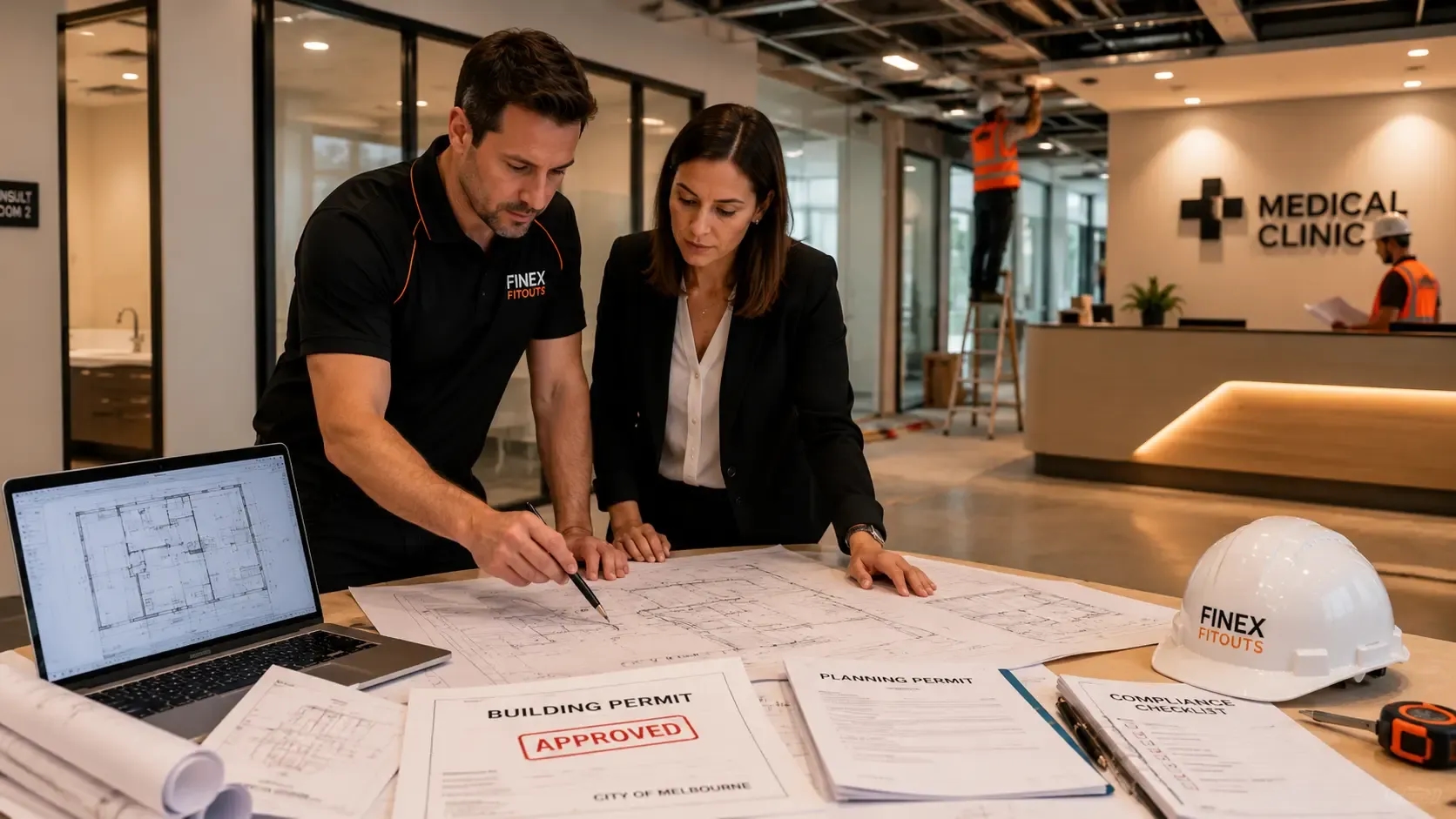
Many Melbourne business owners assume internal renovations do not require approval. That mistake often creates expensive delays later. Medical fitouts face stricter compliance rules than standard office spaces because they involve patient safety, accessibility, fire protection, and healthcare regulations.
In most cases, yes, medical fitouts need permits in Melbourne. The exact approvals depend on the clinic type, building condition, and scope of work.
A medical fitout may require:
🔸 Planning permits
🔸 Building permits
🔸 Occupancy permits
🔸 Fire safety approvals
🔸 Accessibility compliance approvals
🔸 Plumbing and electrical certifications
🔸 Signage approvals
A standard allied health clinic may face fewer approval requirements than a dental clinic or day procedure centre. According to Victorian compliance guidelines, some healthcare spaces may fall under stricter NCC Class 9a healthcare building rules.
This is why many clinic owners in Melbourne discover permit problems only after signing a lease or starting construction.
Fast Facts
- Permits matter: Most Melbourne medical fitouts need building approval before work starts.
- Delays are common: Planning issues, parking rules, and incomplete drawings can slow projects.
- Costs can increase: Compliance reports, surveyor fees, and redesigns may affect the budget.
- Early planning helps: Checking approvals before signing a lease can reduce risk.
What Is the Difference Between a Planning Permit and a Building Permit?
One of the biggest causes of project confusion is misunderstanding these two approvals.
A planning permit focuses on how the property is used within the local council area. A building permit focuses on whether the construction work meets Victorian building and safety standards.
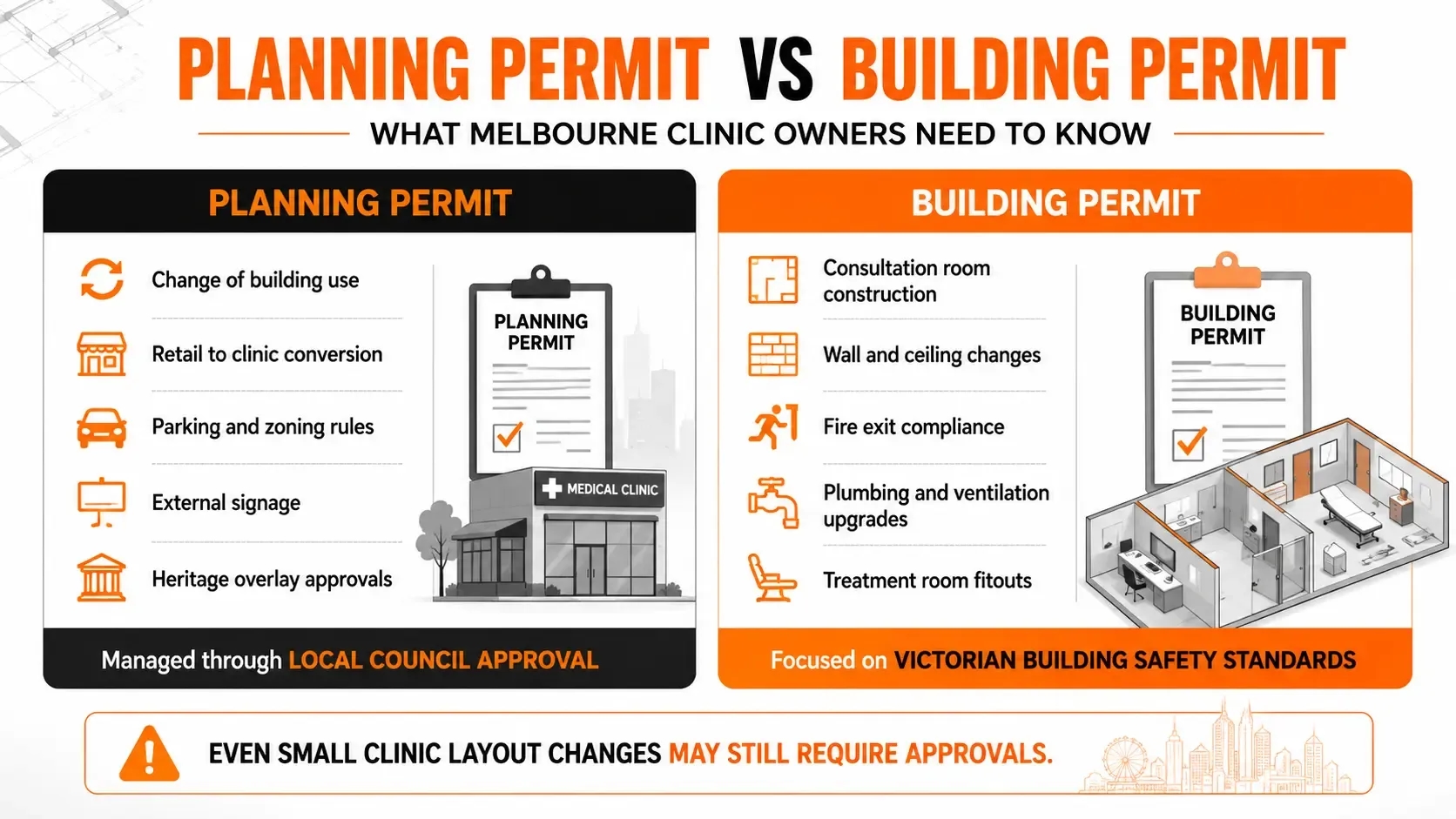
Planning Permit vs Building Permit: A simple comparison guide for Melbourne medical fitouts, showing which approvals apply before clinic construction begins.
Most Melbourne medical fitouts require a building permit because even small layout changes affect compliance and safety requirements.
Business owners often think cosmetic upgrades are exempt. However, partition walls, electrical work, and fire system changes can still trigger approvals.
Why Do Medical Fitout Approvals Get Delayed?
Permit delays are one of the biggest frustrations for clinic owners across Melbourne.
Many businesses plan opening dates based on construction timelines alone. The real delay often happens before construction even starts.
Common reasons for approval delays include:
🔸 Incomplete architectural drawings
🔸 Missing accessibility details
🔸 Parking shortfalls
🔸 Fire safety upgrade requirements
🔸 Landlord approval delays
🔸 Heritage overlay restrictions
🔸 Incorrect building classifications
According to Melbourne healthcare fitout research, planning approvals can take several weeks longer if councils request additional documentation or redesigns.
Parking rules create major delays for medical centres. Victorian planning rules often require additional car spaces for practitioners. If the site cannot provide enough parking, the business may need to apply for a formal parking reduction.
Older Melbourne buildings also create unexpected problems. Clinics opening in converted retail shops or older commercial buildings may require:
🔸 Fire safety upgrades
🔸 Accessibility improvements
🔸 New ventilation systems
🔸 Electrical upgrades
🔸 Corridor widening
These issues usually appear during permit reviews or inspections, not during lease negotiations.
Related Insight
If you are planning a clinic project, this guide to medical clinic fitout requirements in Australia explains the key compliance, layout, and project planning details to check before work begins.
What Hidden Costs Do Many Clinic Owners Miss?
Most business owners budget for builders, flooring, painting, and furniture. Many forget the compliance costs attached to healthcare projects.
Medical fitout costs in Melbourne increase quickly when permits and compliance upgrades are overlooked.
Common hidden costs include:
🔸 Building surveyor fees
🔸 Planning permit application fees
🔸 Fire engineering reports
🔸 Accessibility consultant reports
🔸 Electrical compliance upgrades
🔸 Plumbing certification
🔸 Inspection rectification work
The uploaded compliance guide estimates private building surveyor fees alone can range between $3,000 and $6,000 in Melbourne.
Dental clinics and specialist procedure rooms often cost more because they require:
🔸 Medical-grade electrical systems
🔸 Specialized plumbing
🔸 Sterilisation areas
🔸 Medical gas systems
🔸 Body-protected electrical zones
Many businesses also underestimate the financial impact of delays.
A delayed opening can create:
🔸 Ongoing rent payments
🔸 Staff onboarding delays
🔸 Equipment storage costs
🔸 Lost patient bookings
🔸 Cash flow pressure
This is why early permit planning matters as much as construction budgeting.
What Happens If You Start Construction Without Permits?
Some businesses try to save time by starting demolition or framing work before approvals are complete.
This creates serious risks in Victoria.
Building surveyors and municipal authorities can issue stop-work notices if construction begins without proper permits. In some cases, businesses may need to remove completed work so inspectors can assess hidden services or framing.
Starting early can also create:
🔸 Failed inspections
🔸 Insurance issues
🔸 Lease disputes
🔸 Expensive redesigns
🔸 Delayed occupancy approvals
🔸 Additional builder variation costs
Healthcare spaces face stricter scrutiny because patient safety is involved.
For example, treatment rooms may require:
🔸 Special fire separation
🔸 Emergency lighting
🔸 Compliant ventilation
🔸 Medical electrical protection
🔸 Accessibility clearances
If these elements are installed incorrectly, rectification costs can become significant. This is why experienced fitout teams usually finalise approvals before construction begins.
How Can Melbourne Clinics Reduce Permit Delays and Fitout Stress?
The smoothest medical fitout projects usually start with planning long before builders arrive onsite.
Business owners can reduce delays by taking several practical steps early.
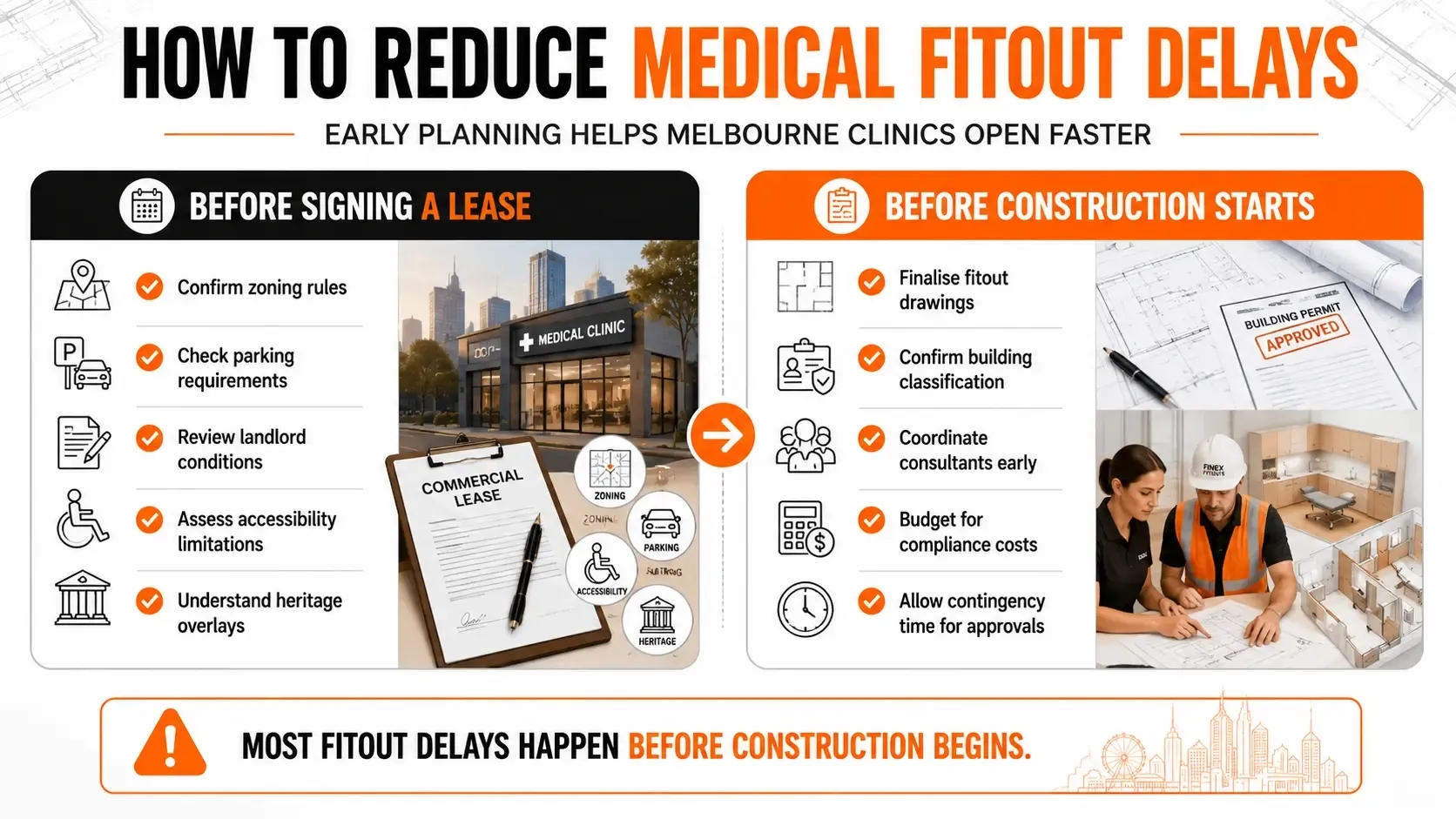
A practical guide for Melbourne clinic owners showing key steps to reduce medical fitout delays before signing a lease and before construction begins.
Many Melbourne clinics also reduce disruption by staging renovations after hours or completing fitouts in phases.
This approach helps existing practices continue operating while upgrades happen gradually.
Another major advantage comes from using a single design-and-construct fitout company instead of managing separate contractors.
When designers, builders, consultants, and project managers work together from the start, there is less risk of:
🔸 Documentation errors
🔸 Contractor disputes
🔸 Inspection failures
🔸 Delayed approvals
🔸 Budget blowouts
The uploaded compliance guide highlights that fragmented contractor management often creates compliance gaps and failed inspections later in the project.
Planning a Medical Fitout in Melbourne? Start With the Right Advice
Medical fitouts involve far more approvals than standard office renovations. Even small mistakes during planning can delay opening dates and increase costs.
The most successful clinic projects usually begin with proper compliance planning, realistic timelines, and experienced project coordination.
Finex Fitouts helps Melbourne businesses manage commercial fitouts from design through construction and project delivery. This includes helping clients navigate approvals, reduce contractor confusion, and minimise disruption during the fitout process.
Before signing a lease or starting renovations, it is worth understanding exactly which permits and compliance requirements may affect your clinic project.
Frequently Asked Questions
Do medical fitouts need permits in Melbourne?
Yes, many medical fitouts in Melbourne need permits. A clinic project may require planning approval, a building permit, fire safety checks, accessibility compliance, and final inspection before opening. The exact approvals depend on the building use, layout changes, services, and council requirements.
What is the difference between a planning permit and a building permit?
A planning permit checks whether the clinic use suits the site, zoning, parking, signage, and local council rules. A building permit checks whether the construction work meets Victorian building safety standards, including fire safety, access, structure, plumbing, and ventilation.
How can clinic owners avoid medical fitout delays?
Clinic owners can reduce delays by checking zoning before signing a lease, confirming parking rules, reviewing landlord conditions, finalising drawings early, and coordinating consultants before construction starts. This guide to medical clinic fitout requirements in Australia explains more compliance and planning points to review before work begins.
Confused about office renovation vs fitout? Learn costs, timelines, and how to choose the right option for your business.
Learn real medical clinic fit-out costs in Melbourne, including timelines, hidden expenses, and compliance risks for 2026.