
Medical Clinic Fitout Requirements in Australia: Costs, Permits and Compliance Guide
Author
Shawn Vandersay
Date Published
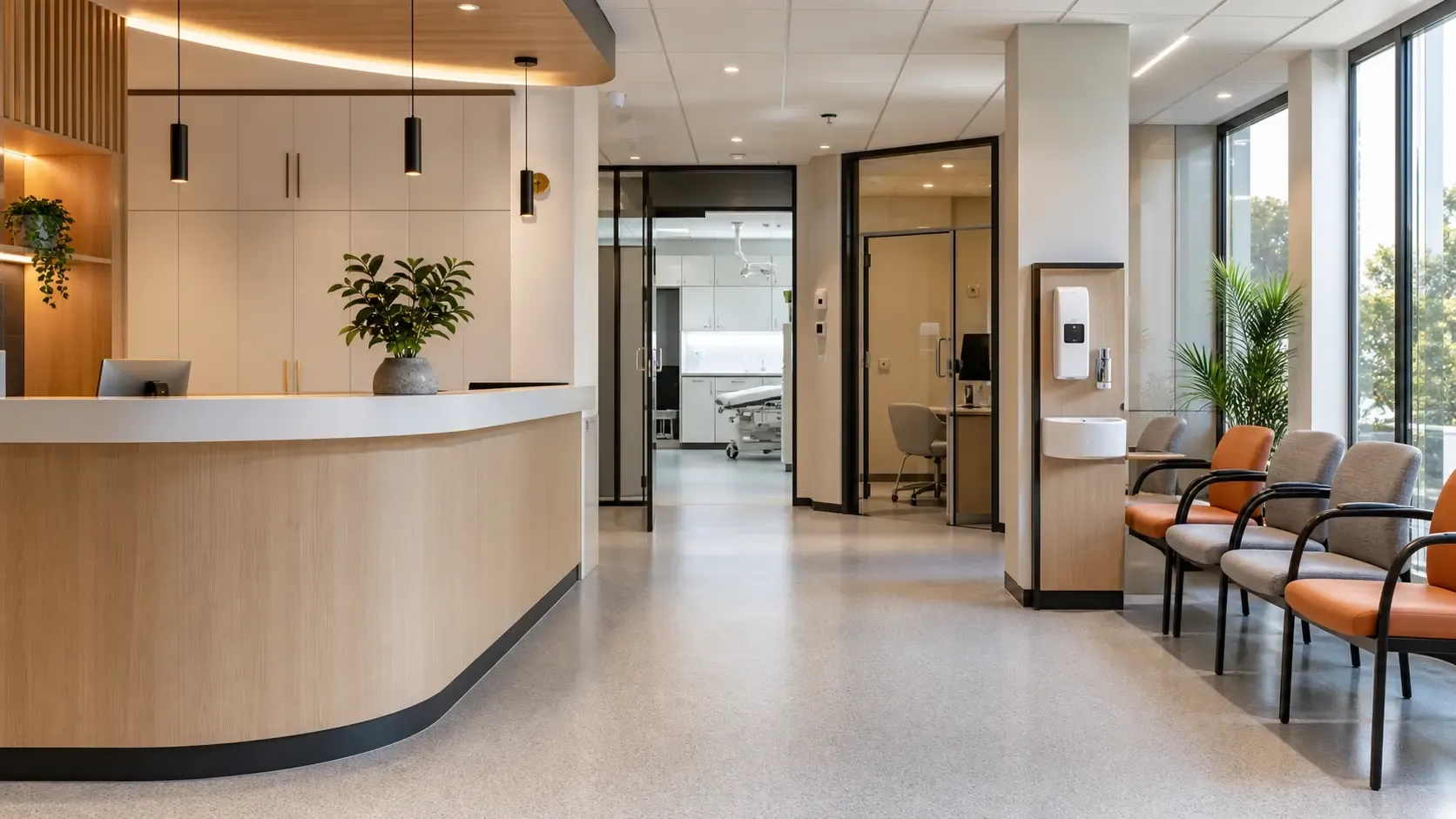
A medical clinic fitout is a major business decision, not just a building project. The wrong layout, missing permit, or underestimated service upgrade can delay opening and increase costs. In Melbourne, clinic owners also need to consider council rules, building approvals, patient access, and daily operations. This guide explains the main requirements so you can plan with fewer surprises.
Fast Facts
- Costs: Medical clinic fitouts often need extra budget for services, compliance, and clinical finishes.
- Approvals: Melbourne projects may need planning permits, building permits, and final inspections.
- Layout: Patient flow, privacy, accessibility, and storage should be planned before construction starts.
- Services: Electrical, plumbing, data, and HVAC requirements should be confirmed early.
- Downtime: Active clinics need staged works to reduce disruption to appointments and staff.
Medical Clinic Fitout Requirements In Australia
Medical clinic fitouts need more planning than standard office fitouts. They must support patient care, staff workflow, privacy, safety, and infection control.
The exact requirements depend on the clinic type, services offered, building condition, and location.
A medical clinic fitout in Australia may need:
🔸 NCC building compliance
🔸 Accessibility planning under the DDA and AS 1428.1
🔸 Infection control finishes and hand hygiene points
🔸 Safe electrical systems for patient areas
🔸 Plumbing for clinical hand basins
🔸 HVAC and ventilation planning
🔸 Acoustic and visual privacy
🔸 Fire safety and emergency lighting
🔸 Council and building approvals
Not every clinic has the same building classification. A GP clinic, allied health clinic, dental clinic, cosmetic clinic, and day procedure centre may trigger different rules.
In Melbourne, clinic owners should confirm the site requirements before signing a lease or starting design.
Check The Site Before You Sign A Lease
Many clinic fitout problems begin before construction starts. A tenancy may look suitable, but still create costly issues later.
In Victoria, a planning permit may be needed for change of use, parking, signage, or external works. This is common when converting an office, retail tenancy, or house into a clinic.
A building permit may also be needed for internal fitout works. This can include partitions, plumbing, electrical work, fire safety changes, access upgrades, and service alterations.
Before signing a lease, check:
🔸 Is medical use allowed at the property?
🔸 Does the building need a change-of-use approval?
🔸 Can the site meet parking and access needs?
🔸 Can the tenancy support new plumbing?
🔸 Is the electrical supply strong enough?
🔸 Can HVAC be upgraded if needed?
🔸 Will the landlord approve the works?
🔸 Are accessible paths and toilets possible?
A building surveyor should confirm the NCC classification early. This step helps avoid redesign, approval delays, and unexpected compliance costs.
Medical Clinic Fitout Costs In Australia
Medical clinic fitouts often cost more than standard commercial fitouts. Clinical rooms need services, hygiene finishes, privacy controls, and careful compliance planning.
As a broad guide, many Australian medical clinic fitouts cost around $1,500 to $3,500 per square metre. Simple allied health clinics may sit lower. Dental, cosmetic, imaging, and procedure clinics can cost more.
A small GP or allied health clinic may cost $150,000 to $350,000 or more. A medium clinic may cost $300,000 to $600,000 or more, depending on size and services.
Common hidden costs include:
🔸 Plumbing for treatment rooms and hand basins
🔸 Electrical upgrades for medical equipment
🔸 Data cabling and communications
🔸 HVAC upgrades
🔸 Accessible toilet upgrades
🔸 Fire safety changes
🔸 Clinical flooring and splashbacks
🔸 Custom joinery
🔸 Consultant and permit fees
🔸 Demolition and make-good works
🔸 After-hours work during renovations
Budget blowouts often happen when owners compare quotes before the scope is clear. A low early estimate may not include services, permits, access upgrades, or infection control items.
A practical approach is to prepare a room-by-room brief. List each room, equipment item, plumbing point, power need, storage need, and finish requirement before pricing.
Permits, Approvals, And Compliance Requirements
Permits can affect both the budget and the opening date. In Melbourne, delays often happen when planning, building, and landlord approvals are not handled early.
A planning permit relates to land use and development. Council may assess zoning, parking, traffic, signage, hours of operation, and neighbourhood impact.
A building permit relates to construction and compliance. A building surveyor may need drawings, specifications, engineering reports, access details, and fire safety information.
Some projects may also need an occupancy permit or final inspection before the clinic opens.
Key compliance areas include:
🔸 Fire safety and emergency lighting
🔸 Accessibility under the DDA and AS 1428.1
🔸 Patient area electrical safety under AS/NZS 3003
🔸 Plumbing and drainage
🔸 Ventilation under NCC and AS 1668.2 principles
🔸 Infection prevention guidance from health and clinical standards
🔸 Acoustic and visual privacy
Planning permits can take weeks or months, especially when change of use, parking, or objections are involved. Building permits also need complete documentation.
A realistic full clinic fitout timeline may range from 3 to 9 months. This includes design, approvals, construction, inspections, and handover.
Clinic Layout, Patient Flow, And Privacy
A clinic layout should make care easier to deliver. Poor layout can slow staff, frustrate patients, and create daily workflow problems.
A good clinic layout considers the full patient journey. Patients should move from entry to reception, waiting, consultation, treatment, payment, and exit with minimal confusion.
Staff also need efficient movement between consult rooms, treatment rooms, storage, waste areas, and staff spaces.
Common layout mistakes include:
🔸 Waiting rooms that feel cramped at peak times
🔸 Reception counters with poor privacy
🔸 Consult rooms with weak acoustic separation
🔸 Treatment rooms placed too far from storage
🔸 Narrow corridors
🔸 Poor wheelchair and pram access
🔸 Not enough space for staff areas
🔸 No allowance for future growth
Treatment rooms need space for staff, patients, equipment, hand hygiene, and safe movement. Consulting rooms need privacy, good lighting, and enough room for computers, exam furniture, and visitors.
In a Melbourne office-to-clinic conversion, layout problems often appear when the base building was not designed for healthcare. Existing columns, services, toilets, and entries can limit the design.
Services Planning: Electrical, Plumbing, And HVAC
Electrical, plumbing, and HVAC are expensive to change after walls and ceilings are built. These services should be planned before final pricing.
Medical clinics may need power for exam beds, computers, printers, fridges, medical devices, lighting, emergency systems, and communications equipment.
Some patient areas may need AS/NZS 3003-compliant electrical work. This can include RCD protection, correct outlet planning, testing, certification, and specific patient area classifications.
Plumbing is also a major cost item. Many clinical rooms need hand basins, drainage, splashbacks, and cleanable surrounding surfaces. If the tenancy has limited plumbing access, costs can rise quickly.
HVAC planning affects comfort and infection control. Waiting rooms, consult rooms, and treatment rooms may have different needs. A system that worked for an office may not suit a clinic with higher occupancy and clinical use.
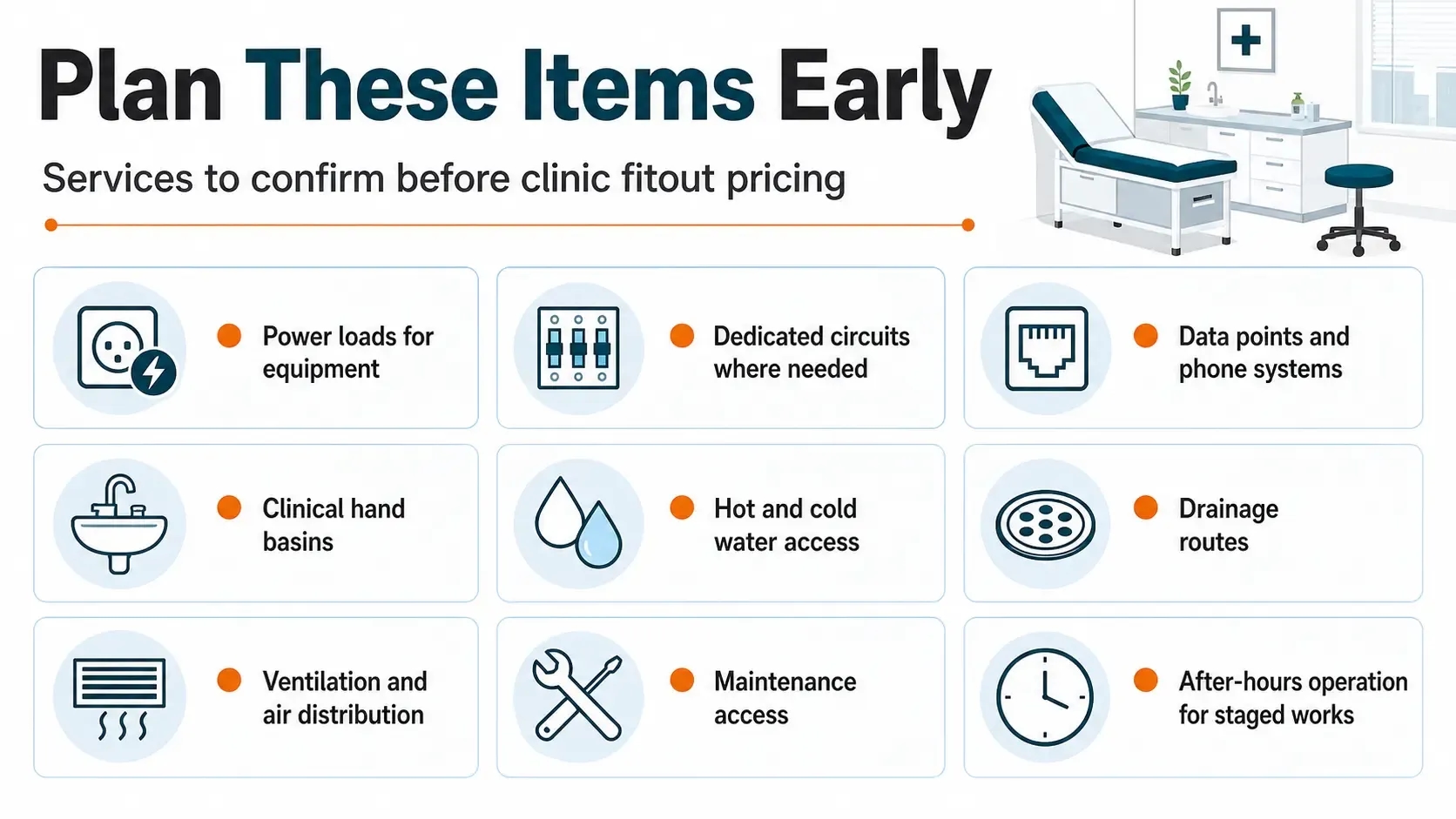
Key electrical, plumbing, and HVAC items to confirm early before pricing a medical clinic fitout.
Infection Control, Storage, And Waiting Areas
Infection control is not only a cleaning issue. It affects layout, materials, plumbing, waste, ventilation, and storage.
Clinical areas should use smooth, cleanable surfaces. Common choices include commercial vinyl flooring, washable wall finishes, durable laminates, and suitable splashbacks.
Clinic owners should also plan for hand hygiene points, PPE storage, cleaning supplies, waste handling, and clean and dirty workflows.
Storage is often underestimated. Clinics need space for consumables, forms, equipment, medication where relevant, PPE, linen, cleaning items, and clinical waste.
Waiting areas also need careful planning. A waiting room should allow wheelchair access, pram movement, clear circulation, reception visibility, and enough seating for busy periods.
A cramped waiting room can affect patient comfort and privacy. It can also make the clinic feel poorly organised, even when the clinical care is strong.
Also Read
For a clearer budget before planning your project, read our guide on medical clinic fitout cost per square metre in Melbourne.
Reducing Downtime During A Clinic Renovation
Renovating an active clinic creates extra risk. Dust, noise, blocked access, and service shutdowns can disrupt appointments and reduce revenue.
A staged plan can help the clinic stay partly open during works. This may include temporary consult rooms, after-hours work, weekend works, temporary signage, and clear patient paths.
Practical disruption controls include:
🔸 Stage works by zone
🔸 Keep key rooms operating where possible
🔸 Schedule noisy works outside clinic hours
🔸 Use dust barriers
🔸 Protect infection control areas
🔸 Communicate changes to patients
🔸 Keep staff updated daily
🔸 Plan safe access for patients and trades
For example, a suburban Melbourne clinic may need to rebuild reception while keeping two consult rooms open. This requires careful sequencing, temporary wayfinding, noise control, and safe separation between patients and works.
Managing Contractors And Avoiding Delays
A clinic fitout involves many people. Designers, builders, plumbers, electricians, HVAC trades, joiners, certifiers, landlords, and council may all affect the project.
Delays happen when no one manages the full sequence. One trade may wait for another. A late drawing change may affect joinery. A missing permit detail may stop work.
Before choosing a contractor, ask:
🔸 Have you completed medical or clinic fitouts before?
🔸 Who manages permits and consultants?
🔸 What is excluded from the quote?
🔸 How are variations priced?
🔸 What items have long lead times?
🔸 Can you stage works around appointments?
🔸 Who manages final inspections and handover?
A clear scope, realistic timeline, and strong project management reduce cost surprises.
Plan Your Medical Clinic Fitout With Less Risk
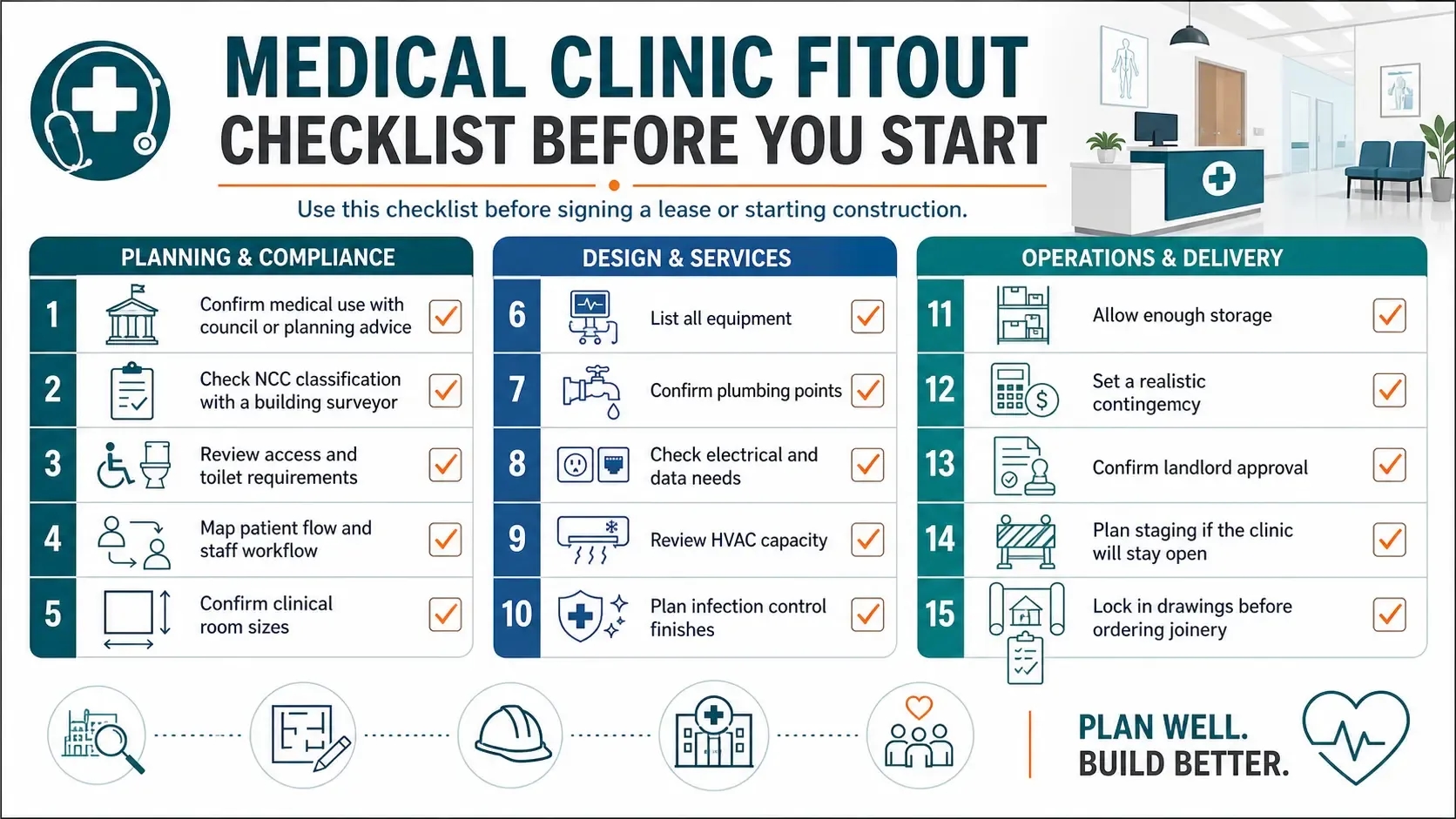
A practical checklist covering permits, layout, services, approvals, storage, and staging before starting a medical clinic fitout.
A medical clinic fitout needs clear planning before construction starts. Costs, permits, layout, services, and downtime all need early attention.
Finex Fitouts helps Melbourne businesses plan and deliver commercial fitouts with design, construction, and project management support. For clinic owners, the right first step is a clear scope that checks compliance, cost, workflow, and site risks before work begins.
Frequently Asked Questions
How much does a medical clinic fitout cost in Australia?
A medical clinic fitout in Australia can cost around $1,500 to $3,500 per square metre. The final cost depends on clinic size, plumbing, electrical work, HVAC, accessibility upgrades, clinical finishes, permits, and equipment needs.
Do I need a permit for a medical clinic fitout in Melbourne?
Many Melbourne clinic fitouts need a building permit. A planning permit may also be needed for change of use, signage, parking, or external works. A building surveyor and local council can confirm what applies to your site.
What should I check before starting a medical clinic fitout?
Before starting, check council requirements, NCC classification, accessibility, plumbing points, electrical capacity, HVAC, infection control finishes, patient flow, storage, landlord approval, and whether staged works are needed to reduce clinic downtime.
Confused about office renovation vs fitout? Learn costs, timelines, and how to choose the right option for your business.

Retail fitout cost Australia guide for 2026. Learn real prices, timelines, risks, and how Melbourne businesses can avoid costly mistakes.