
Turnkey Fitout Finance in Australia: What You Need to Know
Date Published

A turnkey fitout brings design, construction and project management under one delivery plan. It can cover offices, clinics, shops, showrooms and warehouses.
Financing can protect working capital and spread the project cost over time. However, one finance product may not cover every part of the work.
Fast Facts
- Finance is available: Australian businesses may use loans, equipment finance or a blended funding structure.
- Coverage varies: Fixed building work, equipment, fees and working capital may need different funding sources.
- Documents matter: Lenders may request financial reports, forecasts, a lease and an itemised fitout proposal.
- Plan for gaps: Include GST, exclusions, variations, approvals and delayed opening costs in the budget.
- Get advice: Finance terms, security and tax treatment depend on the business and each fitout asset.
Can you finance a turnkey fitout?
A business loan can fund many turnkey fitout costs, subject to lender approval. These costs may include design, approvals, partitions, ceilings, services, finishes and project management.
Equipment finance may cover identifiable assets instead. Examples include furniture, appliances, technology, medical equipment and warehouse machinery.
This difference matters because fixed building work is not always suitable security for asset finance. A lender may also exclude professional fees, permits or early operating costs.
Your complete funding plan may need to cover:
🔸 Design, documentation and consultant fees
🔸 Building work and service upgrades
🔸 Furniture, equipment and technology
🔸 Council, certification and approval costs
🔸 GST, relocation and opening expenses
🔸 Variations and unexpected site conditions
Ask each lender which costs are eligible. Do this before accepting a fitout contract.
Which finance options can cover a fitout?
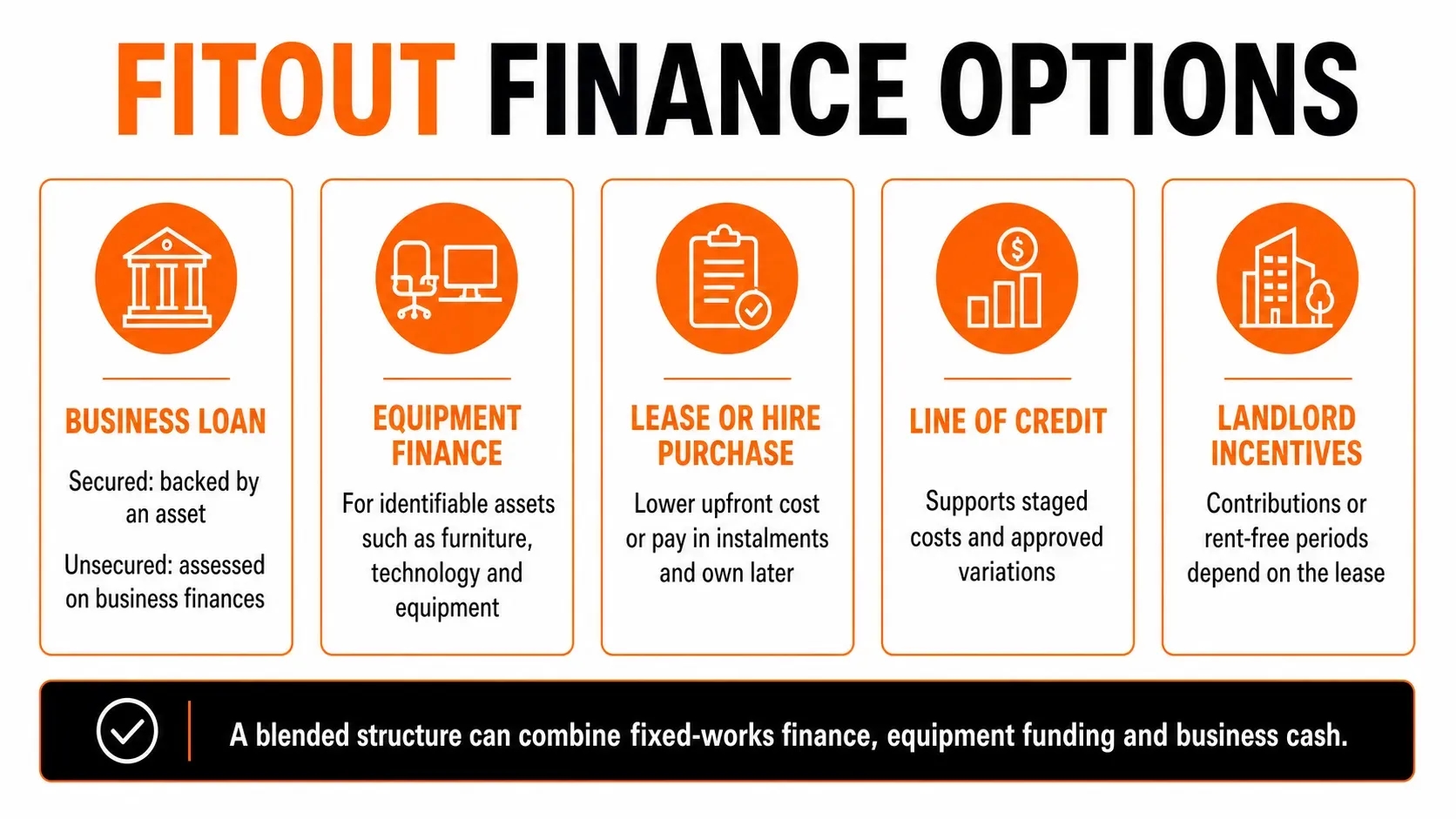
Businesses can fund a fitout through loans, equipment finance, hire purchase, credit facilities, landlord incentives or a blended structure.
A secured or unsecured business loan can provide one amount for the project. A secured loan uses an asset as collateral. An unsecured lender relies more on the business’s financial position.
Equipment finance can suit assets with a clear identity and value. Leasing can reduce the upfront payment for eligible equipment. Hire purchase lets the business pay for an asset in instalments and own it later.
A line of credit can support staged costs or approved variations. Interest usually applies to the amount used. It may not suit long-term building works if the rate or repayment structure is unsuitable.
Some tenants also negotiate landlord contributions or rent-free periods. These incentives can reduce the cash burden. However, they depend on the lease and should not be assumed.
A blended structure may work well. For example, a term loan could fund fixed works. Equipment finance could cover furniture and technology. Business cash could remain available for wages, stock and opening costs.
Australian Government guidance explains the main funding options available to businesses.
What will a lender assess?
Approval depends on more than the fitout quote. The lender will assess whether the business can meet repayments.
It may review:
🔸 Revenue, expenses, existing debts and cash flow
🔸 Recent financial statements and bank records
🔸 A business plan and future financial forecasts
🔸 The property lease and remaining lease term
🔸 The fitout scope, quote and payment schedule
🔸 Available security and any proposed guarantees
New businesses may face closer review because they lack trading history. Their owners may need stronger forecasts, more equity or suitable security.
The lender may also compare the finance term with the premises lease. A long loan can create risk when the lease expires sooner.
Prepare one clear information pack. Include the signed lease, detailed quote, approvals plan and realistic cash-flow forecast. The Australian Government lists common documents needed when applying for a business loan.
How do you build a finance-ready fitout budget?
Start with an itemised fitout proposal. A single total price gives a lender limited information. It also makes exclusions harder to identify.
Separate the budget into fixed building works, removable equipment and professional services. Add relocation expenses and working capital as separate categories.
Confirm whether each figure includes GST. The loan amount and progress claims must use the same basis. Otherwise, a temporary GST funding gap may appear.
The proposal should also identify:
🔸 Items supplied by the landlord
🔸 Work excluded from the contract price
🔸 Permit and certification responsibilities
🔸 Deposit and progress-payment dates
🔸 Rules for pricing and approving variations
🔸 A project-specific contingency allowance
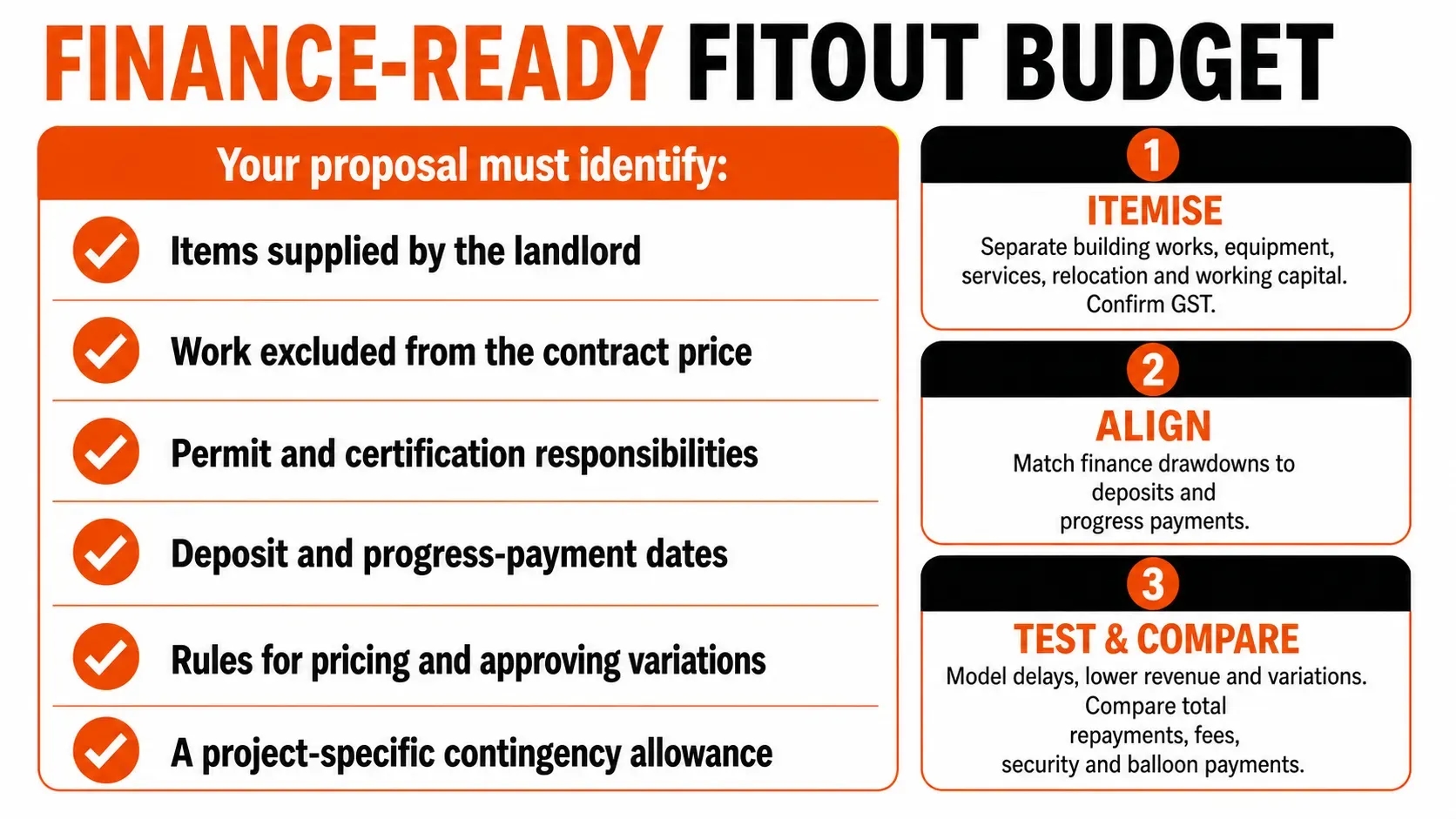
Build a finance-ready fitout budget by itemising costs, aligning drawdowns with payments, stress-testing forecasts and comparing total finance costs.
Match the finance drawdowns to the payment schedule. Confirm when the lender can release each amount. Builders and suppliers still expect payment when a claim becomes due.
Stress-test the forecast before borrowing. Model a delayed opening, lower early revenue and one unexpected variation. The business should still cover repayments, rent, wages and essential operating costs.
Finally, compare the total amount repayable. Review the interest rate, fees, loan term, security and exit costs. Check any balloon payment due at the end.
What risks and tax issues should you check?
Security can reduce a lender’s risk, but it increases yours. A lender may claim secured assets after a default. Some facilities may also require a director’s guarantee.
Do not assume a business loan carries the same protections as consumer credit. ASIC explains when the National Credit Code applies. Get independent advice before signing unfamiliar terms.
Tax treatment also varies across a fitout. Permanently fixed work may fall under capital works rules. Equipment and removable items may be depreciating assets.
Interest on business borrowing may be deductible when the funds support income-producing activities. The timing and value of deductions still depend on your circumstances.
Ask the contractor for an itemised invoice. Then ask a registered tax professional to classify the costs. The ATO provides further guidance about business premises and fitout costs. A tax deduction does not remove the repayment obligation.
Melbourne businesses should also check approvals early. Internal fitout work may require planning or building permits. Landlord approval may apply even when council approval does not.
Business Victoria recommends checking permits, zoning and approvals with the relevant local council.
An approval delay can increase rent, finance and storage costs. It can also shift the planned opening date.
Plan the fitout and funding together
Turnkey fitout finance is possible for many Australian businesses. The strongest approach connects the design, price, approvals, payments and finance from the beginning.
Confirm what the facility covers before signing the building contract. Keep enough working capital for operations and test the repayments against delays.
Finex Fitouts can help Melbourne businesses develop an itemised scope and coordinated delivery plan. A clear proposal can also support discussions with your accountant, adviser and lender.
Frequently Asked Questions
Quick answers about financing a turnkey commercial fitout in Australia.
Can you finance the full cost of a turnkey fitout in Australia?
Yes, many Australian businesses can finance a turnkey fitout, subject to lender approval. A business loan may cover design, construction and project management. Equipment finance may cover furniture, technology, appliances or machinery. Some projects need several funding sources because one product may not cover every cost.
What documents are needed to apply for fitout finance?
Lenders may request financial statements, bank records, cash-flow forecasts and a current business plan. They may also need your premises lease and an itemised fitout quote. A clear payment schedule, approvals plan and list of exclusions can help the lender assess the project.
Which finance option is suitable for a commercial fitout?
The suitable option depends on the costs, cash flow and available security. A term loan may suit fixed construction work. Equipment finance may suit removable business assets. A line of credit can support staged expenses or approved variations. Compare the total repayment, fees, security and loan term before deciding.
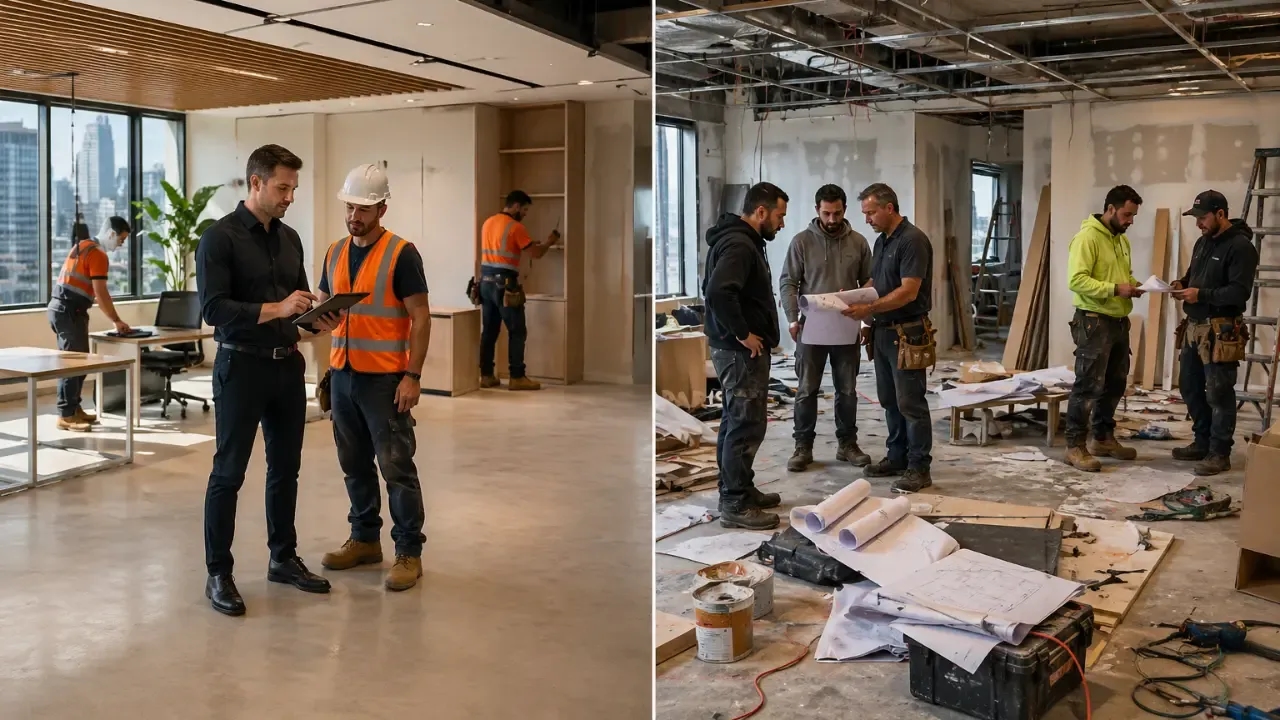
Compare turnkey fitout vs traditional fitout in Melbourne. Learn cost, timeline, and risk differences to choose the right option for your business.
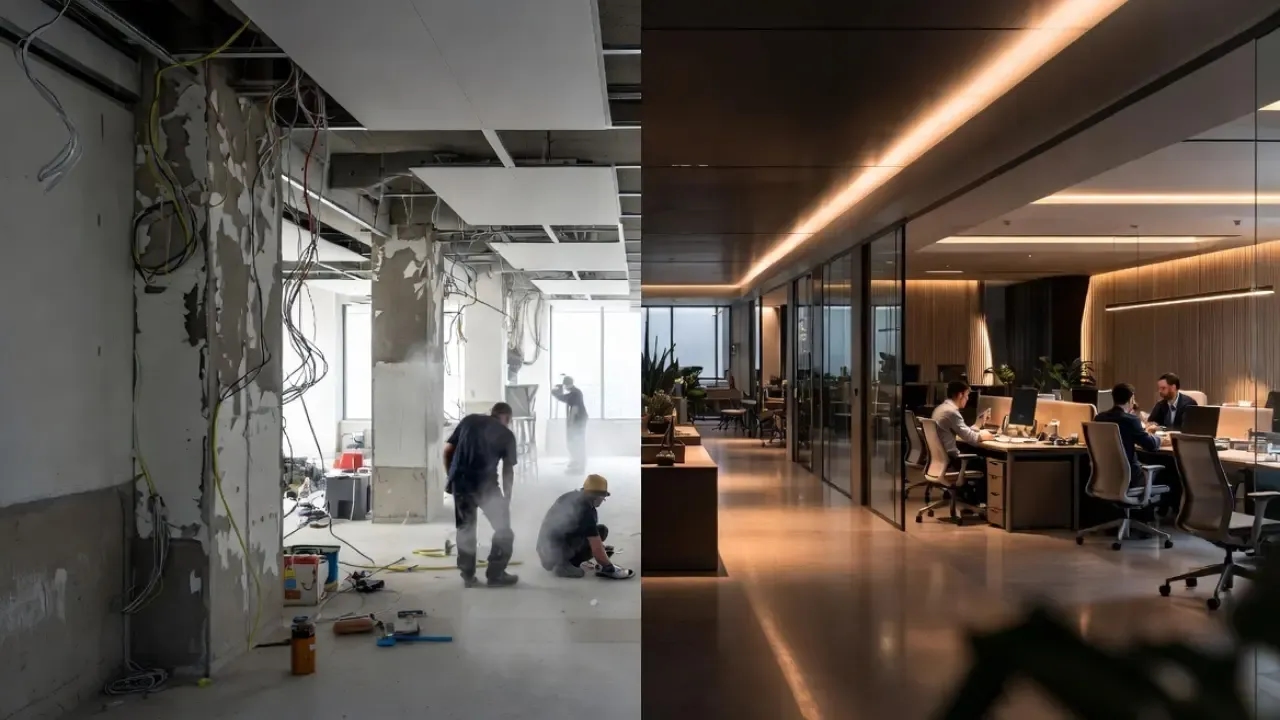
Confused about office renovation vs fitout? Learn costs, timelines, and how to choose the right option for your business.