
Is Turnkey Fitout Faster Than Traditional Construction?
Date Published
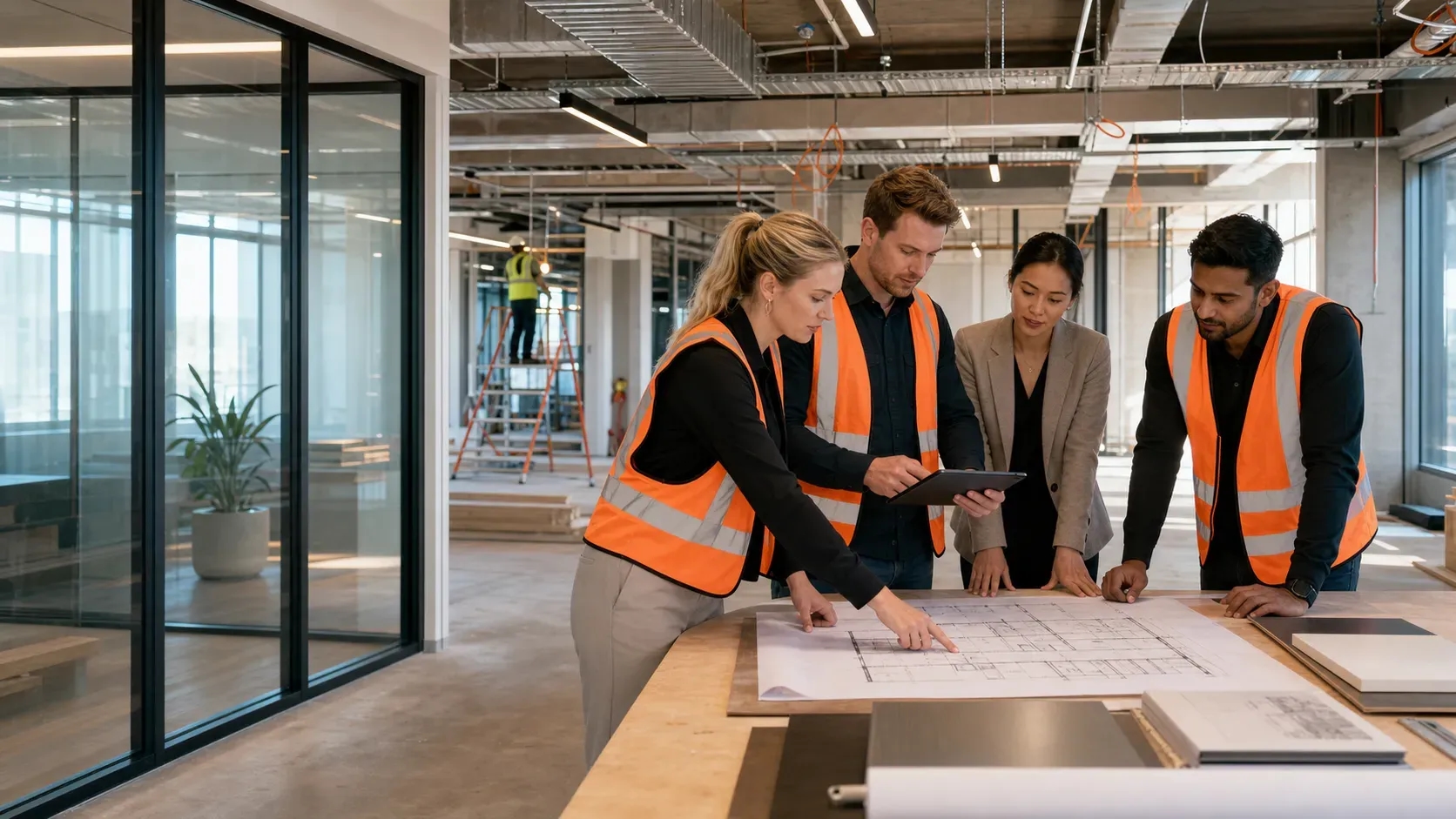
A turnkey fitout is usually faster because one team can coordinate design, procurement, construction, and handover.
For a Melbourne business, every extra project week can affect rent, revenue, staff, and customer service.
A traditional process often completes the design before tendering the work. A turnkey team can plan several stages together. This overlap often creates a shorter overall program.
However, a turnkey contract does not make every delay disappear. Approvals, late decisions, site conditions, and unavailable materials can still affect completion.
Fast Facts
- Usually faster: Turnkey delivery can overlap design, pricing, procurement, and construction planning.
- One delivery team: Fewer contractual handovers can make decisions and issue resolution quicker.
- No fixed saving: Scope, access, approvals, materials, and client decisions still control the completion date.
- Compare total time: Include design, tendering, permits, procurement, construction, inspections, and handover.
- Plan early: Confirm the brief, responsibilities, long-lead items, landlord reviews, and permit requirements before work starts.
What Is the Difference Between Turnkey and Traditional Delivery?
A turnkey fitout places the main delivery tasks with one provider. These tasks may include design, cost planning, approvals coordination, procurement, construction, and handover.
Traditional delivery usually separates the designer and builder. The client develops the design first, obtains tenders, appoints a builder, and then starts construction.
The basic difference is simple:
🔸 Turnkey delivery uses one integrated team and allows some activities to overlap.
🔸 Traditional delivery uses separate stages and usually has more contractual handovers.
🔸 Both methods must meet the same applicable building and safety requirements.
Traditional delivery can give clients more independent design control before pricing. However, the tender stage adds time between design and construction.
Why Can a Turnkey Fitout Finish Faster?
The main advantage comes from earlier coordination. Designers, estimators, project managers, and construction specialists can review the project together.
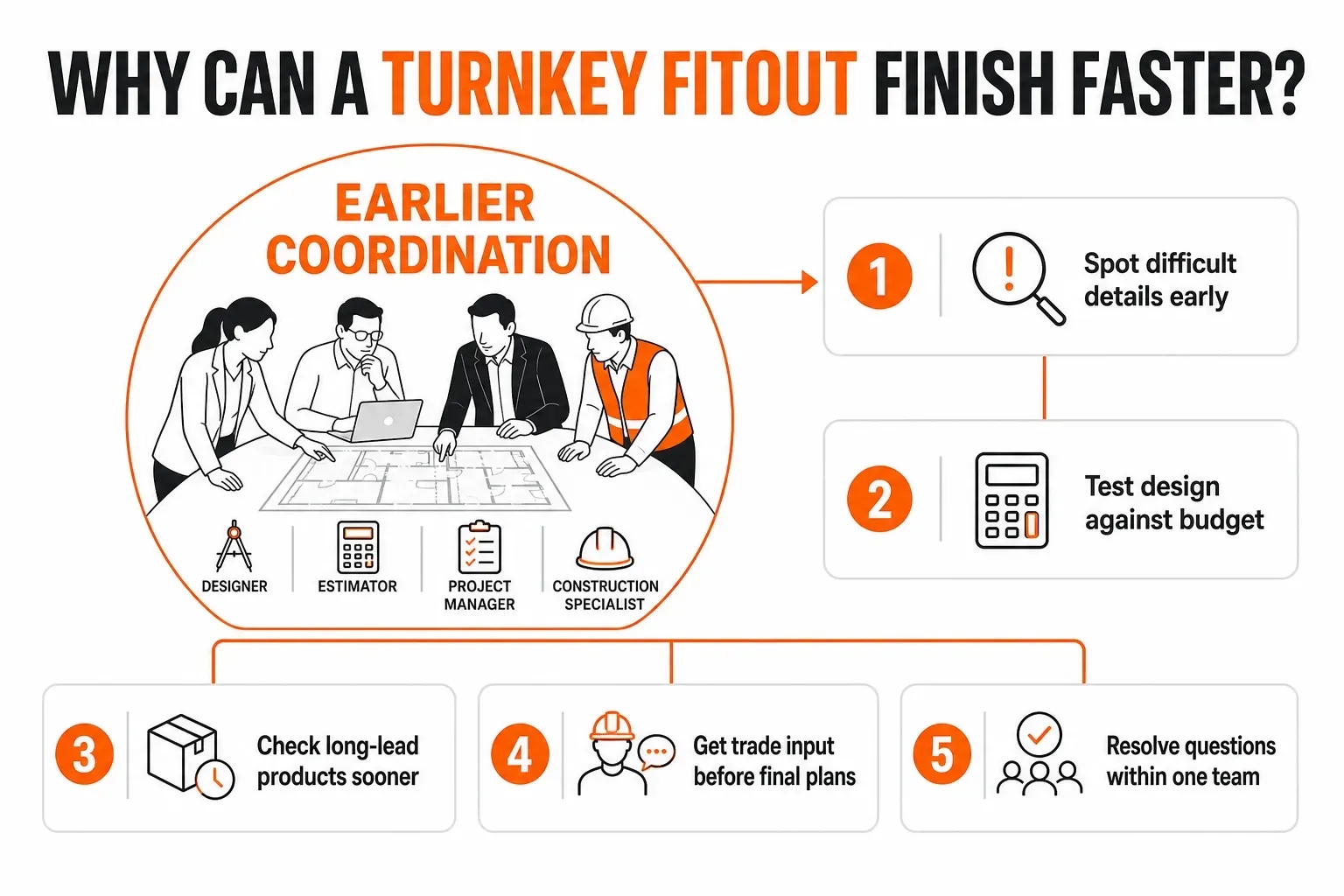
Early coordination between designers, estimators, project managers, and construction specialists can help a turnkey fitout progress faster.
Consider a Melbourne office that needs custom joinery and changes to its air-conditioning layout. Under traditional delivery, trade input may arrive after tendering.
A turnkey team can check those items while developing the design. It may then order approved materials earlier and avoid redesign during construction.
Research by the Construction Industry Institute compared delivery results across 351 United States building projects. It supports the wider principle that project delivery methods influence schedule performance.
However, businesses should not treat an overseas percentage as a guaranteed local saving. Project scope, approvals, access, and team performance still shape the result.
What Can Still Delay a Turnkey Fitout?
Turnkey delivery improves coordination, but it cannot control every dependency. A weak brief can cause repeated design changes and late purchasing decisions.
Common delay risks include:
🔸 An incomplete scope or uncertain budget.
🔸 Slow client reviews and approvals.
🔸 Changes after drawings or orders are approved.
🔸 Restricted loading, lift, or working-hour access.
🔸 Unknown electrical, hydraulic, or mechanical conditions.
🔸 Custom joinery, imported finishes, or specialist equipment.
🔸 Landlord review requirements.
🔸 Planning, building, or occupancy approvals.
Victorian businesses may need planning or building approval for commercial renovations and internal fitout changes. The exact requirement depends on the property and proposed work.
Some internal work can also affect essential safety measures. Examples include fire sprinklers, emergency lighting, exit paths, and accessible circulation.
A change in how a space will be used may also affect its NCC classification. A clinic, shop, office, or warehouse area can have different compliance requirements.
These issues should be reviewed early. An integrated provider can coordinate information and applications, but it cannot bypass a statutory assessment.
How Should You Compare the Two Programs?
Do not compare construction periods alone. Compare the full calendar period from the first brief to practical occupation.
A traditional builder may offer a shorter site program after receiving complete drawings. That figure may exclude months spent on design, tendering, clarification, and builder appointment.
Ask each provider for a program that includes:
🔸 Briefing and site investigation.
🔸 Concept and detailed design.
🔸 Landlord and authority reviews.
🔸 Building permit documentation.
🔸 Trade pricing and procurement.
🔸 Site establishment and construction.
🔸 Inspections, commissioning, and handover.
The program should identify assumptions and dependencies. It should also name the person responsible for each decision.
Check the required turnaround for layout approval, finishes, equipment, and variations. A three-day client decision can protect a milestone. A three-week delay can affect trades and deliveries.
The program should also list long-lead items. Early selections create more time for approved alternatives when the preferred product is unavailable.
When Is Turnkey the Faster Choice?
Turnkey delivery tends to work well when the business wants one team to manage the entire path. It also suits projects with a firm opening or lease date.
The strongest conditions include:
🔸 A clear operational brief.
🔸 A realistic and approved budget.
🔸 One authorised client decision-maker.
🔸 Early access for surveys and investigations.
🔸 Prompt landlord and authority engagement.
🔸 Flexible material choices where suitable.
🔸 Controlled changes after design approval.
Traditional delivery may suit a client who wants to complete an independent design before selecting a builder. It may also suit formal tendering or specialist architectural requirements.
In either model, speed should not replace careful planning. A rushed brief can create changes, rework, and operational problems after opening.
Before appointing a provider, confirm what “turnkey” includes. Check responsibility for design, approvals, surveys, services, procurement, permits, commissioning, and defects.
Plan a Faster Melbourne Fitout
A turnkey fitout is often faster than traditional construction because it reduces sequential stages and coordination gaps.
The benefit becomes strongest when the scope is clear and decisions arrive on time. Early approvals and procurement planning also protect the program.
Finex Fitouts can review your Melbourne premises, timing, and operational requirements before work starts. An early project review can identify approval, access, and procurement risks that may affect your opening date.
Frequently Asked Questions
Quick answers about turnkey fitout timelines, delays, and project planning in Melbourne.
Is a turnkey fitout faster than traditional construction?
A turnkey fitout is usually faster because design, pricing, procurement, and construction planning can overlap. Traditional delivery often completes these stages separately. The actual saving depends on the scope, approvals, site access, material lead times, and client decisions.
What can delay a turnkey fitout in Melbourne?
Common delays include late design changes, landlord reviews, permit requirements, restricted building access, concealed site conditions, and long-lead products. Early site investigations and prompt decisions can reduce these risks. Required approvals must still be completed before affected work begins.
How should businesses compare turnkey and traditional fitout timelines?
Compare the entire period from briefing to occupation, not only the construction stage. Include design, tendering, landlord reviews, permits, procurement, inspections, commissioning, and handover. Ask each provider for a milestone program that clearly identifies assumptions, responsibilities, and long-lead items.
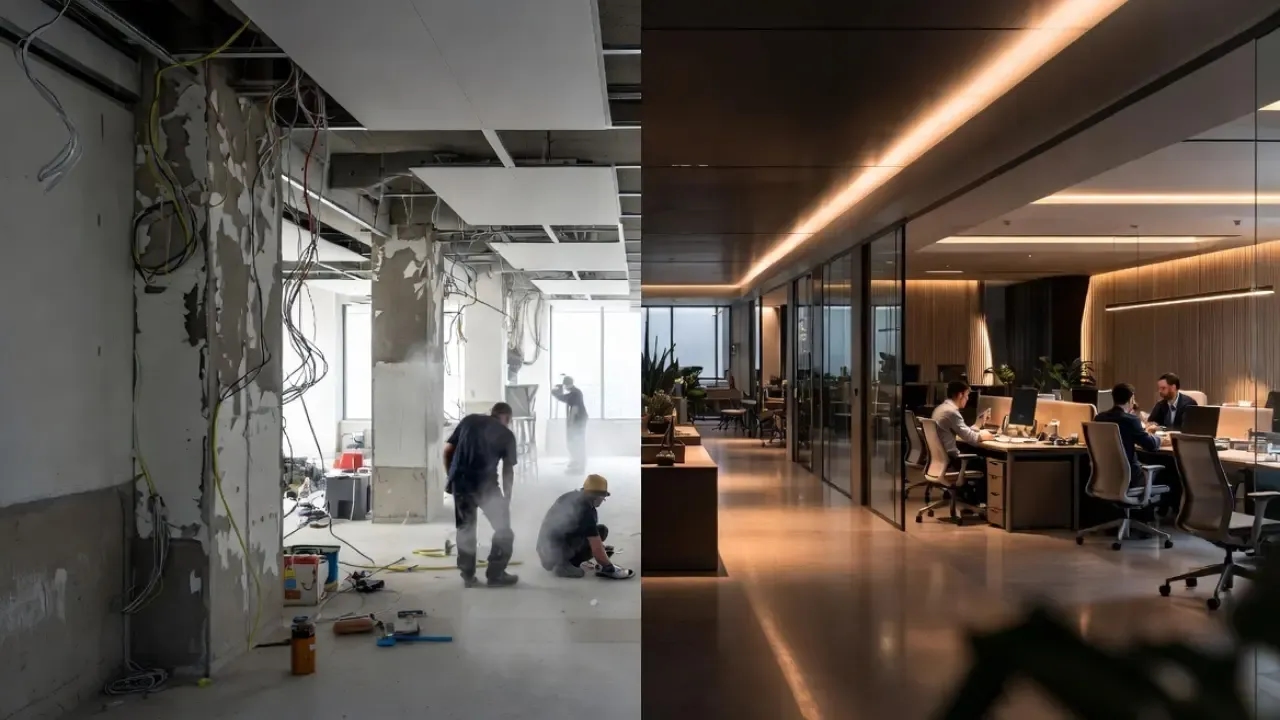
Confused about office renovation vs fitout? Learn costs, timelines, and how to choose the right option for your business.
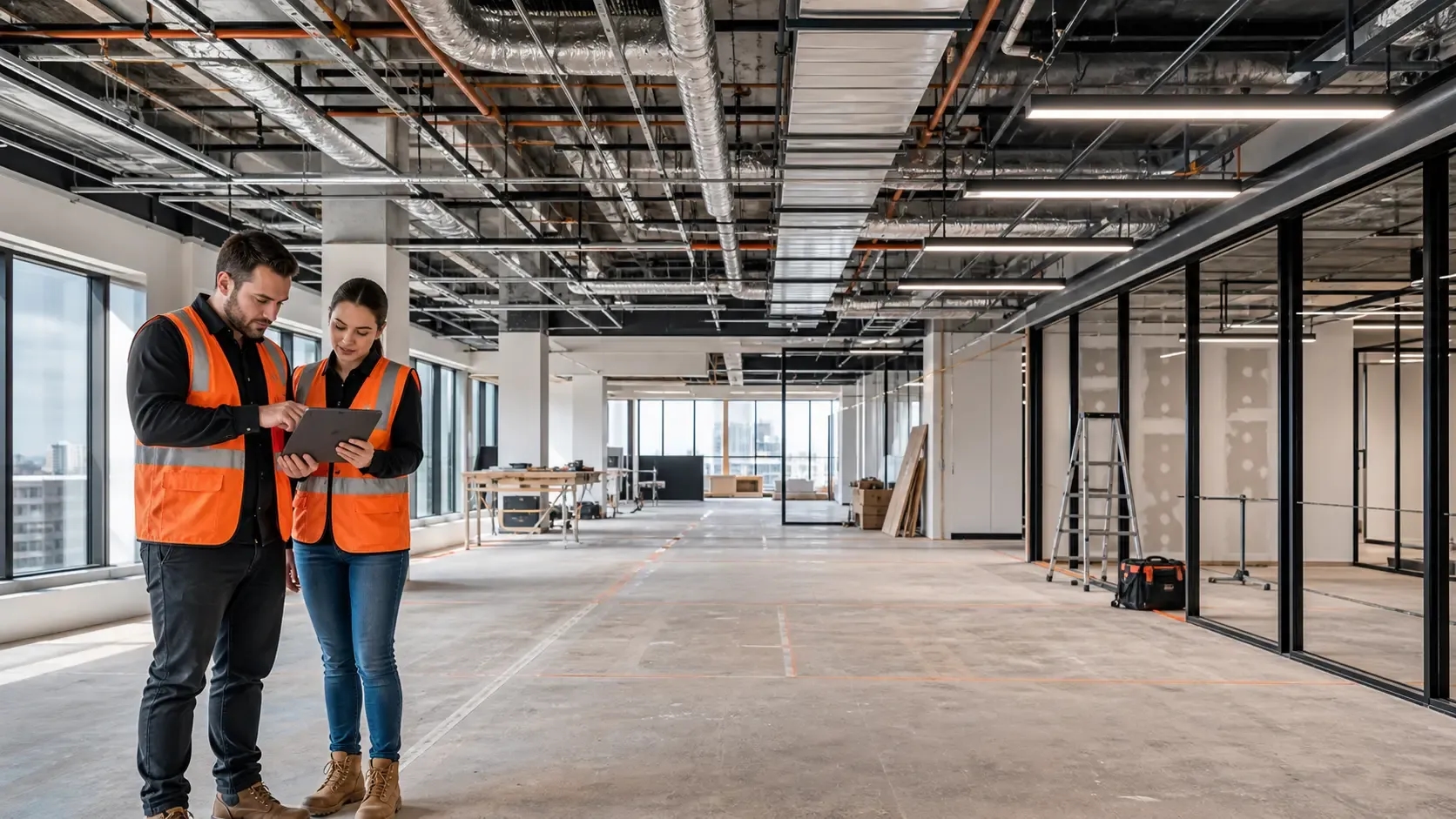
Learn how Melbourne businesses can reduce fitout costs by reusing existing infrastructure safely, avoiding delays, and planning smarter.