
Design and Construct vs Turnkey Fitout: Which Project Delivery Model Is Right for Your Space?
Author
Shawn Vandersay
Date Published
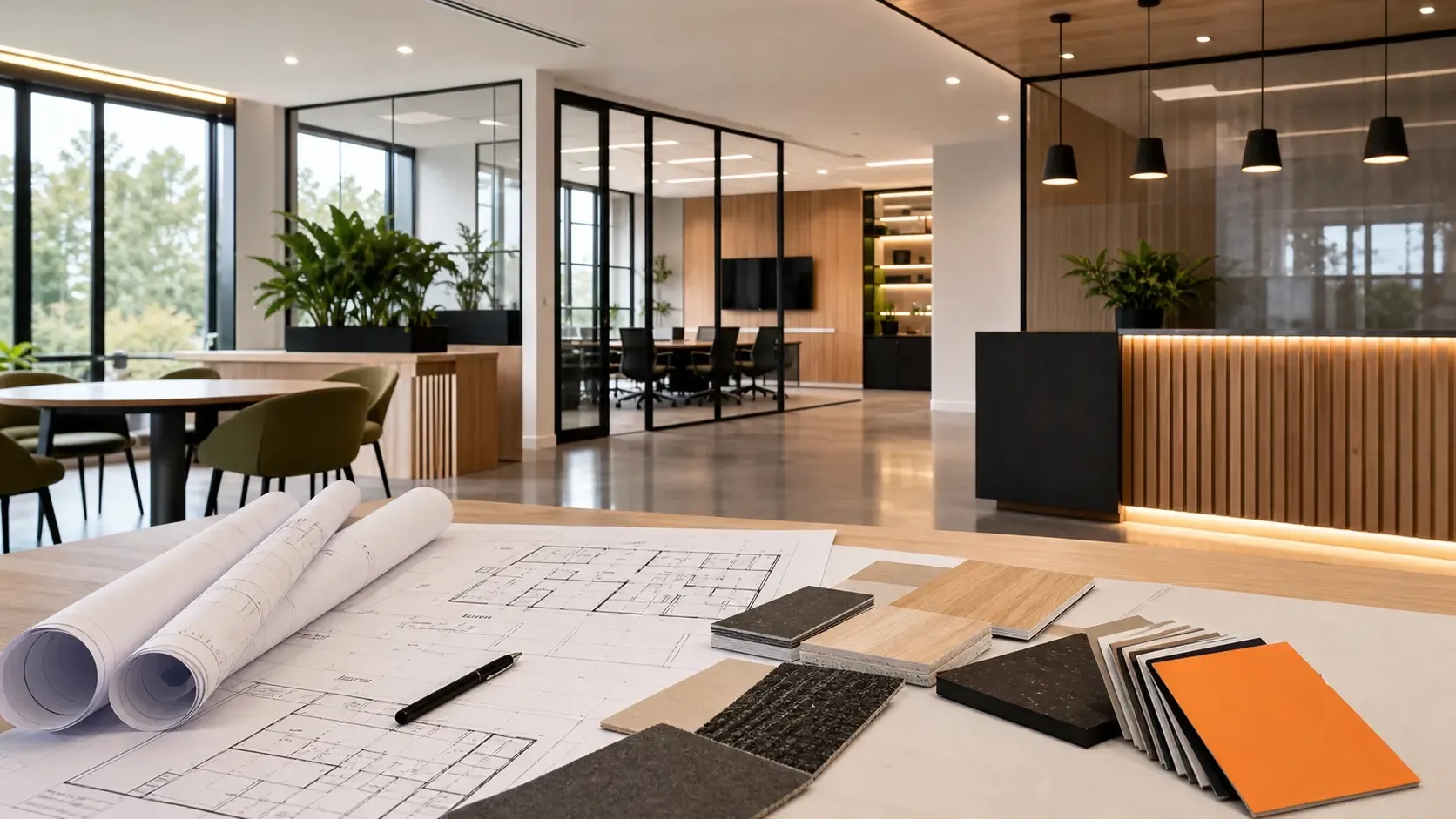
Design and construct means one provider manages both the design and building work. You still have input during planning, layout, finishes, and budget choices.
A turnkey fitout is usually a more complete package. The provider manages the process from early planning to handover, so the space is ready to use.
The terms can overlap. Many turnkey fitouts use a design and construct process. The key difference is how much detail, control, and decision-making support you expect.
🔸 Design and construct gives you design input and build support under one process.
🔸 Turnkey fitout gives you a more complete managed package.
🔸 Both models aim to reduce the need for multiple separate contractors.
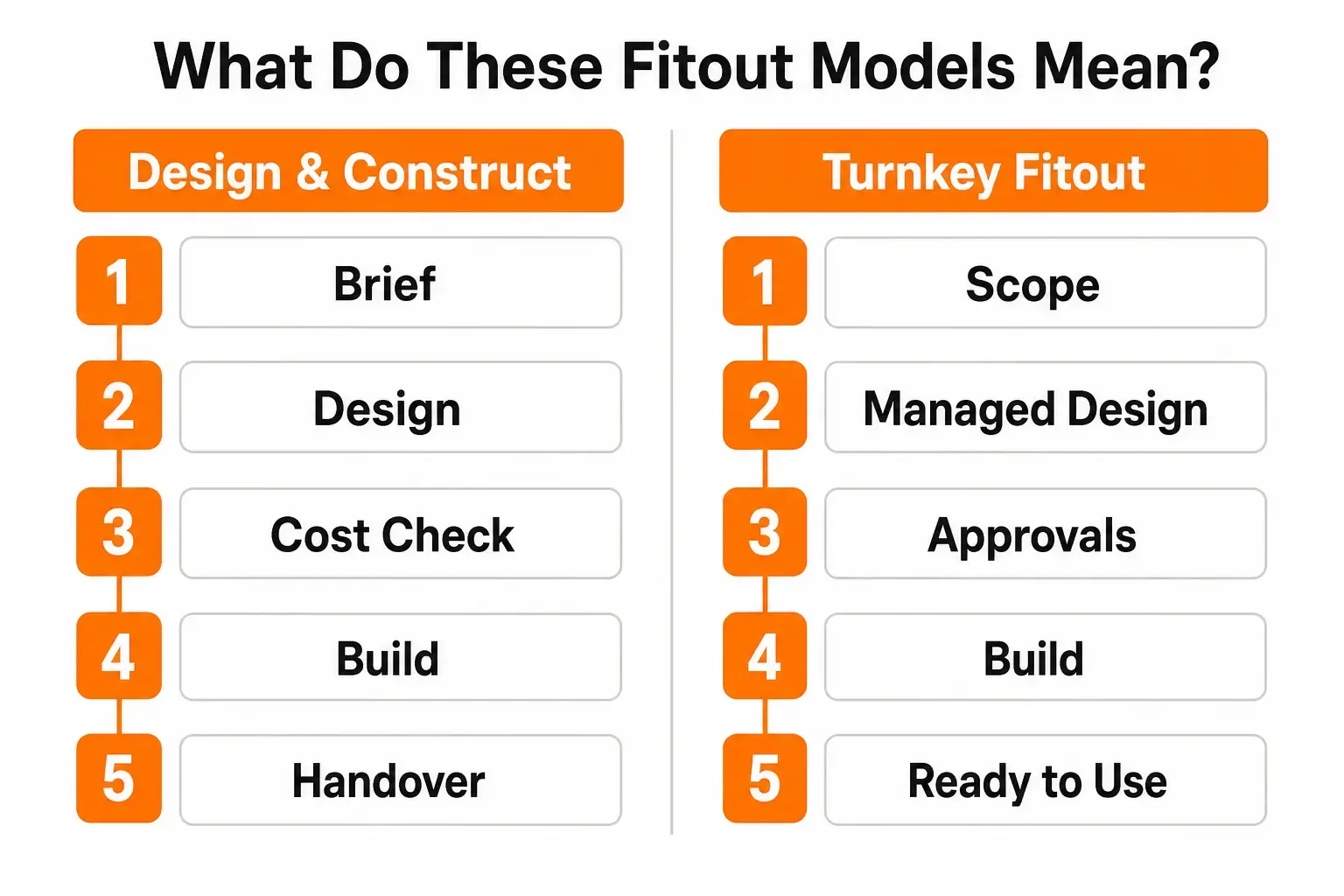
A simple comparison of design and construct and turnkey fitout project delivery models.
Fast Facts
- Design and construct: Best when you want input into layout, finishes, budget choices, and build planning.
- Turnkey fitout: Best when you want one provider to manage most details through to handover.
- Main difference: The choice comes down to control, speed, scope clarity, and responsibility.
- Melbourne factor: Permits, landlord approval, compliance, and site access can affect cost and timeline.
- Smart next step: Compare quotes by inclusions, exclusions, approvals, variations, and handover support.
The Main Difference Is Control
Design and construct gives you more room to shape the result. You can work through layout options, materials, staged budgets, and practical trade-offs before construction starts.
Turnkey fitout suits businesses that want one team to manage most of the process. It reduces day-to-day coordination and can make decisions easier.
The single contract for both design and construction is a common feature of design-build delivery. For commercial fitouts, this can give business owners one main point of contact.
🔸 Choose design and construct if you want more say in the layout and finishes.
🔸 Choose turnkey if you want a simpler path from planning to handover.
🔸 Ask who is responsible for design changes, trade coordination, and defects.
Cost, Timeline, and Risk
Cost depends on scope, services, finishes, building condition, permits, and access. A simple office refresh will not cost the same as a clinic, restaurant, warehouse, or showroom fitout.
In Victoria, some building work may need a planning permit, building permit, or both. The Building and Plumbing Commission explains when a building permit is required.
Permit applications also need a clear cost of building work. This includes labour and materials. The BPC also explains how to calculate the cost of building work for permit purposes.
Design and construct can reduce risk by testing cost early. Turnkey can reduce risk by giving one provider responsibility for a broader package.
🔸 Check if design, documentation, approvals, and project management are included.
🔸 Confirm how variations will be priced and approved.
🔸 Allow time for landlord approval, permits, inspections, and service upgrades.
🔸 Ask how the builder will reduce downtime during the fitout.
When Design and Construct Works Better
Design and construct works well when your space needs careful planning. This may include offices with hybrid work needs, clinics with patient flow, or warehouses with mezzanine and storage requirements.
It is also useful when you want to compare options before locking in the final design. You can balance cost, workflow, compliance, and future growth.
This model suits business owners who want clear advice, but still want a say in key decisions.
🔸 You have a complex layout or special workflow needs.
🔸 You want design advice before committing to the full build.
🔸 You need staged works to keep part of the business open.
🔸 You want clear links between design choices and construction cost.
Related Insight
If you are comparing fitout delivery models, it also helps to understand what a Category A vs Category B fitout means before planning your project scope.
When Turnkey Fitout Works Better
Turnkey fitout works well when you want a ready-to-use space with less daily management. It can suit retail shops, showrooms, smaller offices, or businesses moving under time pressure.
It can also help when you do not want to coordinate designers, trades, suppliers, and site access yourself.
The main risk is assuming everything is included. Always check the scope, exclusions, approvals, furniture, services, defects process, and handover items.
🔸 You want one provider to manage most of the fitout process.
🔸 You have a clear business deadline or lease start date.
🔸 Your fitout is fairly standard and does not need many design revisions.
🔸 You want fewer meetings with separate consultants and trades.
Plan Your Fitout With Less Stress
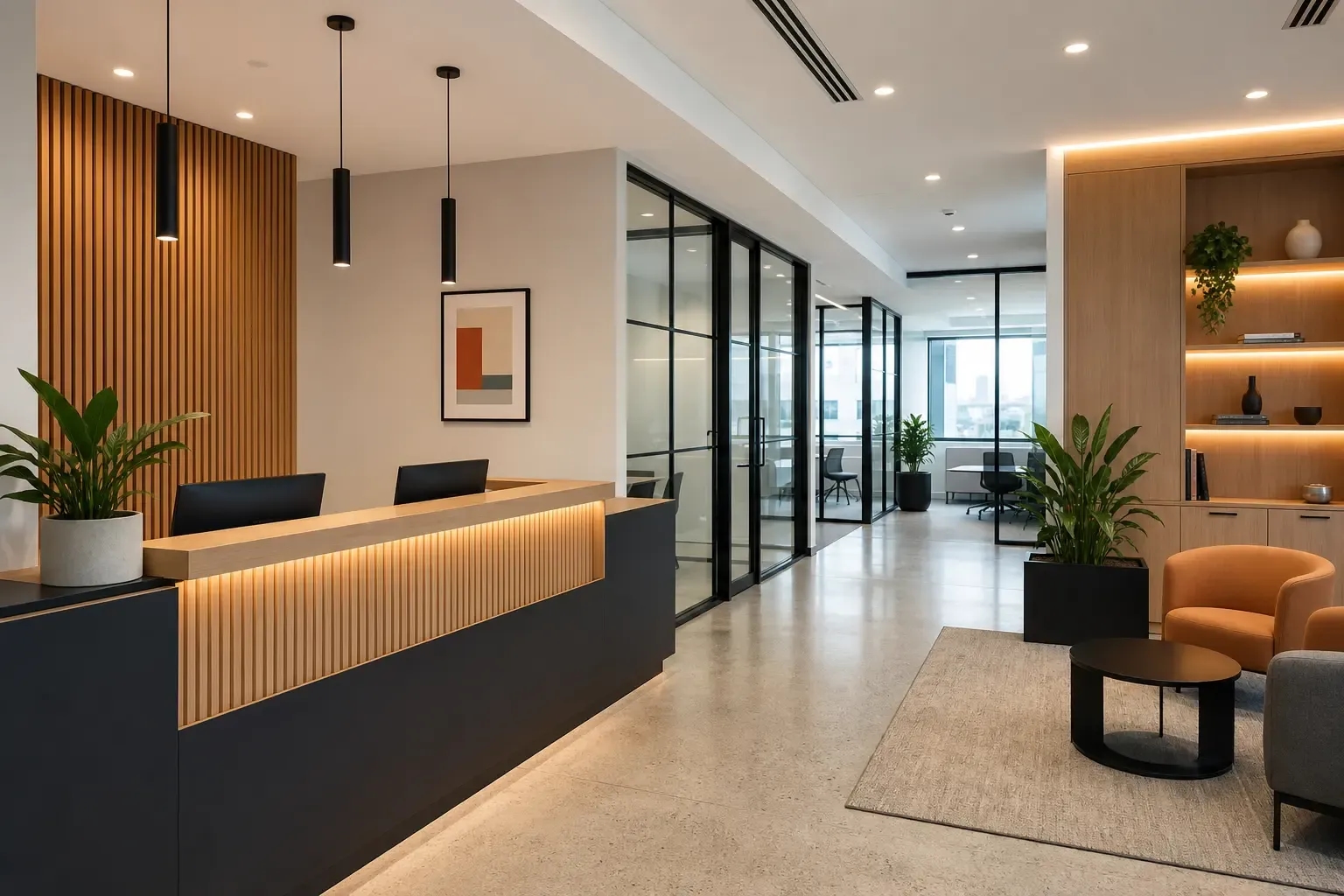
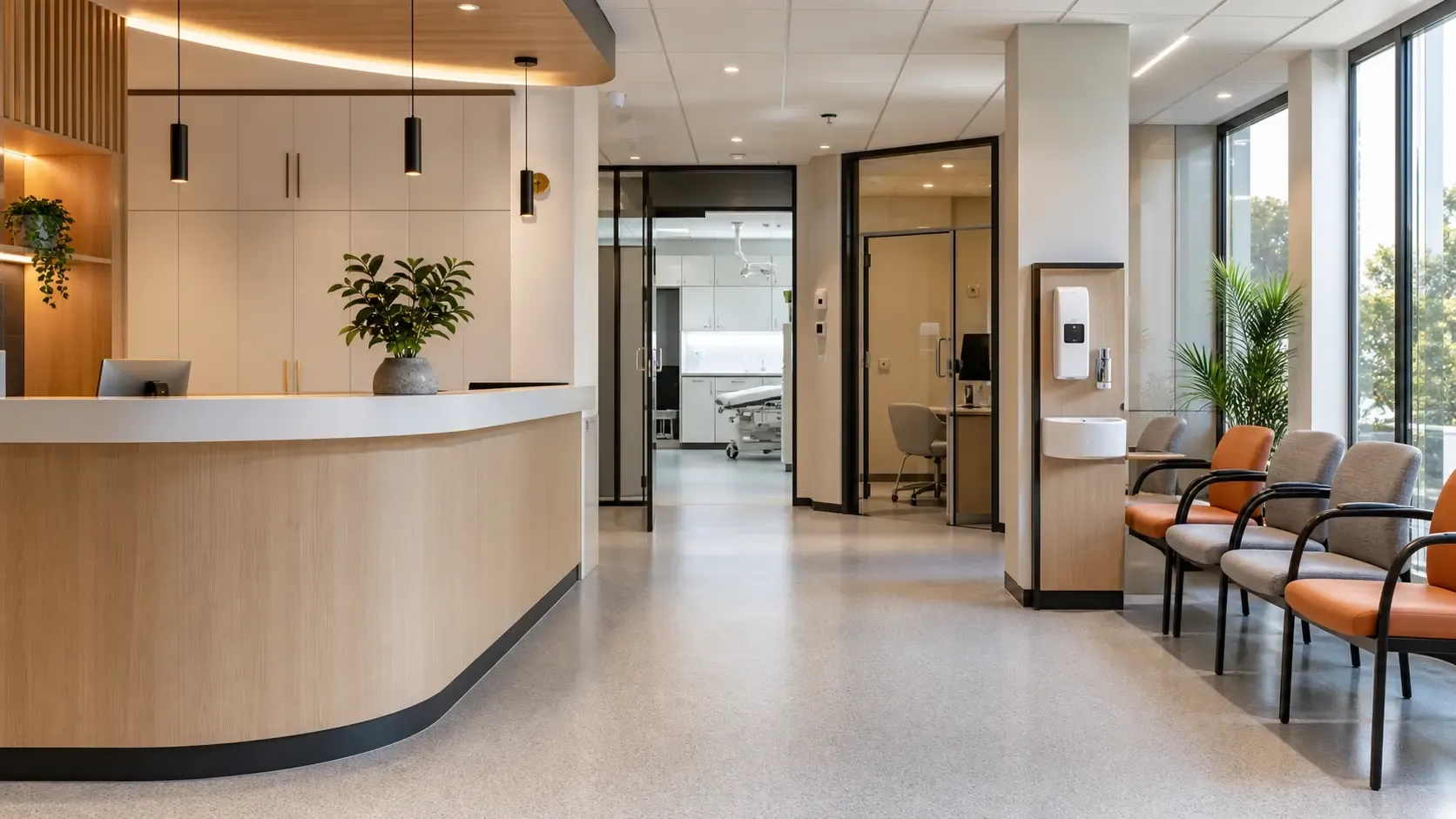
A completed commercial fitout with clean finishes helps create a professional space that is ready for use.
Before choosing a model, ask what your business needs most. Do you need speed, control, price clarity, or a fully managed process?
Ask for a clear scope before comparing quotes. Check who manages permits, landlord requirements, site safety, variations, defects, and final handover.
Site safety also matters. WorkSafe Victoria explains the requirements for construction induction training in Victoria.
Finex Fitouts helps Melbourne businesses plan commercial fitouts with clear design, construction, and project management support. A clear delivery model can help you avoid delays and make better budget decisions.
Frequently Asked Questions
Is design and construct the same as turnkey fitout?
Not always. Design and construct means one provider manages both design and building work. A turnkey fitout usually goes further by managing more of the process through to a ready-to-use space.
Which fitout model gives better cost control?
Design and construct can give strong cost control when pricing is tested during design. Turnkey can also help if the scope, exclusions, approvals, and variation process are clearly documented before work starts.
Which option suits a Melbourne commercial fitout?
Design and construct suits tailored offices, clinics, warehouses, and complex spaces. Turnkey fitout suits businesses that want one provider to manage most details, especially when speed and simple coordination matter.
Learn real medical clinic fit-out costs in Melbourne, including timelines, hidden expenses, and compliance risks for 2026.
Learn medical clinic fitout requirements in Australia, including costs, permits, layout, compliance, and Melbourne planning tips.