
Turnkey Fitout vs Traditional Fitout: Which Option Saves Time and Cost in Melbourne?
Author
Shawn Vandersay
Date Published
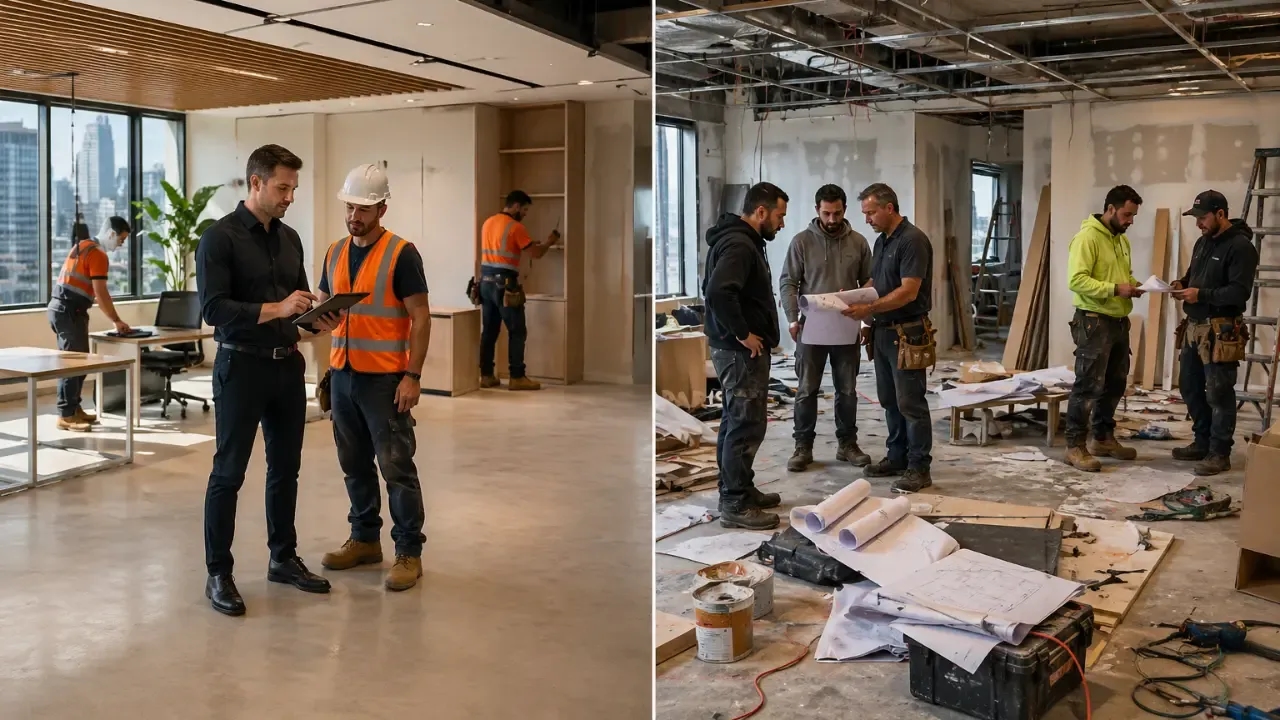
Most Melbourne businesses don’t blow budgets because of price. They blow them because of poor coordination.
Many projects start with a low quote. But delays, rework, and unclear scope increase the final cost. The fitout model you choose plays a major role in this outcome.
Poor planning often leads to last-minute changes, which increase labour and material costs. Many owners underestimate how much coordination affects the final result. Choosing the right model early helps avoid these hidden issues.
Fast Facts
- Turnkey fitouts: One team manages design, approvals, construction, and handover.
- Traditional fitouts: Separate contractors can increase coordination risks and delays.
- Cost control: Clear scope and early planning help reduce unexpected variations.
- Melbourne projects: Permits, compliance, and landlord approvals should be checked early.
What Is a Turnkey Fitout vs Traditional Fitout?
Before comparing cost and time, you need to understand how each model works.
Turnkey Fitout
🔸 Design, approvals, and construction sit under one contract
🔸 One project manager handles everything
🔸 The space is ready to use at handover
This model offers clear responsibility and fewer gaps between stages.
Turnkey works well for businesses that want a simple process. It reduces confusion because one team handles all decisions. This helps avoid delays caused by miscommunication between designers and builders.
Traditional Fitout
🔸 Designers, builders, and trades work separately
🔸 The client manages coordination
🔸 Each contractor has a different scope
This structure gives more control but increases complexity.
Traditional fitouts suit owners who want more input in design. However, they require time and experience to manage different teams. Without strong coordination, small mistakes can turn into major delays.
Quick Comparison: Time, Cost, and Risk
If you want a fast answer, here is the key difference.
🔸 Cost control: Turnkey is more predictable
🔸 Timeline: Turnkey is usually faster
🔸 Flexibility: Traditional offers more control
🔸 Risk: Traditional has higher coordination risk
🔸 Effort: Turnkey requires less owner involvement
For most Melbourne businesses, time and risk matter as much as cost.
This comparison helps business owners make quick decisions. If your priority is speed and certainty, turnkey is often the better option. If you value flexibility and customisation, traditional may be suitable.
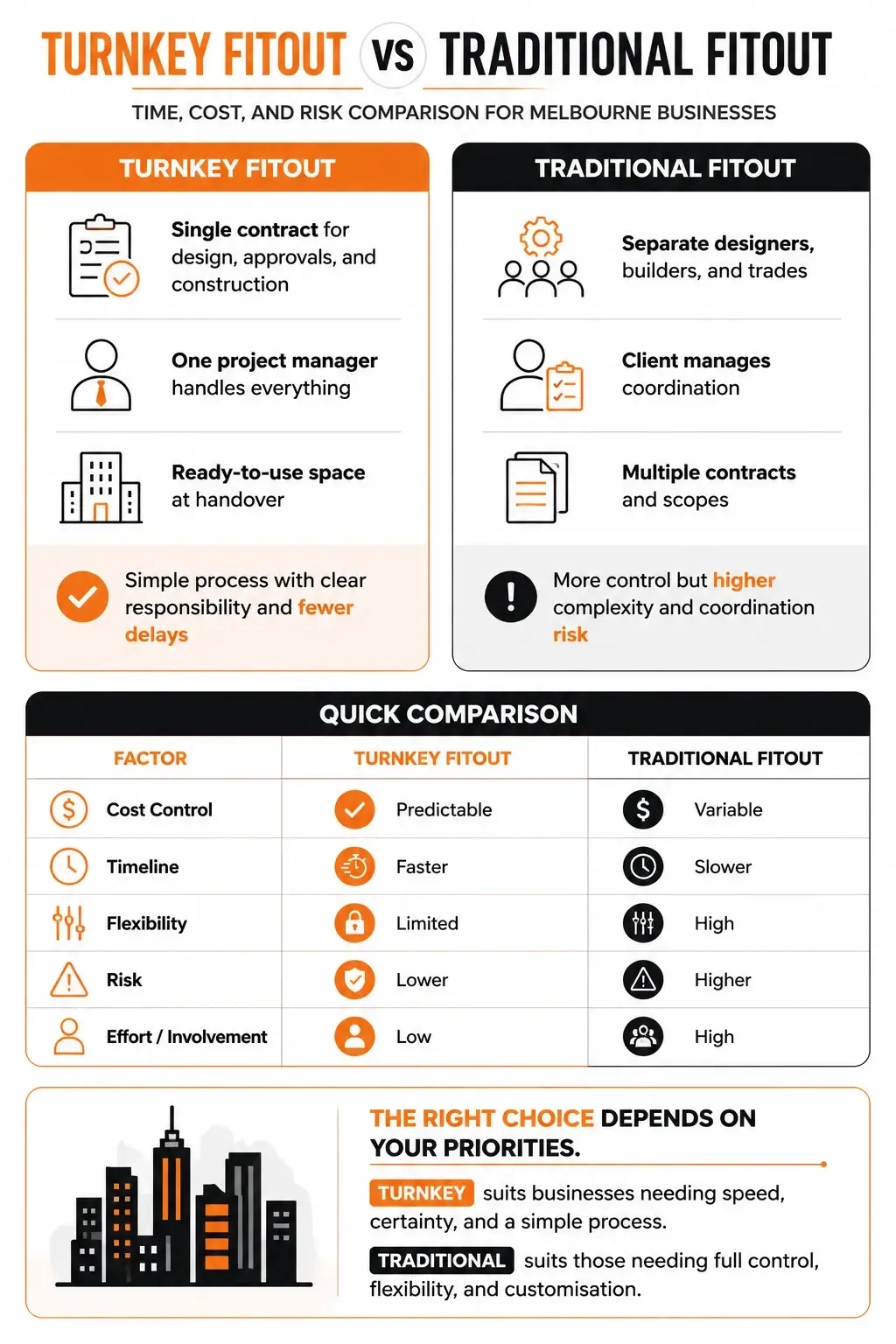
A clear comparison of turnkey and traditional fitouts, helping Melbourne businesses understand cost, timeline, and risk differences before starting a project
Real Cost Breakdown in Melbourne
Many business owners focus only on the initial quote. The real cost depends on what happens during the project.
Typical Fitout Costs
🔸 Basic fitouts: $800 to $1,200 per sqm
🔸 Mid-range: $1,200 to $1,800 per sqm
🔸 Premium: $1,800 to $2,800+ per sqm
Average office fitouts can reach around $2,500 per sqm depending on location and scope.
Costs also depend on building condition and services upgrades. Older buildings often require electrical or fire system changes. These upgrades can add significant cost if not planned early.
Why Traditional Fitouts Often Cost More
🔸 Design changes after pricing
🔸 Variations during construction
🔸 Gaps between contractor responsibilities
🔸 Extended rent during delays
Scope creep alone can increase costs significantly across the project lifecycle.
These hidden costs are common when scope is unclear. Many businesses only discover missing items after construction begins. This leads to variation charges and budget stress.
How Turnkey Fitouts Control Costs
🔸 One clear scope from the beginning
🔸 Fewer variations during construction
🔸 Better alignment between design and build
This leads to stronger cost predictability, even if the initial quote is slightly higher.
Turnkey also reduces duplicated costs. You avoid paying separate consultants and contractors for similar work. This makes budgeting easier and reduces financial surprises.
Timeline Comparison: Where Delays Happen
Time delays often cost more than construction itself. Rent, salaries, and lost revenue continue during delays.
Typical Project Timelines
🔸 Small fitouts: 4 to 6 weeks
🔸 Medium fitouts: 6 to 12 weeks
🔸 Large projects: 12+ weeks
Planning and approvals can add several weeks before construction begins.
Timelines can change based on complexity and approvals. Retail and hospitality projects often need extra time for compliance checks. Early planning helps avoid last-minute delays.
Why Traditional Fitouts Face More Delays
🔸 Poor coordination between trades
🔸 Late design changes
🔸 Slow approvals and landlord reviews
🔸 Delayed material orders
Each contractor works on their own schedule. This creates bottlenecks.
Delays often happen when one trade waits for another to finish. This idle time increases labour costs and extends project duration.
Why Turnkey Fitouts Are Faster
🔸 Integrated planning from day one
🔸 Early material procurement
🔸 One project manager controlling the timeline
This reduces downtime and keeps the project moving.
Turnkey teams plan the sequence of work more efficiently. They reduce waiting time between trades, which helps complete projects faster.
Permits and Compliance in Melbourne
Ignoring compliance early can stop a project completely.
Common Requirements
🔸 Planning and building permits
🔸 Fire safety and accessibility compliance
🔸 National Construction Code requirements
🔸 Occupancy approvals
Related Insight
If you are still comparing project models, this guide on what is a turnkey fitout explains the costs, timelines, and common mistakes Melbourne businesses should understand before starting.
Final Verdict: Which Option Saves Time and Cost?
Turnkey fitouts usually save time and reduce risk. They offer better coordination and clearer pricing.
Traditional fitouts can work for experienced teams. But they require strong management and carry higher risk.
For most Melbourne businesses, the real saving comes from avoiding delays and rework, not from choosing the lowest quote.
Plan Your Fitout Without Delays or Budget Stress
A clear plan can prevent most fitout problems.
Work with a team that understands Melbourne regulations and timelines. Make sure your scope, budget, and approvals are clear from the start.
Finex Fitouts helps Melbourne businesses manage fitouts from design to completion. This reduces delays, improves cost control, and simplifies the entire process.
Frequently Asked Questions
Is a turnkey fitout cheaper than a traditional fitout in Melbourne?
A turnkey fitout is not always cheaper upfront, but it often gives better cost control. One team manages design, approvals, construction, and handover, which can reduce variations, rework, and coordination delays.
Which fitout option is faster for Melbourne businesses?
Turnkey fitouts are usually faster because one project manager controls the workflow. Traditional fitouts can take longer when separate designers, builders, trades, landlords, and approval teams are not aligned.
When should a business choose a traditional fitout?
A traditional fitout can suit businesses that want more design control and already have trusted consultants. It works best when the timeline is flexible and the owner can manage multiple contractors confidently.
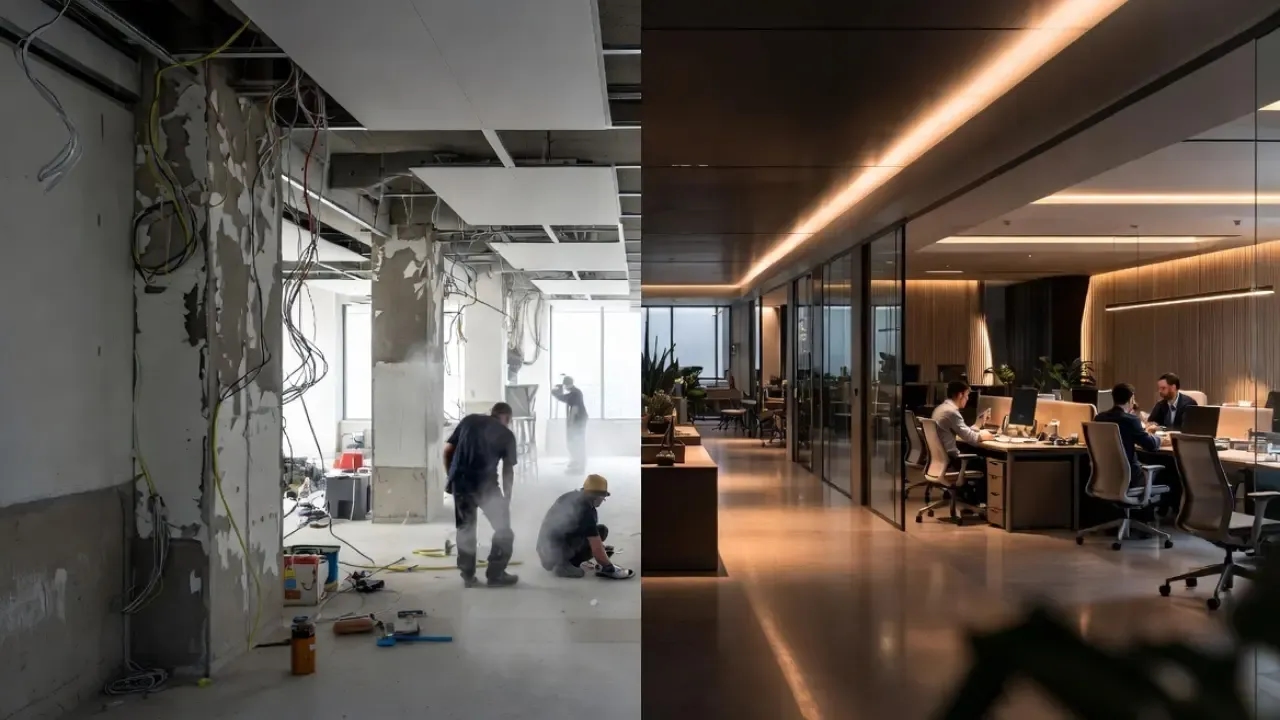
Confused about office renovation vs fitout? Learn costs, timelines, and how to choose the right option for your business.
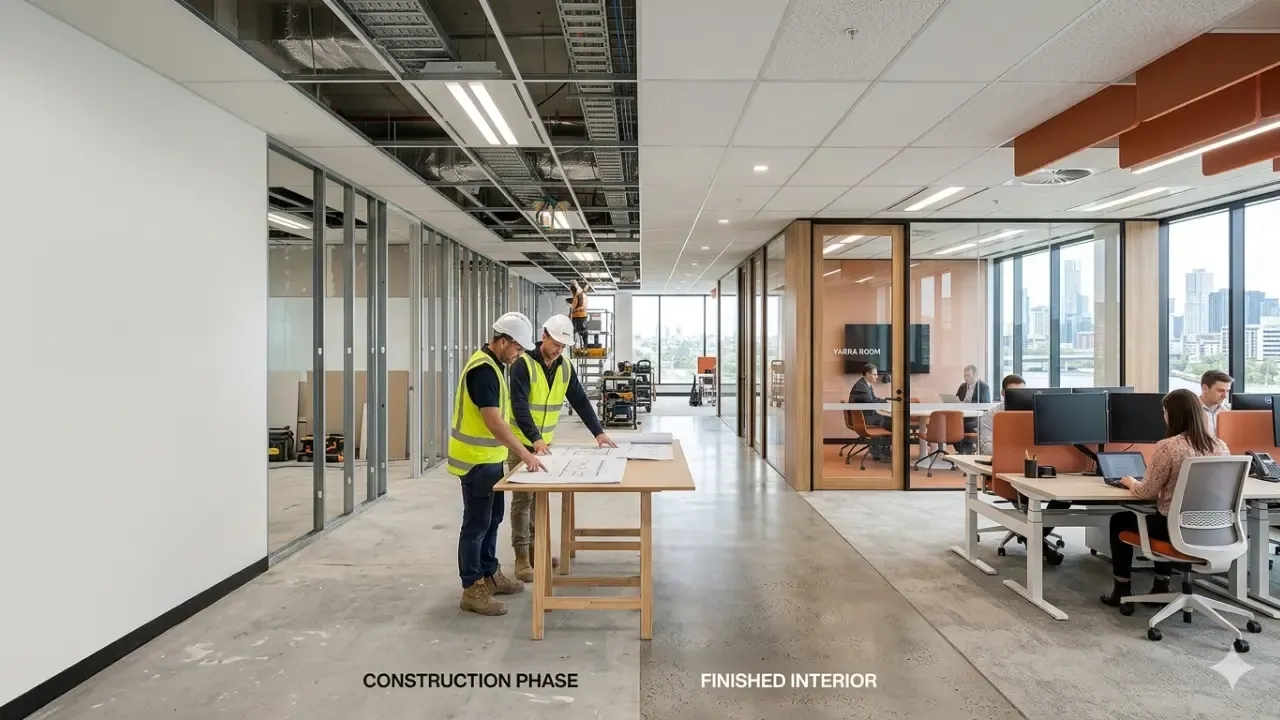
Learn turnkey fitout costs in Australia 2026. Melbourne pricing, timelines, hidden costs, and how to avoid budget blowouts.