
Retail Fitout Mistakes That Cost You Time, Money and Customers
Author
Shawn Vandersay
Date Published
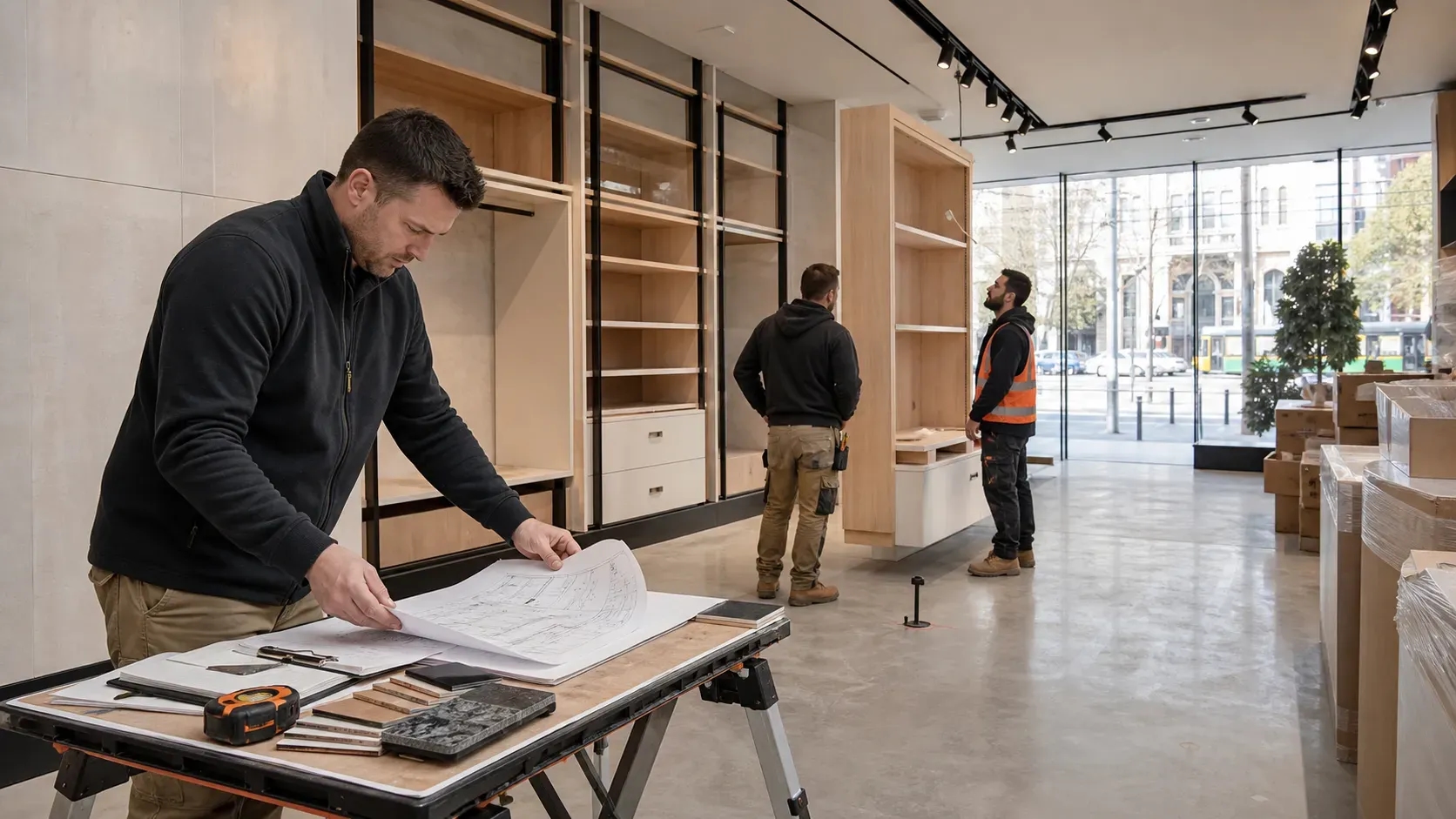
A retail fitout connects your lease, brand, building and daily operations. A decision in one area can quickly affect several others.
For example, moving a service counter may look like a simple design change. However, it can alter power, data, lighting, flooring and accessible circulation.
These mistakes can delay opening while rent, wages and marketing costs continue. Poor decisions can also leave customers with narrow aisles, confusing displays or long queues.
The most costly retail fitout mistakes usually begin before construction. Early planning gives your team more time to find practical and affordable solutions.
Fast Facts
- Plan before signing: Check the lease, landlord rules, services and make-good obligations before confirming the fitout.
- Budget for the full project: Include design, approvals, equipment, technology, signage and genuine site risks.
- Design for real operations: Test customer flow, accessibility, storage, deliveries, queues and staff requirements.
- Compare scope, not price: Review exclusions, allowances, responsibilities and coordination before choosing a contractor.
- Protect the opening date: Allow time for approvals, procurement, inspections, defects, cleaning and merchandising.
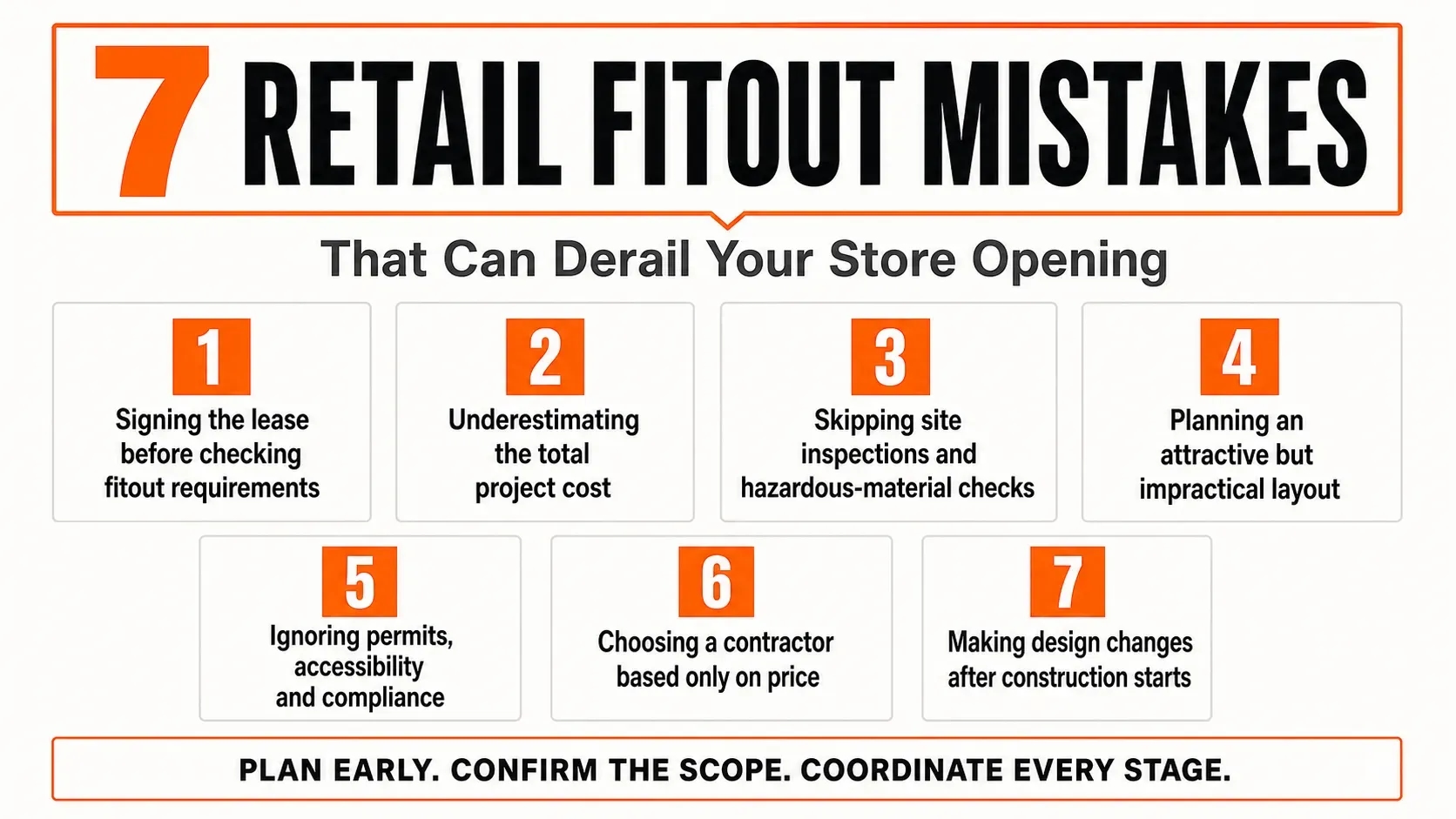
Seven retail fitout mistakes to avoid when planning your store design, budget, approvals and construction.
Mistake 1: Signing a Lease Before Checking the Fitout Requirements
A shop may have the right location but the wrong building conditions. Review the lease and property requirements before confirming your fitout plan.
Check the permitted use, landlord approval process and access rules. Shopping centres may restrict noisy work, deliveries, waste removal and construction hours.
You should also confirm who pays for service upgrades and essential safety measures. Ask whether the available power, drainage and ventilation can support your operations.
Review the make-good clause as well. Your lease may require you to remove the fitout when the tenancy ends.
Do not rely on a visual inspection alone. Involve your legal adviser and fitout team before making a major commitment.
Mistakes 2 and 3: Underestimating Costs and Skipping Site Checks
A fitout budget should cover more than visible construction work. It may also include design, approvals, equipment, technology, signage and professional advice.
Several costs often appear late because they were missing from the original scope. These may include service upgrades, hazardous material removal and after-hours work.
Create a detailed scope before comparing quotes. Include a contingency for genuine unknowns and keep optional upgrades separate from essential work.
Existing conditions also need investigation. Confirm dimensions, switchboard capacity, plumbing locations, ceiling space and access restrictions.
Older premises may contain asbestos or other hazardous materials. Complete the required checks before demolition or refurbishment disturbs existing materials.
Site investigations reduce uncertainty, although they cannot expose every hidden condition. They still give contractors better information and reduce provisional allowances.
Mistakes 4 and 5: Poor Layout Planning and Ignoring Compliance
An attractive store can still perform poorly. The layout must support customers, staff, stock and deliveries throughout the day.
Map the customer journey from the entrance to the payment point. Test aisle widths, display positions, queues, fitting rooms and exit paths.
Then examine the less visible areas. Your team needs suitable storage, waste handling, staff facilities and safe access for deliveries.
Design should also consider people with disability from the beginning. Entrances, circulation routes, counters and amenities may all affect access.
Victorian businesses may need planning or building permits for internal fitouts, shopfronts or signage. Requirements can vary between councils and sites.
Contact the council and relevant building professionals early. Late compliance changes can require redesign, new documentation and additional construction.
Compliance must continue after opening. Stock boxes, temporary displays and promotional stands should never block accessible routes or exits.
Mistakes 6 and 7: Choosing on Price Alone and Changing the Design Late
The cheapest quote may not provide the lowest final cost. A low figure can hide exclusions, vague allowances or missing responsibilities.
Compare each quote against the same drawings and scope. Review demolition, permits, services, waste, protection, cleaning and completion requirements.
Ask who will coordinate trades, landlord communication and inspections. Retail fitouts contain many connected tasks, so fragmented responsibility can create gaps.
You should also review relevant retail experience and proposed supervision. A contractor must understand live environments, restricted access and fixed opening dates.
Freeze key decisions before procurement begins. Approve the layout, finishes, equipment and service locations through a clear sign-off process.
Late changes can affect several trades at once. Moving a display may require revised joinery, lighting, power and flooring work.
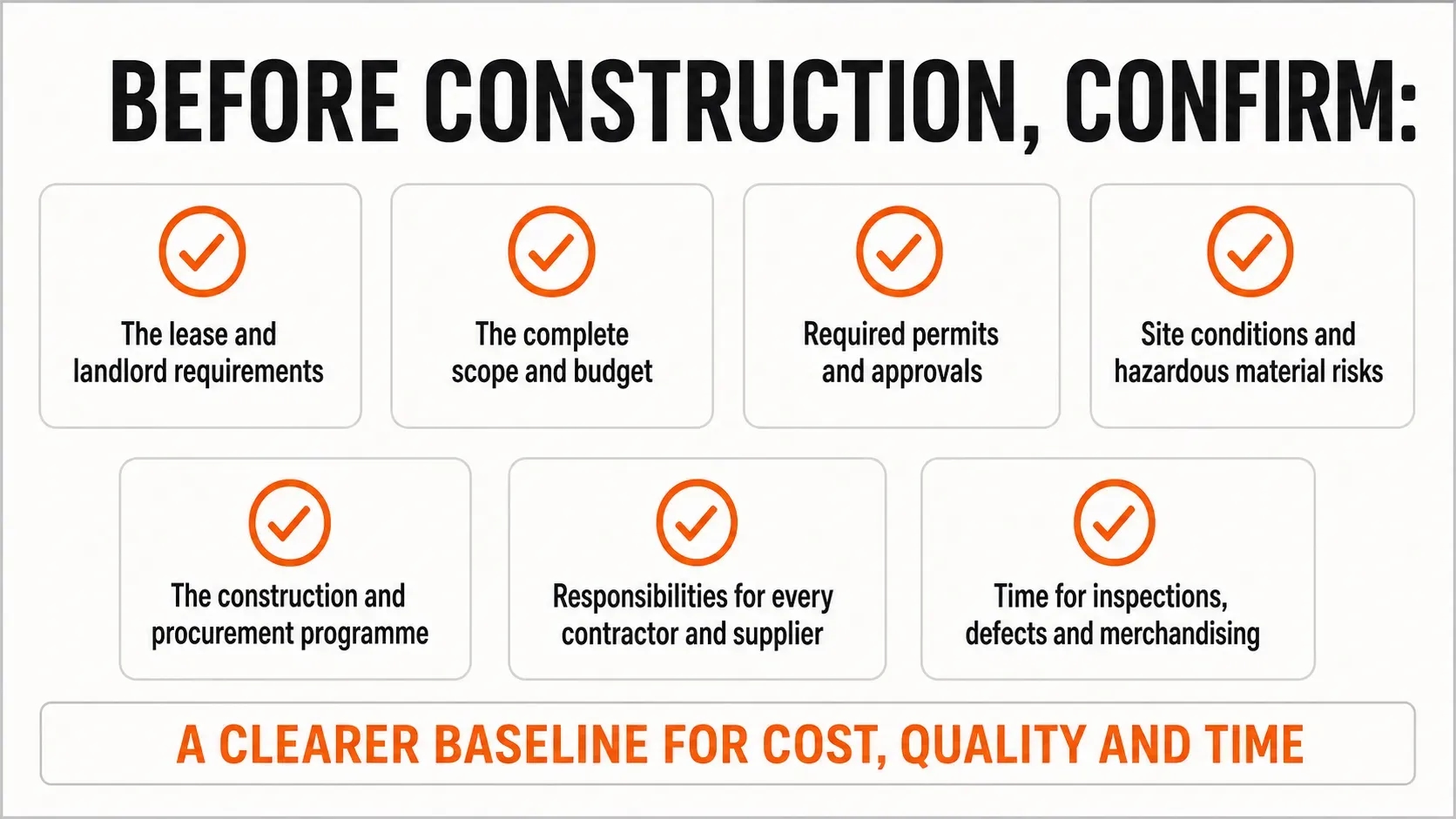
Confirm these seven items before construction to create a clearer baseline for retail fitout cost, quality and timing.
Plan Your Melbourne Retail Fitout With Fewer Surprises
Good retail fitouts begin with clear information and coordinated decisions. Resolve major lease, site and approval questions before construction starts.
Your programme should also protect the opening period. Allow time for commissioning, final inspections, defect repairs, cleaning and stock setup.
Finex Fitouts helps Melbourne retailers coordinate design, construction and project delivery. Early involvement can identify risks before they become costly site problems.
If you are planning a new store or refurbishment, discuss the site and scope before committing to construction dates.
Retail Fitout FAQs
Practical answers for Melbourne retailers planning a new store or refurbishment.
What are the most common retail fitout mistakes?
Common mistakes include signing a lease too early, setting an incomplete budget and skipping site checks. Poor layouts, missing approvals, unclear contractor responsibilities and late design changes can also increase costs and delay opening.
Does a retail fitout in Melbourne need a permit?
Some retail fitouts need planning permits, building permits or both. Internal alterations, signage, shopfront changes and a new property use may trigger approvals. Requirements vary by site and council, so check with the relevant council and building professionals before construction. Read the Victorian Government guidance on permits and approvals.
How can retailers reduce fitout delays and budget overruns?
Confirm the lease, scope, budget, site conditions and required approvals before work starts. Use coordinated drawings, compare quotes against the same scope and approve finishes early. The programme should also allow time for procurement, inspections, defect repairs, cleaning and merchandising.
Confused about office renovation vs fitout? Learn costs, timelines, and how to choose the right option for your business.
Retail fitout cost Australia guide for 2026. Learn real prices, timelines, risks, and how Melbourne businesses can avoid costly mistakes.