
Is Turnkey Fitout Worth It for Small Businesses?
Date Published

A turnkey fitout can save time, reduce stress, and help small businesses control project risk.
A turnkey fitout is often worth it for small businesses that need one team to manage design, trades, approvals support, and delivery. It can reduce delays, confusion, and hidden costs.
It may not suit every project. A small paint, flooring, or furniture update may not need a full turnkey service. But for offices, shops, clinics, showrooms, and warehouses, the value often sits in better control.
For Melbourne business owners, the main question is simple. Will the fitout cost less to manage yourself, or will the risk cost more later?
Fast Facts
- Best fit: Turnkey fitout suits projects with several trades, tight timelines, or compliance needs.
- Main benefit: One team manages design, construction, coordination, and handover.
- Cost view: It may cost more upfront but can reduce delays, rework, and owner time.
- Melbourne factor: Landlord rules, permits, site access, and business downtime should be planned early.
- Decision tip: Compare full scope, exclusions, timeline, and accountability before choosing a fitout path.
What Does Turnkey Fitout Mean?
A turnkey fitout means one company manages the project from planning to handover. This can include design, site checks, trade coordination, materials, construction, and final defects.
The goal is to give the business owner one main contact. Instead of calling several trades, the owner deals with a project manager.
🔸 Design and layout planning
🔸 Site checks and scope planning
🔸 Trade coordination
🔸 Construction and project management
🔸 Handover and defect checks
Why Small Businesses Consider Turnkey Fitouts
Small businesses often choose turnkey fitouts because time is tight. Many owners work around lease start dates, rent-free periods, and planned opening days.
A delay of two weeks can affect sales, staff rosters, stock delivery, and customer bookings. In some cases, downtime can cost more than a single trade variation.
Turnkey fitouts can also help when the owner does not know which trade should come first. For example, ceiling works may affect lighting. Joinery may affect power. Flooring may depend on demolition and wall changes.
A coordinated team can plan these steps before work starts. That reduces clashes on site.
When Turnkey Fitout Is Worth It
A turnkey fitout is usually worth it when the project affects business operations, compliance, or customer experience.
It can be useful for offices that need better meeting rooms, quiet areas, staff zones, or hybrid work layouts.
It also suits retail stores and showrooms where layout, lighting, customer flow, and display areas affect sales.
Medical and clinic fitouts often need closer planning. Privacy, access, hygiene, storage, and patient movement all matter.
Warehouse fitouts may involve mezzanine floors, offices, amenities, racking zones, or safer workflow planning.
🔸 Your project needs several trades
🔸 You have a fixed opening date
🔸 Your landlord needs clear documents
🔸 Your space must support staff or customer flow
🔸 You want one team accountable for delivery
When It May Not Be Worth It
Turnkey fitout may not be worth it for very small updates. If you only need loose furniture, minor painting, or simple replacement flooring, direct trade quotes may be enough.
It may also be less useful if you already have design drawings, a trusted builder, and time to manage the project.
The key is project complexity. The more trades, approvals, and timing issues involved, the more value a turnkey team can provide.
Related Insight
If you are comparing fitout quotes, it also helps to understand the hidden costs and budget blowouts in fitout projects before you commit.
Costs, Risks, And Hidden Savings
Cost is where many small businesses hesitate. A turnkey quote can look higher than separate trade quotes.
But separate quotes can hide missing items. One trade may exclude demolition. Another may exclude waste removal. Another may not include after-hours work, access equipment, or final defects.
This makes the cheapest quote hard to compare.
A clear turnkey proposal should show inclusions, exclusions, allowances, timing, and handover details. It should also explain what may cause variations.
The hidden savings can come from fewer delays, fewer mistakes, and less owner time spent managing people.
Permits, Compliance, And Melbourne Site Rules
Melbourne businesses also need to think about permits, landlord rules, and building compliance. The City of Melbourne provides public building permit information, and many commercial works need review before work starts.
The NCC sets national building requirements across Australia. A space may be treated differently depending on its use, such as office, retail, warehouse, or health care.
Construction safety also matters. WorkSafe Victoria states that construction induction training in Victoria must be done through an approved RTO in a face-to-face setting.
A good turnkey provider should help identify these issues early. They should not treat permits and compliance as an afterthought.
How To Decide Before You Commit
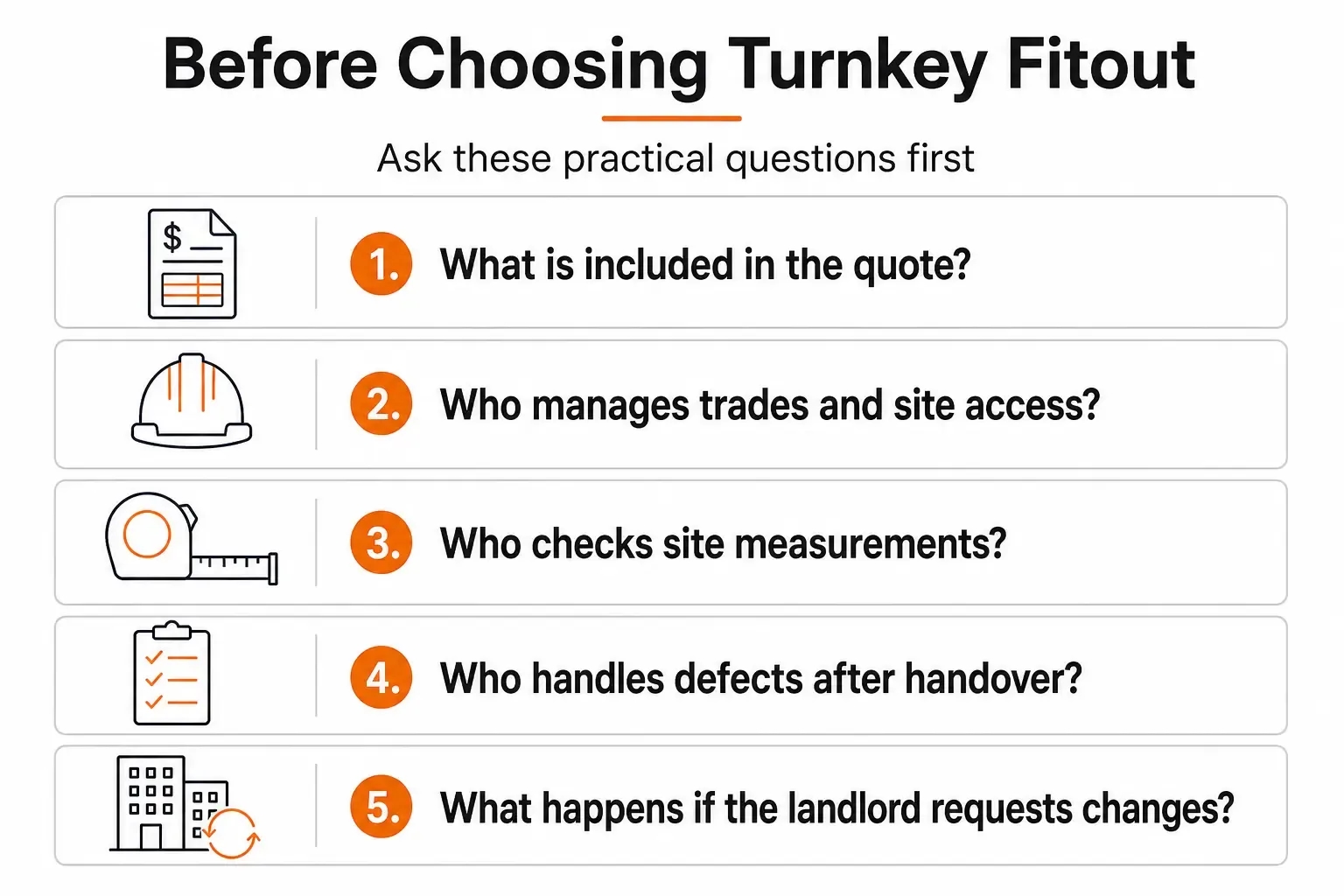
Before choosing a turnkey fitout, check what is included, who manages the work, and how changes or defects will be handled.
Also ask about business downtime. Can noisy work happen after hours? Can the fitout be staged? Can staff keep working during part of the project?
Small businesses should also prepare their own numbers. business.gov.au advises owners to plan finances and risks clearly. That same thinking applies to fitouts.
A fitout budget should include design, construction, furniture, signage, technology, permits, moving costs, and a contingency.
So, Is Turnkey Fitout Worth It?
For many small businesses, turnkey fitout is worth it when the project needs speed, coordination, and clear accountability.
It gives owners one team to manage the process. It can reduce the stress of chasing trades. It can also help avoid costly mistakes before they reach site.
The right choice depends on scope, budget, lease terms, and how much time you can give the project.
If you are planning a commercial fitout in Melbourne, Finex Fitouts can help you review the scope and understand the practical steps before work begins.
Turnkey Fitout FAQs
Is turnkey fitout worth it for a small business?
Yes, turnkey fitout is often worth it when your project needs several trades, a clear timeline, and one team managing the work from planning to handover.
Does turnkey fitout cost more than managing trades yourself?
It can look higher upfront, but it may reduce hidden costs linked to delays, rework, missed scope, poor coordination, and business downtime.
What should Melbourne businesses check before choosing a turnkey fitout provider?
Check inclusions, exclusions, site access, landlord requirements, permit needs, project timelines, defect support, and who is accountable for each stage.
Learn how Melbourne businesses can reduce fitout costs by reusing existing infrastructure safely, avoiding delays, and planning smarter.

Compare turnkey fitouts and separate trades for Melbourne commercial projects, including cost, risk, delays, and downtime.