
Hidden Fitout Costs: How to Avoid Budget Blowouts in Your Project
Date Published

A fitout budget can look fine at the start. Then the first site issue appears. After that, more small costs follow.
Most budget blowouts come from missing scope. A quote may cover walls, floors, ceilings, and joinery. Yet it may not include permits, service upgrades, after-hours access, or landlord changes.
Melbourne businesses also face local site issues. Older CBD buildings, shopping centres, clinics, and warehouses often have strict access rules. These rules can affect labour time and delivery costs.
The biggest mistake is treating the first estimate as the final project cost. A better budget includes design, approvals, construction, contingency, and downtime.
Fast Facts
- Main risk: Budget blowouts often come from missing scope, not one large surprise.
- Common hidden costs: Permits, service upgrades, access limits, after-hours work, and final cleaning.
- Delay cost: Late openings can affect rent, staff time, sales, bookings, and trade availability.
- Planning tip: Use a clear scope, written exclusions, early site checks, and a realistic contingency.
- Melbourne context: Older buildings, landlord rules, and access limits can change both cost and timing.
Hidden Costs That Are Easy To Miss
Hidden fitout costs are usually practical items. They are not always obvious during the first walkthrough.
Common missed costs include:
🔸 Permits, certificates, and consultant reports
🔸 Fire service changes and essential safety measures
🔸 Electrical board upgrades and extra power points
🔸 Data cabling, server cabinets, and security systems
🔸 Mechanical services, ventilation, and air conditioning changes
🔸 After-hours work in offices, centres, or medical buildings
🔸 Delivery limits, lift bookings, and loading dock rules
🔸 Waste removal, final cleaning, and defect fixes
🔸 Furniture, signage, appliances, and loose equipment
These items may seem small on their own. Together, they can move the budget by thousands of dollars.
A clear inclusions and exclusions list helps. It shows what the quote covers and what still needs pricing.
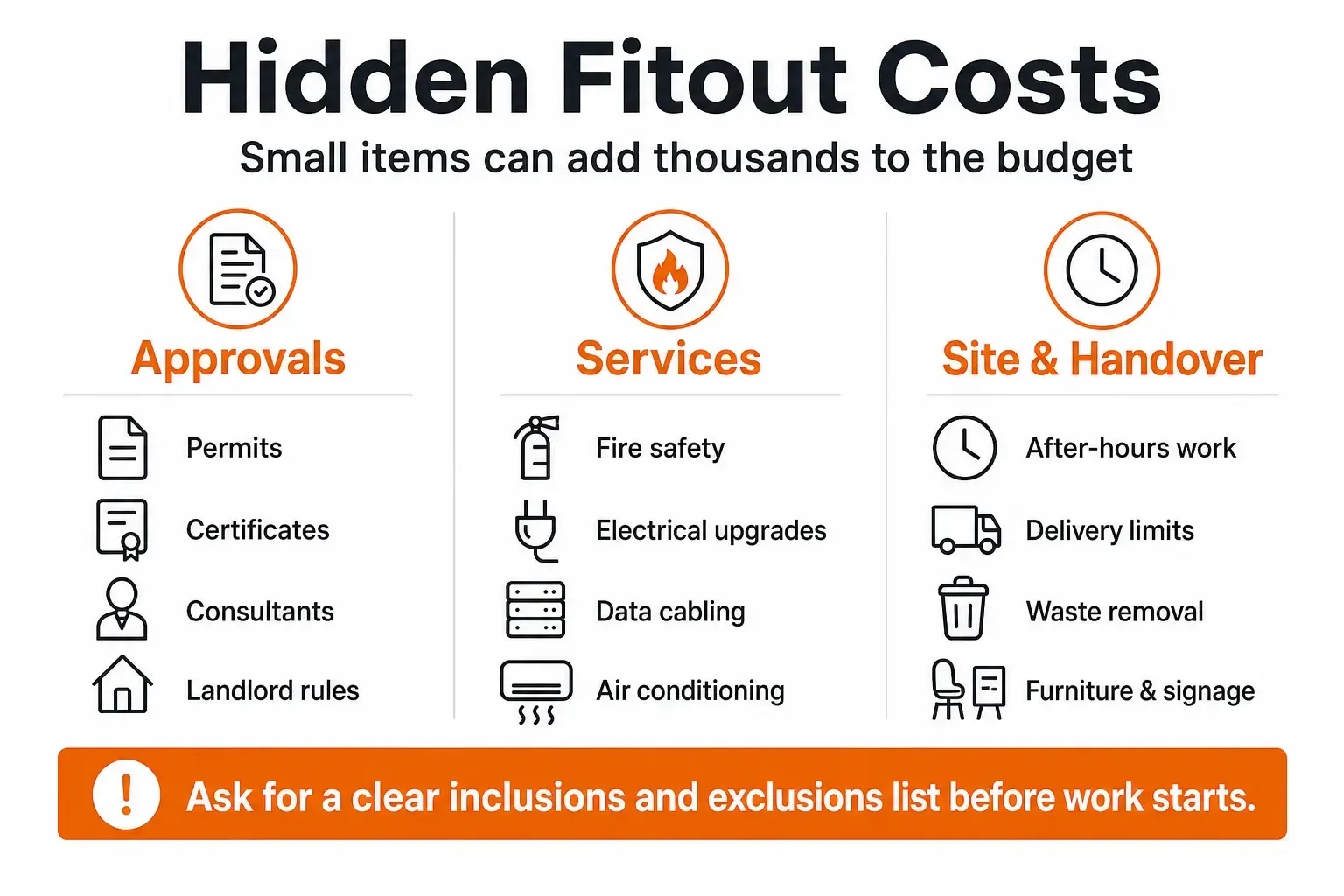
Common hidden fitout costs can add thousands to a project budget, so clear inclusions and exclusions should be confirmed before work starts.
Site Conditions Can Change The Price
The site itself often creates the biggest surprises. This is common in refurbishment projects.
An empty tenancy can still hide cost. Walls may cover old services. Ceilings may hide non-compliant work. Floors may need grinding, levelling, or moisture treatment.
In older Melbourne buildings, services may need extra checks. Electrical capacity may not suit the new layout. Plumbing may sit far from the planned kitchen, treatment room, or amenities.
Warehouse fitouts can bring different risks. Mezzanine floors, racking, amenities, lighting, and fire coverage may need engineering or compliance review.
For extra context, the NCC building classifications can help owners understand how different building uses are treated.
The best time to find these issues is before work starts. A detailed site inspection can reduce variations later.
Delays Can Cost More Than Variations
A delay does not only affect the builder’s program. It can affect the whole business.
If a retail store opens two weeks late, the owner may lose sales. If an office move slips, the business may pay rent on two sites. If a clinic opening is delayed, staff and bookings may need to move.
Delays often come from slow decisions. They also come from late approvals, missing information, and long lead-time materials.
Typical delay costs include:
🔸 Extra rent before trading starts
🔸 Staff downtime or temporary remote work
🔸 Rebooking trades and deliveries
🔸 Storage costs for furniture or equipment
🔸 Extra project management time
🔸 Lost revenue from a late opening
A realistic program should include approvals and procurement. It should not only show construction dates.
Related Insight
Planning your handover is just as important as controlling the build budget, so it is worth reading what happens after your fitout is completed before your project reaches the final stage.
How To Control Fitout Costs Before You Start
Good cost control starts before the quote. It begins with a clear brief and a tested scope.
Before starting a fitout, confirm the layout, business needs, compliance risks, and landlord rules. Then ask for a quote that separates fixed costs from allowances.
Construction costs can also change during planning. The ABS Producer Price Indexes show current pressure across building construction and key material categories.
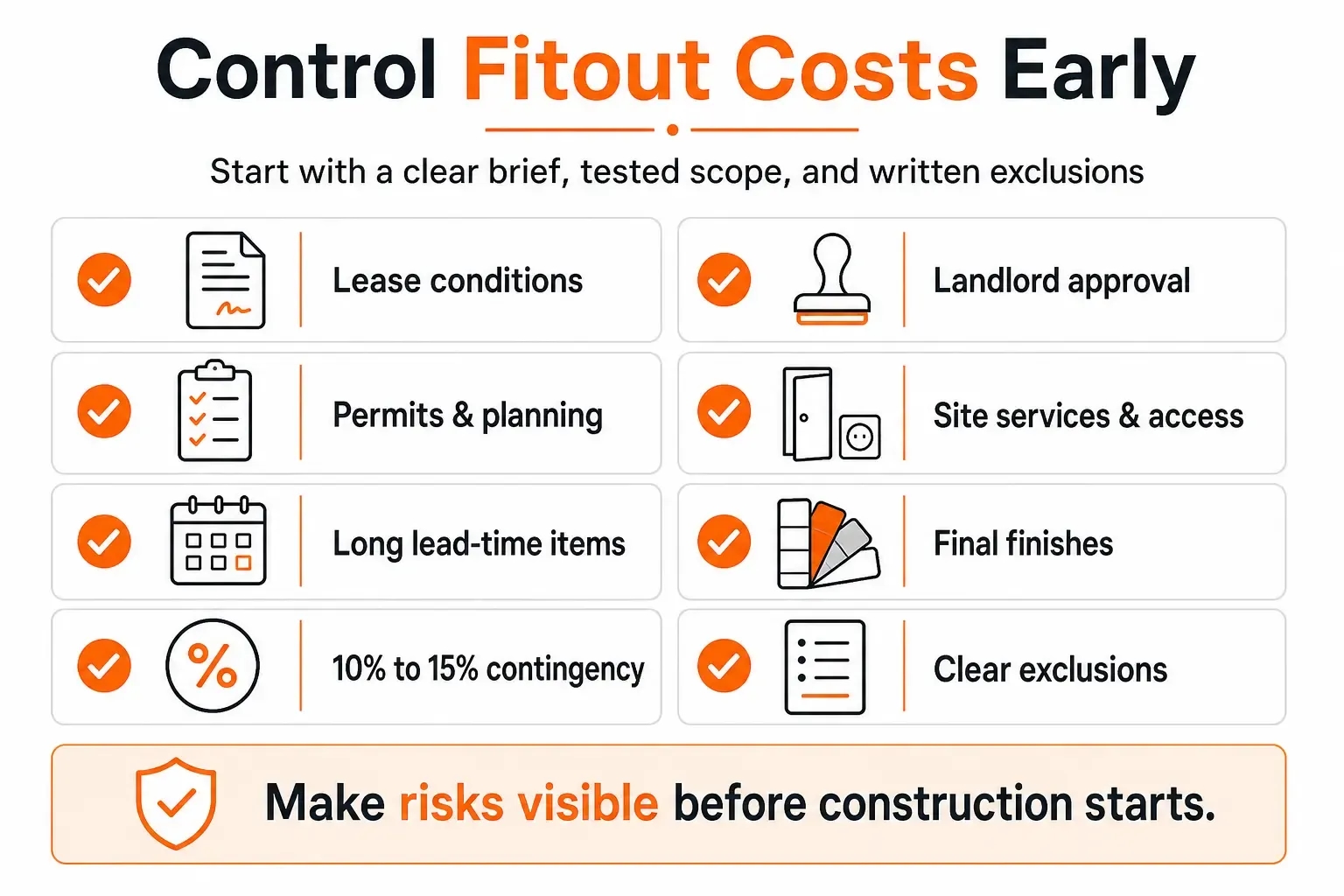
A clear brief, tested scope, written exclusions, and realistic contingency help make fitout cost risks visible before construction starts.
For many commercial projects, a contingency of 10% to 15% is sensible. More may be needed for older sites or unclear scopes.
Site access also needs planning. WorkSafe Victoria explains that construction induction training must meet approved requirements in Victoria.
The goal is not to remove every risk. The goal is to make risk visible early.
Plan Your Fitout With Fewer Surprises
Hidden costs are easier to manage when they are found early. Clear planning gives owners better control over price, timing, and business disruption.
Finex Fitouts helps Melbourne businesses plan office, retail, clinic, and warehouse fitouts with practical cost checks from the start.
If you are planning a new space or upgrade, start with a clear scope. Then build a budget that includes the work, the approvals, and the risks.
Frequently Asked Questions
What causes budget blowouts in fitout projects?
Budget blowouts often come from missing scope, site issues, permit needs, service upgrades, landlord changes, and late design decisions. A detailed quote with clear inclusions and exclusions helps reduce these risks.
How much contingency should I allow for a commercial fitout?
Many commercial fitout projects should allow a 10% to 15% contingency. Older buildings, unclear scopes, or complex services may need more because hidden issues can appear after work starts.
How can I avoid hidden fitout costs before signing a contract?
Confirm lease rules, landlord approval, permit needs, site access, service capacity, long lead-time items, and written exclusions before signing. This makes cost risks visible early and supports a more accurate project budget.
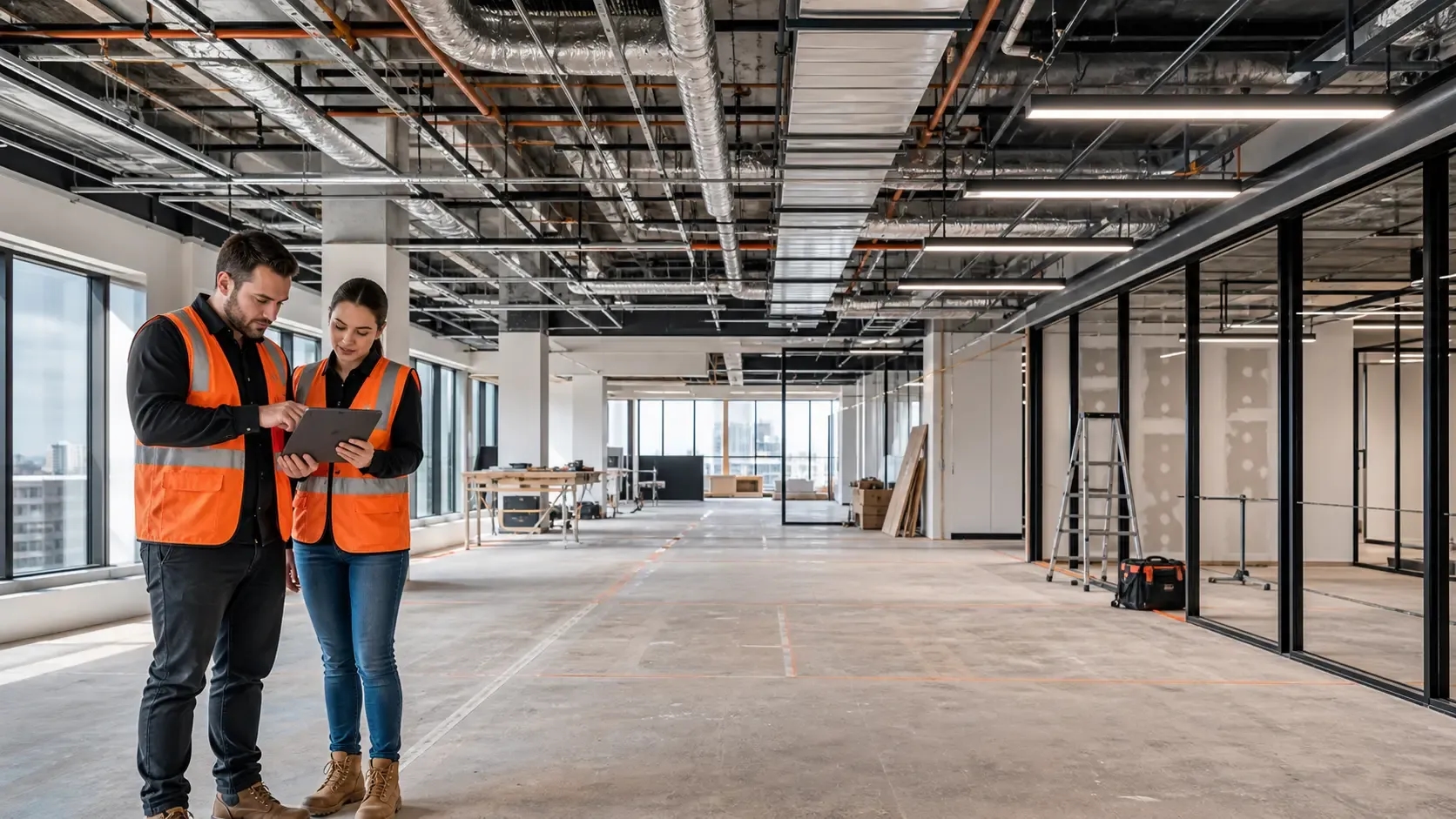
Learn how Melbourne businesses can reduce fitout costs by reusing existing infrastructure safely, avoiding delays, and planning smarter.

Learn common fitout delays in Melbourne and how to avoid permit, design, supply, trade, and downtime issues.