
Fitout Completed? Here’s What Happens Before You Move In
Date Published

A commercial fitout does not end the moment the tools leave site. That is when the space starts moving from construction mode into business mode.
For many Melbourne businesses, this stage feels rushed. Staff want to move in, customers may be waiting, and the lease clock keeps ticking. But the handover stage matters.
Practical completion usually means the main works are complete enough for handover. It does not always mean every small item is finished.
🔸 Final access may need to be confirmed
🔸 Small touch-ups may still be listed
🔸 Documents may still need review
🔸 Landlord or building manager checks may still apply
Some projects also involve building permits or formal building works records. City of Melbourne provides information about building permits and related building services.
Fast Facts
After a fitout is completed: the space still needs handover checks, documents, defect tracking, safety review, and first-month adjustments.
- Handover matters: collect keys, manuals, warranties, certificates, and final drawings.
- Defects are common: record issues clearly with photos, locations, and agreed timing.
- Safety comes next: test lighting, access, ventilation, emergency paths, and staff procedures.
- Costs need review: check final invoices, variations, utilities, insurance, and landlord requirements.
- The first month is useful: gather staff feedback and adjust the space before small issues grow.
What Should Be Included At Handover
Handover is the point where your contractor walks you through the completed fitout. This should be practical, clear, and documented.
You should inspect each area before daily operations begin. Check rooms, joinery, flooring, fixtures, signage, lighting, access control, and services.
🔸 Keys, access cards, and alarm details
🔸 Product manuals and maintenance guides
🔸 Warranties for installed items
🔸 Certificates, approvals, or compliance documents
🔸 Final drawings or marked-up plans
Keep these documents in one shared folder. They can help with maintenance, insurance, landlord requests, future upgrades, and staff training.
Defects, Adjustments, And Final Checks
Most completed fitouts need a defects list. This list records small items that need correction after handover.
Defects are not always a sign of poor work. Many appear once staff use the space each day. What matters is a clear process for reporting and fixing them.
🔸 Paint marks or small wall dents
🔸 Door and lock adjustments
🔸 Loose handles or minor joinery movement
🔸 Flickering lights or switch issues
🔸 Data, power, or signage adjustments
Take photos, note locations, and agree on timing. This keeps the process calm and helps everyone understand what needs attention.
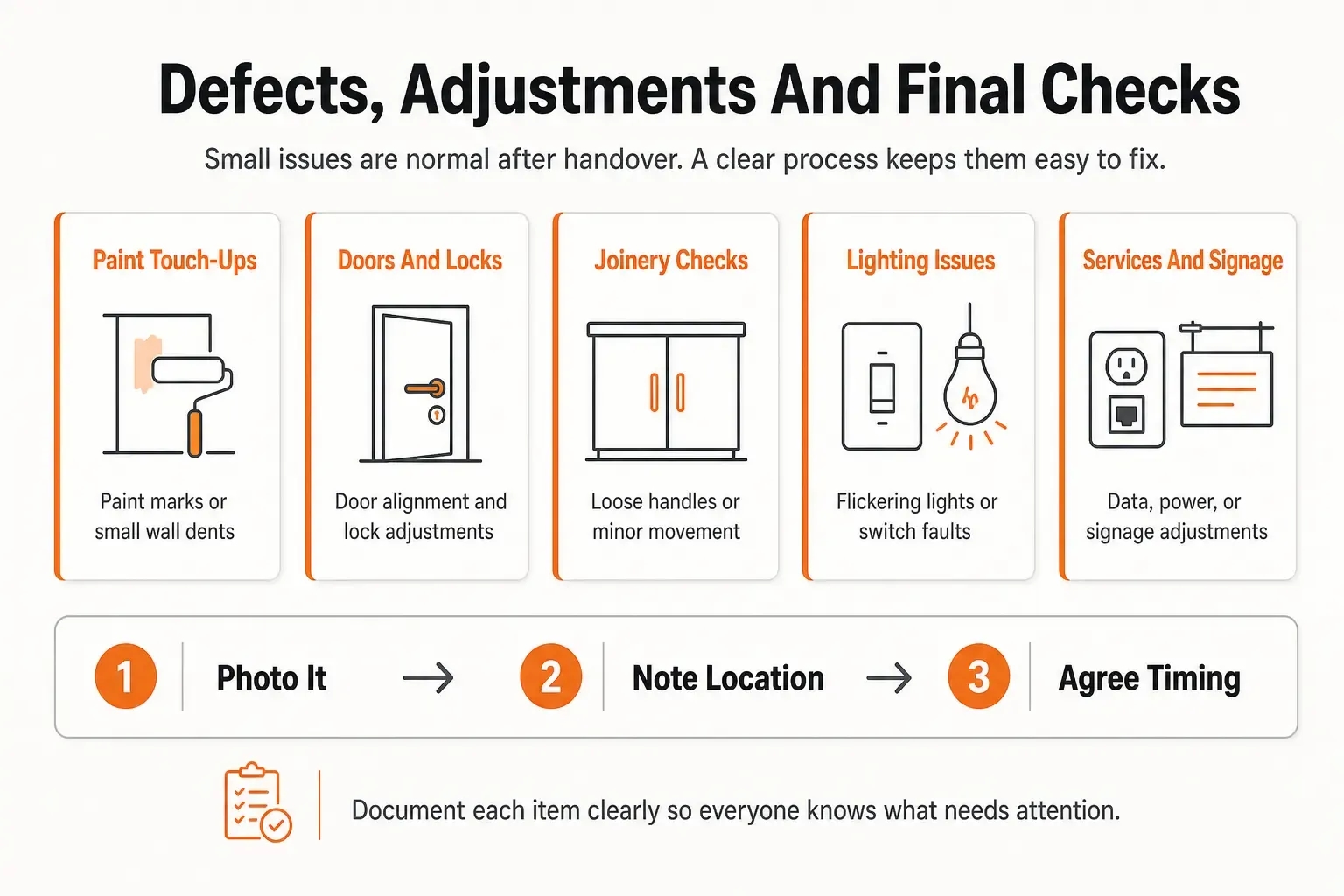
Common fitout defects are easier to manage when each item is photographed, located, and given an agreed fix time.
Getting Staff And Systems Ready
The first week after a fitout tests how the space works in real life. A plan helps staff settle faster and reduces disruption.
Office teams may need meeting room rules. Retail teams may adjust display zones. Clinics may refine patient flow. Warehouses may update storage labels or traffic paths.
Safety also matters after handover. Australian businesses must maintain safe work environments, safe structures, safe procedures, and adequate facilities. The work health and safety guidance from business.gov.au explains these duties.
🔸 Test lighting, ventilation, access, and security
🔸 Confirm emergency exits and evacuation paths
🔸 Train staff on new equipment and systems
🔸 Check cleaning, waste, and storage procedures
Safe Work Australia also provides guidance on the work environment, including lighting, ventilation, facilities, and emergency plans.
Also Read
If you want to control project costs after handover, learn how to reduce fitout costs by using existing infrastructure before planning your next commercial upgrade.
Costs, Payments, And Lease Closeout
After completion, review the commercial side of the project. This helps protect cash flow during the first few months of trading or operation.
Check the final invoice against the agreed scope. Confirm approved variations, retention terms, utility connections, insurance updates, and landlord requirements.
🔸 Final invoice and payment timing
🔸 Approved variations and credits
🔸 Utility and internet activation costs
🔸 Insurance and asset updates
🔸 Landlord or building manager sign-off
It also helps to review running costs. business.gov.au recommends planning for expenses such as equipment, utilities, insurance, and other start-up costs.
How To Make The First Month Run Smoothly
The first 30 days give you the clearest view of how the fitout performs. Treat this period as a settling-in stage.
Walk the site each week. Ask staff what is slowing them down. Track maintenance issues. Watch how customers, patients, visitors, or warehouse teams move through the space.
🔸 Keep one defects list, not several scattered notes
🔸 Store all manuals and warranties in one place
🔸 Review staff feedback after the first week
🔸 Check whether the layout supports daily workflow
🔸 Book follow-up work before small issues grow
If Finex Fitouts has completed your commercial space, our team can help you move through handover, defects, and the first month with a clear process. That way, your new fitout can support daily work, not distract from it.
Frequently Asked Questions
What happens at commercial fitout handover?
At handover, your contractor should walk you through the completed space, note any defects, provide keys or access details, and give you important documents such as manuals, warranties, certificates, and final drawings.
Can I move into my business space as soon as the fitout is completed?
You may be able to move in after practical completion, but only once access, safety checks, services, landlord requirements, and any required approvals are confirmed. This helps reduce disruption and avoids opening with unresolved issues.
How long do fitout defects take to fix after completion?
Minor defects are usually handled during the defects period after handover. Timing depends on the item, trade availability, and product supply. Keep one clear defects list with photos, locations, and agreed dates.
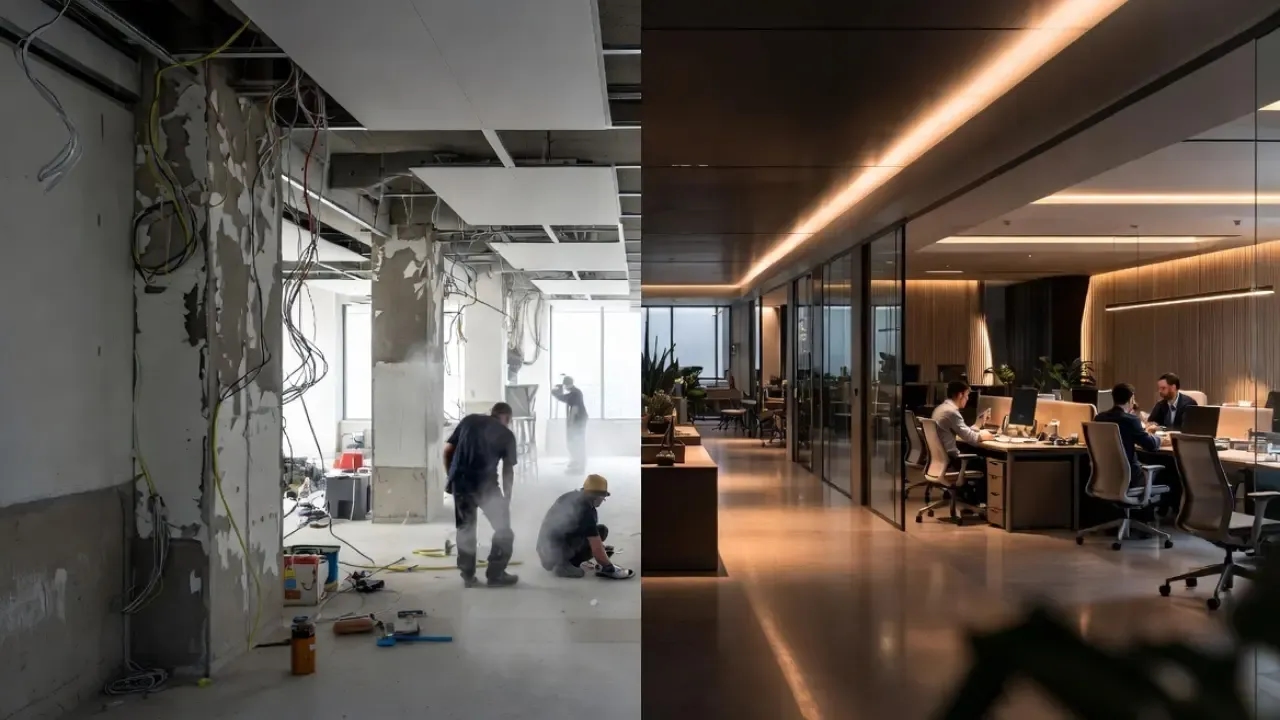
Confused about office renovation vs fitout? Learn costs, timelines, and how to choose the right option for your business.

Compare turnkey fitouts and separate trades for Melbourne commercial projects, including cost, risk, delays, and downtime.