
The Best Materials for Durable, High-Impact Shopfitting Fixtures
Author
Shawn Vandersay
Date Published
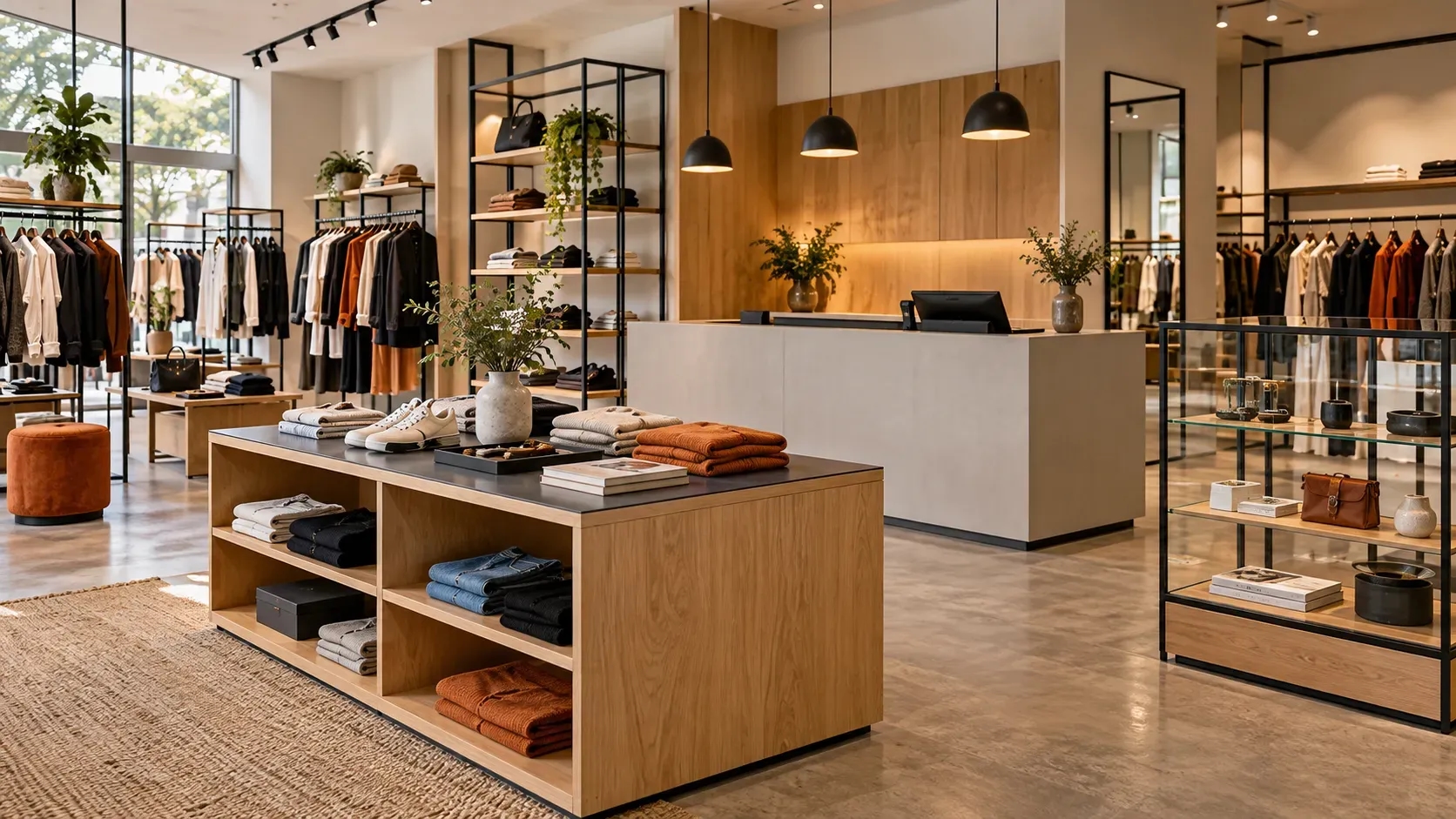
A new counter can look impressive on opening day. Yet weak edges, unsuitable surfaces, or poor fixings may cause damage within months.
Durability depends on how customers and staff use each fixture. It also depends on moisture, cleaning, product weight, and movement.
A durable shopfitting material should provide:
🔸 Impact and scratch resistance
🔸 Enough strength for expected product loads
🔸 Reliable fixing points
🔸 Resistance to moisture and stains
🔸 Simple cleaning and maintenance
🔸 Practical repair or replacement options
No single material meets every need. Strong fixtures usually combine a structural core, protective surface, and suitable hardware.
A plywood shelf may provide strength, while laminate protects its surface. Steel brackets can then support heavy products without creating bulky joinery.
This layered approach often delivers better value than using one costly material throughout the fixture.
Fast Facts
- Combine materials: Use a strong core, durable surface, and suitable hardware instead of relying on one material.
- Match the application: Plywood suits demanding fixtures, while MDF supports detailed painted finishes.
- Protect vulnerable areas: Strengthen exposed edges, corners, bases, wet zones, and customer contact points.
- Check compliance early: Confirm permits, fire performance, emissions, access, and engineered stone restrictions before fabrication.
- Consider lifetime value: Include cleaning, repairs, replacement, and business disruption when comparing material costs.
Which Board and Timber Materials Work for Shop Fixtures?
Plywood, MDF, particleboard, and solid timber serve different purposes. Selecting one board for every fixture can create unnecessary cost or early damage.
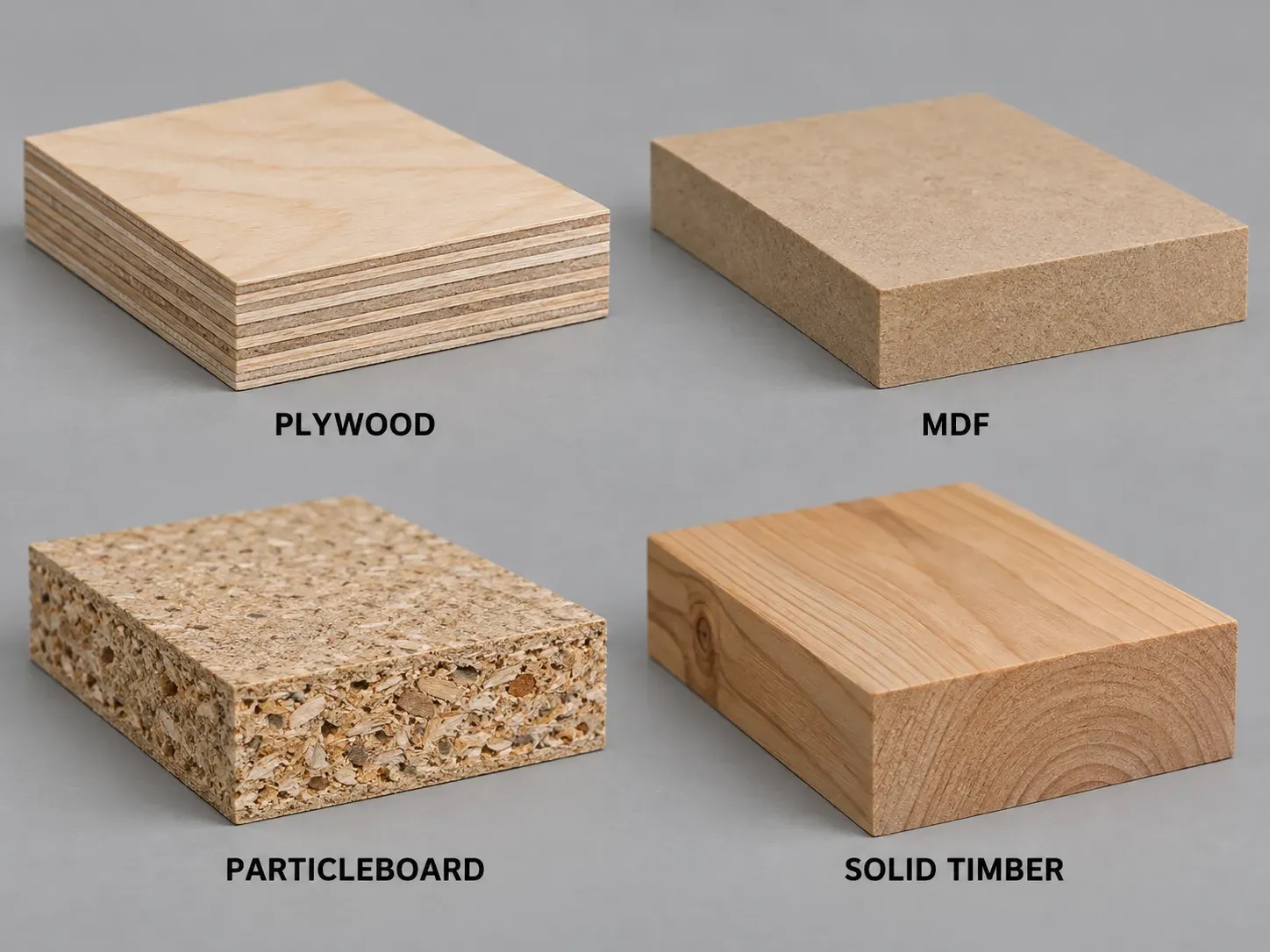
Plywood, MDF, particleboard and solid timber each offer different strengths for retail shelving, counters and display fixtures.
Plywood
Quality plywood provides good strength without excessive weight. Its layered construction also supports reliable screw fixings.
Plywood suits display shelving, counters, seating bases, and movable fixtures. It performs well where staff may relocate or modify displays.
Exposed plywood edges can create a warm, detailed finish. However, sheet quality and appearance may vary.
Plywood usually costs more than particleboard or standard MDF. Its strength and repairability can justify that cost in demanding locations.
MDF
MDF has a smooth, consistent surface. It suits painted joinery, routed details, signage panels, and branded display features.
It machines cleanly and supports detailed shapes. This flexibility helps designers create strong visual features without using solid timber.
Standard MDF belongs in dry locations. Moisture-resistant grades suit areas with humidity or occasional wetting.
MDF remains vulnerable when water reaches unsealed edges or fixing holes. It is also heavy and may weaken after repeated screw removal.
Particleboard
Particleboard provides an economical core for cabinet interiors, storage units, and low-impact fixtures. Melamine-faced options arrive with a clean finished surface.
Protected particleboard can perform well in dry retail areas. However, exposed edges may chip or absorb moisture.
It also provides less reliable fixing strength than plywood. Avoid using it for frequently moved fixtures or heavily loaded shelves.
Good edge protection and accurate installation greatly improve its service life.
Solid Timber
Solid timber creates warmth and a natural point of difference. It suits feature shelves, trims, handles, and customer contact areas.
It can also be sanded and repaired. However, timber may move as temperature and humidity change.
Specify the species, grade, finish, and responsible sourcing requirements. This step reduces variation and supports accurate pricing.
Which Surface Materials Handle Heavy Retail Use?
The surface often receives more wear than the fixture core. Customers touch it, products scrape across it, and staff clean it every day.
High-Pressure and Compact Laminate
High-pressure laminate provides a practical finish for counters, shelves, and service areas. It resists common stains and everyday wear.
It also offers many colours, patterns, and textures. Retailers can match brand requirements without selecting a costly solid material.
Compact laminate provides a dense, thin-profile option. It suits changing-room benches, wet zones, and heavily used horizontal surfaces.
Both products need careful edge and joint detailing. Poorly positioned seams can collect dirt or allow moisture into the supporting core.
Powder-Coated Metal
Powder-coated steel suits frames, brackets, garment rails, and high-load shelving. It creates slim structures that keep products visible.
The coating can match a store’s colour palette. Fabricators can also replace modular metal parts when layouts change.
Aluminium provides a lighter alternative with good corrosion resistance. However, its cost and load capacity need project-specific review.
Glass and Acrylic
Glass helps displays feel open and allows light to reach products. Safety glass and protected edges reduce the risk of injury.
Its weight requires suitable supports and careful installation. Fingerprints and dust can also increase daily cleaning.
Acrylic weighs less and supports custom shapes. However, it scratches more easily and may not suit busy horizontal surfaces.
Countertop Alternatives
Australia prohibits specified engineered stone benchtops, panels, and slabs. Retailers should consider compliant alternatives during early design.
Options may include stainless steel, compact laminate, porcelain, and qualifying sintered products. Each material has different fabrication and support requirements.
Select surfaces according to impact, moisture, heat, food service, cleaning, and maintenance needs.
How Should Materials Be Matched to Each Fixture?
Start with the fixture’s purpose rather than its appearance. Then select a core, surface, edge detail, and fixing system.
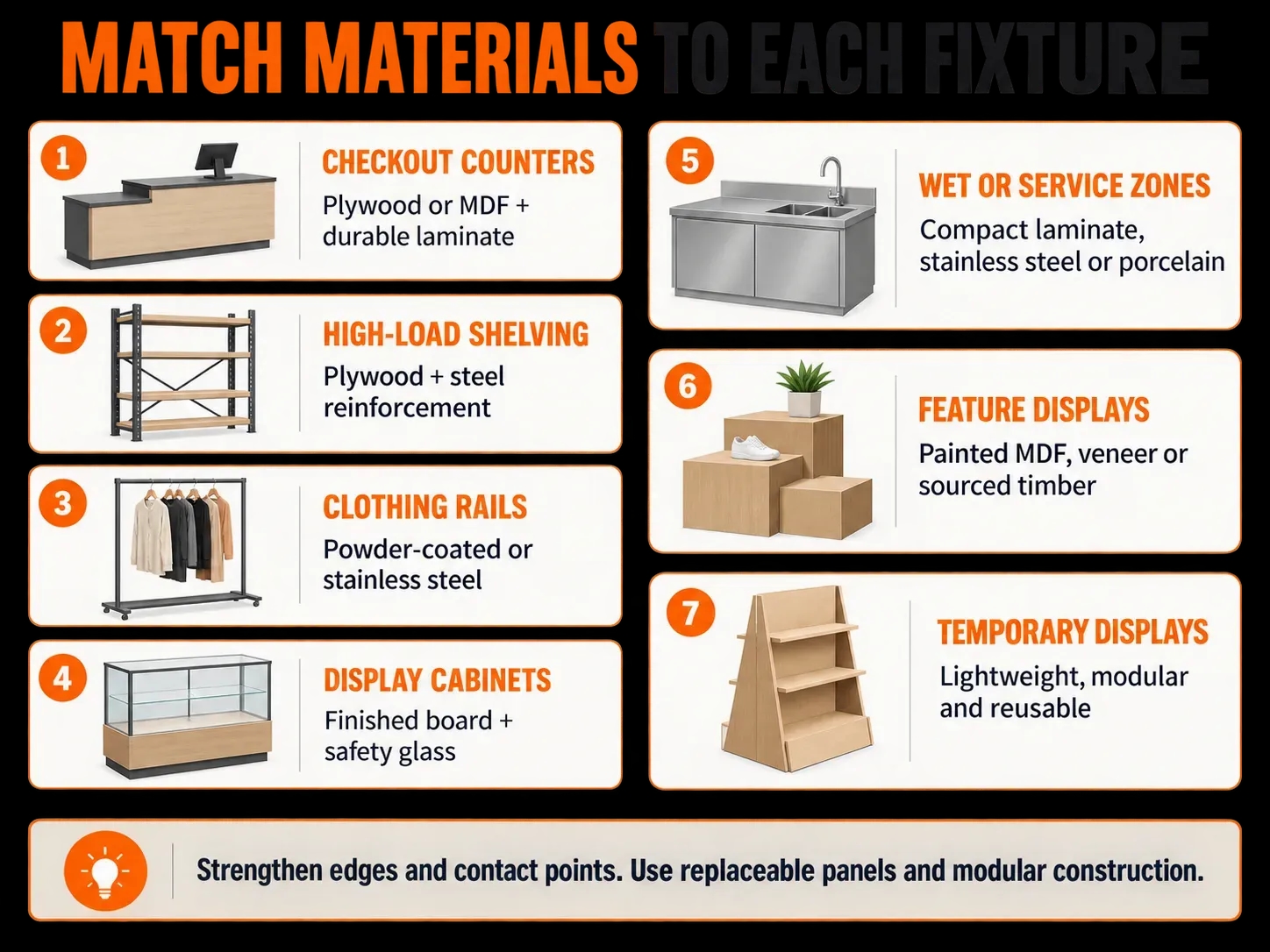
Match each shopfitting fixture to its purpose, using durable materials and replaceable components to simplify future store updates.
Place stronger materials at edges, corners, bases, and customer contact points. Less costly boards may suit protected internal areas.
Replaceable kickboards, worktops, and display panels can also extend a fixture’s life. Staff can renew worn sections without replacing the complete unit.
Modular construction helps retailers respond to seasonal ranges and store changes. It may also reduce downtime during future refurbishments.
What Should Melbourne Retailers Check Before Approving Materials?
A showroom sample cannot reveal every performance issue. Review each material against real store conditions before approving the final specification.
Use this checklist:
🔸 Confirm product weights and required shelf spans.
🔸 Identify edges exposed to trolleys, bags, footwear, or cleaning equipment.
🔸 Test samples for scratching, stains, fingerprints, and cleaning.
🔸 Confirm moisture resistance around sinks, entrances, and service zones.
🔸 Request fire performance evidence where the application requires it.
🔸 Check formaldehyde and VOC information for boards, coatings, and adhesives.
🔸 Verify timber sourcing and other environmental claims.
🔸 Confirm availability before approving custom colours or uncommon finishes.
🔸 Protect accessible paths, exits, sprinklers, and emergency equipment.
🔸 Record exact products, finishes, and edge details in the project scope.
Melbourne councils may require approval for retail fitout work. Fixed fixtures can also affect essential safety measures and exit paths.
Check these requirements before fabrication begins. Early review reduces redesign, delayed approvals, and expensive site changes.
Compare whole-of-life value rather than material price alone. Include fabrication, installation, maintenance, repairs, and future replacement.
A slightly higher initial cost may reduce disruption later. This matters when repairs would require closing a trading area.
Plan Fixtures That Last with Finex Fitouts
Fixture materials influence appearance, cost, construction time, and daily operations. Early decisions also affect maintenance and future store changes.
Finex Fitouts can coordinate design, material selection, construction, and project delivery for Melbourne retail spaces.
Discuss loads, cleaning, finishes, compliance, and budget before procurement. This approach creates practical fixtures that support the store for longer.
Shopfitting Material Guidance
Frequently Asked Questions
What is the most durable material for shopfitting fixtures?
No single material suits every shopfitting fixture. Durable fixtures usually combine plywood, laminate, metal, and suitable commercial hardware.
Plywood suits loaded shelves and movable displays. High-pressure laminate protects busy surfaces, while steel strengthens frames, rails, and brackets.
Is MDF or plywood better for retail display fixtures?
Plywood is generally better for loaded shelves, movable displays, and fixtures requiring strong screw fixings. MDF suits smooth painted finishes and routed details.
Standard MDF should remain in dry areas. Use moisture-resistant grades and sealed edges where humidity or occasional wetting may occur.
What should Melbourne retailers check before approving fixture materials?
Check load capacity, moisture exposure, cleaning needs, fixing strength, emissions, fire performance, availability, and whole-of-life cost.
Fixed fixtures must not obstruct accessible paths, exits, sprinklers, or emergency equipment. Confirm applicable planning and building approval requirements before fabrication.
Retailers must also consider the national engineered stone prohibition when selecting benchtops, panels, and slabs.
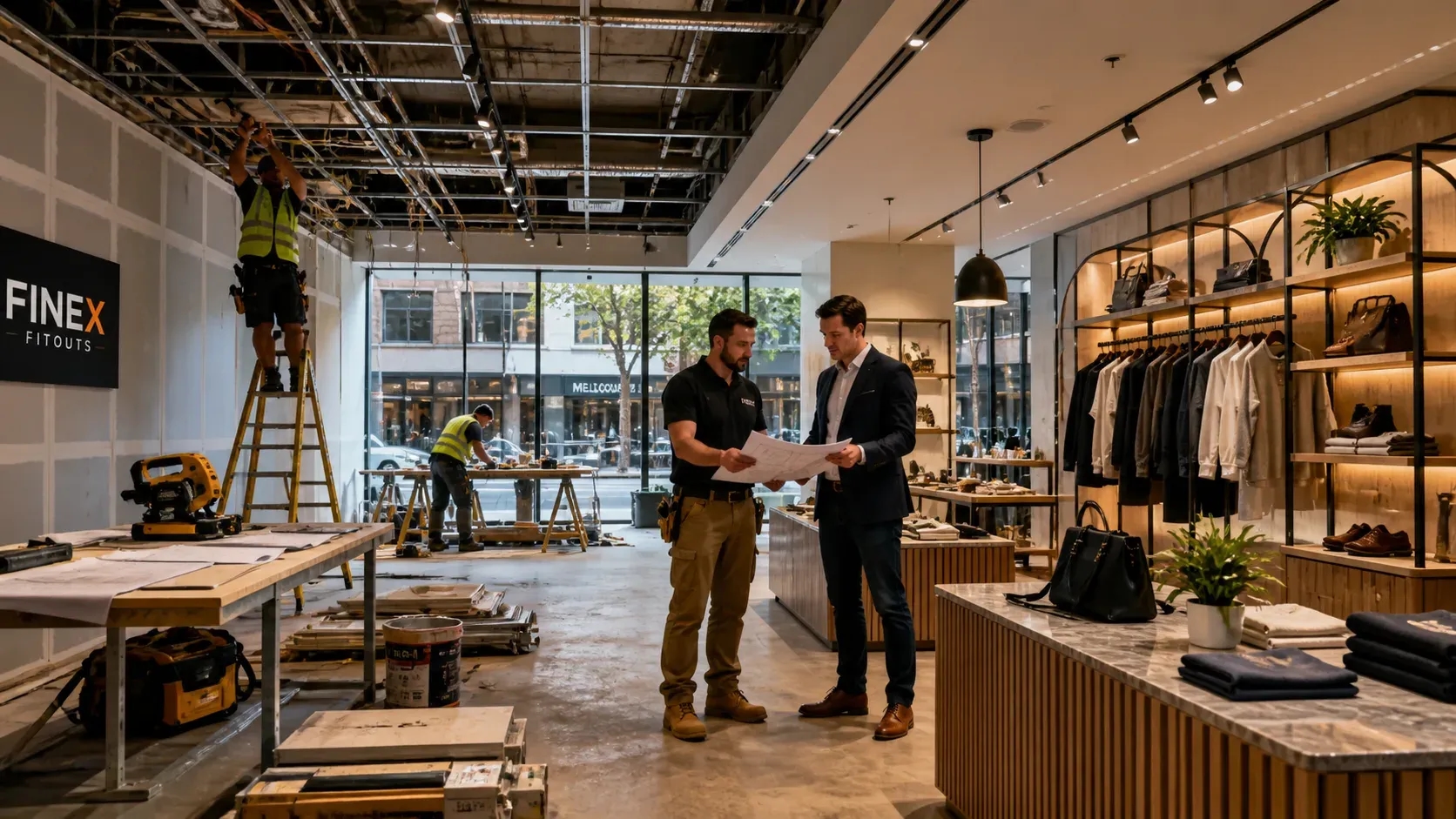
Retail fitout cost Australia guide for 2026. Learn real prices, timelines, risks, and how Melbourne businesses can avoid costly mistakes.
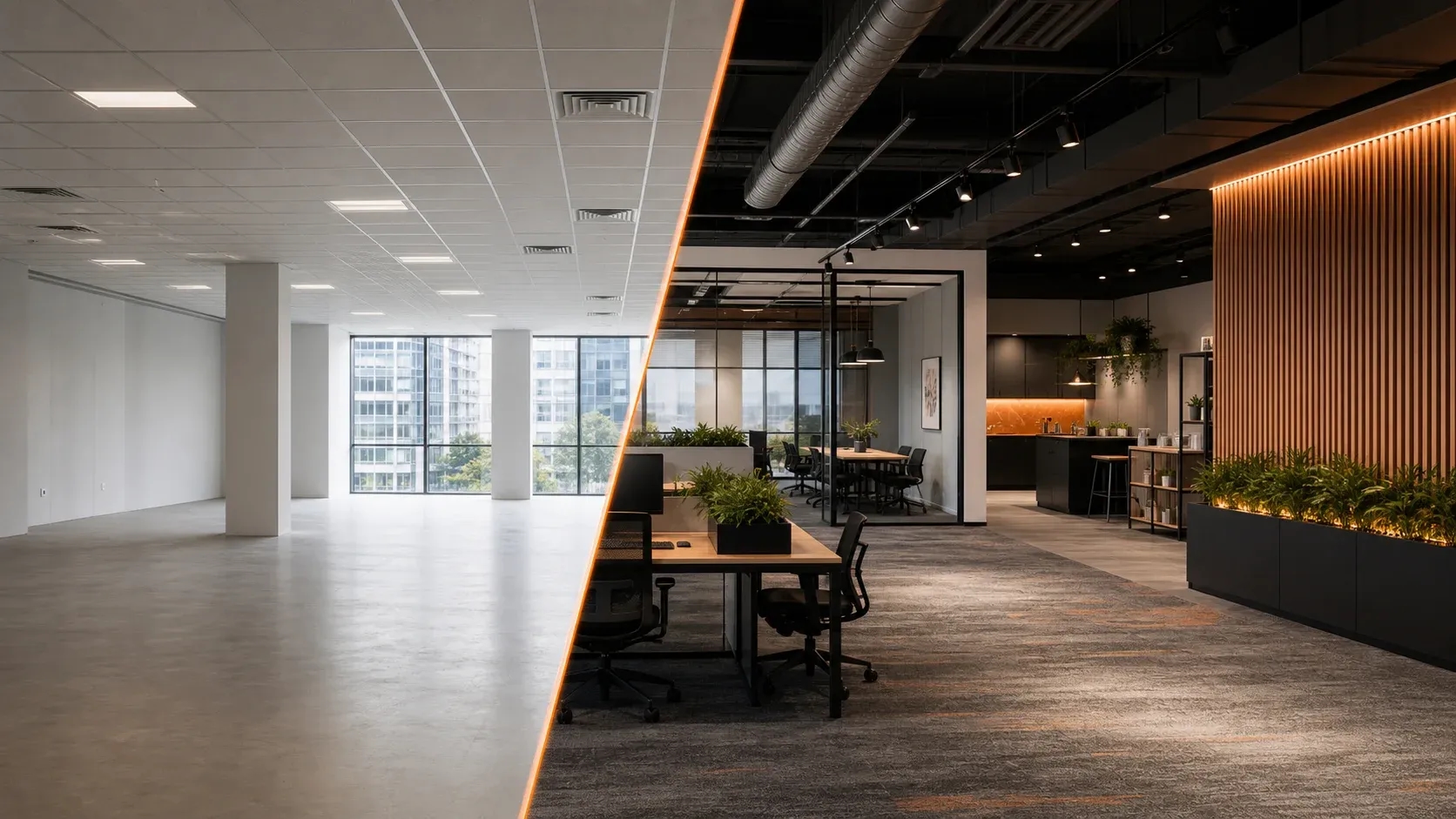
Learn the difference between Category A and Category B fitouts for Melbourne offices, shops, clinics, and warehouses.