
Are There Tax Deductions for Fitout Expenses?
Author
Shawn Vandersay
Date Published
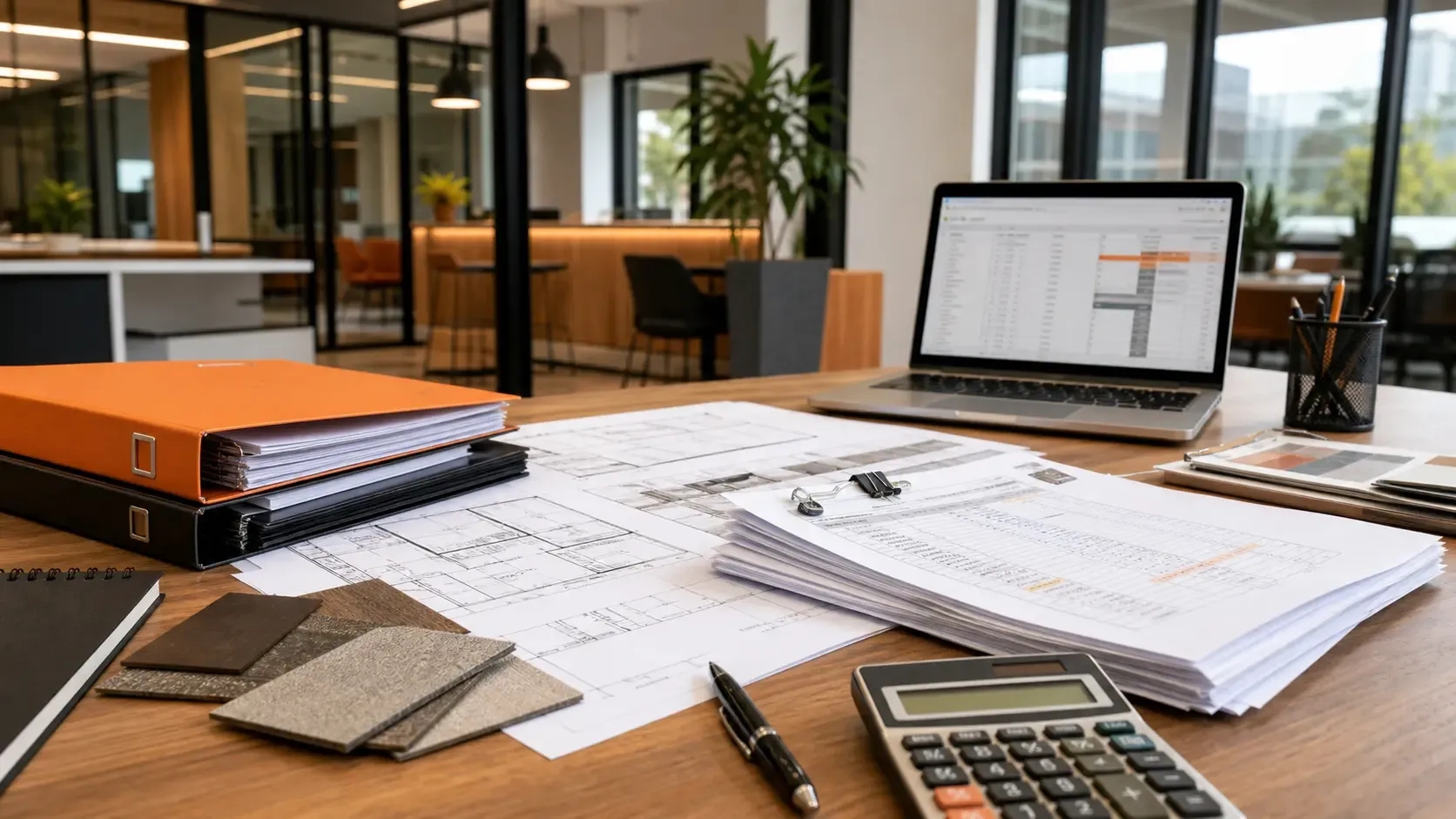
Fitout expenses can reduce taxable income for Australian businesses, but the claim depends on the type of work, asset, or service included in the project.
The key question is not only whether you can claim them. It is when and how you can claim them.
A commercial fitout can include several tax categories. Some costs may be claimed sooner. Others may need to be claimed over several years.
🔸 Operating expenses may be deductible in the year they are incurred
🔸 Depreciating assets may be claimed over their effective life
🔸 Capital works may be claimed over time under capital works rules
🔸 Some eligible small business assets may qualify for simplified depreciation
This article gives general information only. Always speak with a registered tax adviser before making a claim.
Fast Facts
- Fitout expenses may be deductible: The timing depends on whether the cost is an operating expense, depreciating asset, or capital work.
- Not every cost is claimed at once: Structural works and long-term improvements are often claimed over time.
- Itemised invoices matter: Clear records help your accountant separate assets, construction, repairs, and professional fees.
- Small business rules may help: Some eligible assets may qualify for simplified depreciation or instant asset write-off rules.
- Get advice early: Speak with your accountant before the fitout starts, not only at tax time.
Common Fitout Costs and How They May Be Treated
A fitout invoice often includes many different items. Your accountant may not treat each item the same way.
This is why a detailed quote and itemised invoice matter. They help separate the project into useful tax categories.
🔸 Partitions, ceilings, and fixed walls may be treated as capital works
🔸 Fixed joinery and built-in counters may also fall under capital works
🔸 Furniture, appliances, and loose equipment may be depreciating assets
🔸 Signage may depend on whether it is fixed, removable, or part of a larger build
🔸 Design, project management, and professional fees may need to be allocated to the related work
The ATO guidance on depreciating assets and capital expenses explains how capital costs can differ from ordinary business expenses.
Immediate Deductions, Depreciation, and Capital Works
Fitout tax claims usually fall into three broad groups.
The first group is immediate deductions. These may apply to some running costs or eligible business expenses that do not create a lasting asset.
The second group is depreciating assets. These are assets that lose value over time. Examples may include office furniture, equipment, appliances, and some removable fixtures.
The third group is capital works. This can include construction, alterations, and structural improvements to a building.
The ATO simplified depreciation rules for small business may allow eligible businesses to claim some assets faster. This can include the instant asset write-off when the asset and business meet the rules.
Do not assume the whole fitout qualifies for an immediate deduction. Many fitout costs provide a benefit over several years, so they may need to be claimed over time.
Repairs vs Improvements
Repairs and improvements can look similar on site. For tax purposes, they may be different.
A repair usually restores something that already exists. An improvement usually upgrades, replaces, or changes the space in a more lasting way.
🔸 Fixing damaged carpet in an existing office may be a repair
🔸 Replacing all flooring with a higher-grade finish may be an improvement
🔸 Repairing a damaged wall may differ from building new partitions
🔸 Replacing broken lights may differ from installing a new lighting layout
The ATO has separate information on repairs, maintenance, and replacement expenses. This is useful when a Melbourne business is renovating an existing workplace.
Records to Prepare Before Tax Time
Good records make fitout deductions easier to review and support.
They also help your accountant split the project into capital works, depreciating assets, and other costs.
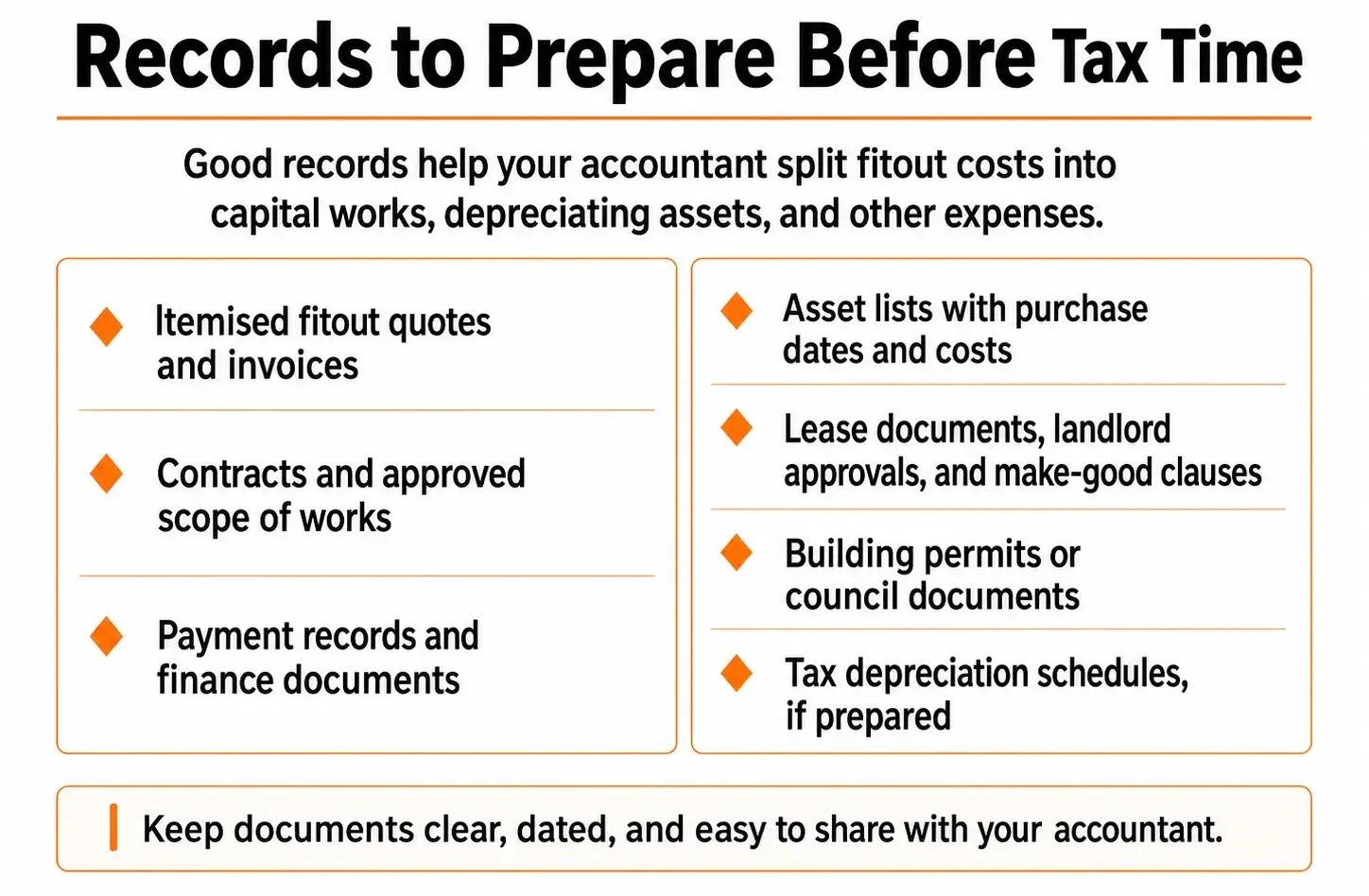
Key records to keep before tax time, including invoices, contracts, asset lists, lease documents, permits, and depreciation schedules.
The Australian Government business tax deductions guide gives a useful overview of deduction records and business expense basics.
Planning a Fitout With Tax in Mind
Tax should not be the only reason for a fitout decision.
Your space still needs to support staff, customers, storage, workflow, safety, and daily operations. A poor layout can cost more than a tax deduction saves.
Still, tax planning can help your cash flow. It can also reduce confusion at the end of the financial year.
🔸 Ask your accountant to review the project before work starts
🔸 Request itemised pricing from your fitout contractor
🔸 Separate loose assets from fixed construction where possible
🔸 Keep landlord and permit documents together
🔸 Confirm the timing of invoices and asset installation
For Melbourne businesses, planning also needs local context. Office, retail, clinic, and warehouse fitouts can involve landlord rules, access limits, trading disruption, and approval timing.
Related Insight
Before you finalise your fitout budget, review the common causes of hidden costs and budget blowouts in fitout projects so you can plan with clearer expectations.
Speak With Finex Fitouts
A well-planned fitout gives your accountant clearer records and gives your team a better workplace.
Finex Fitouts helps Melbourne businesses plan and deliver office, retail, clinic, warehouse, and commercial fitout projects.
If you are preparing a fitout, start with a clear scope, itemised budget, and practical timeline. This can make the build easier to manage and the paperwork easier to review at tax time.
Frequently Asked Questions
Can I claim my full fitout cost as a tax deduction?
Not always. Some fitout costs may be deductible sooner, while others may need to be depreciated or claimed as capital works over time. The treatment depends on the item, the business use, and current ATO rules.
What fitout records should I give my accountant?
Give your accountant itemised invoices, contracts, approved scope of works, payment records, asset lists, lease documents, landlord approvals, permits, and any depreciation schedules. Clear records help separate assets, capital works, and other costs.
Should I speak to an accountant before starting a fitout?
Yes. Early advice can help you understand cash flow, depreciation, record keeping, and possible deductions before invoices are issued. It also helps your fitout contractor prepare a clearer cost breakdown.
Compare turnkey fitout vs traditional fitout in Melbourne. Learn cost, timeline, and risk differences to choose the right option for your business.

Compare turnkey fitouts and separate trades for Melbourne commercial projects, including cost, risk, delays, and downtime.