
Fitout vs Refurbishment: What’s the Difference and Which Does Your Space Need?
Date Published
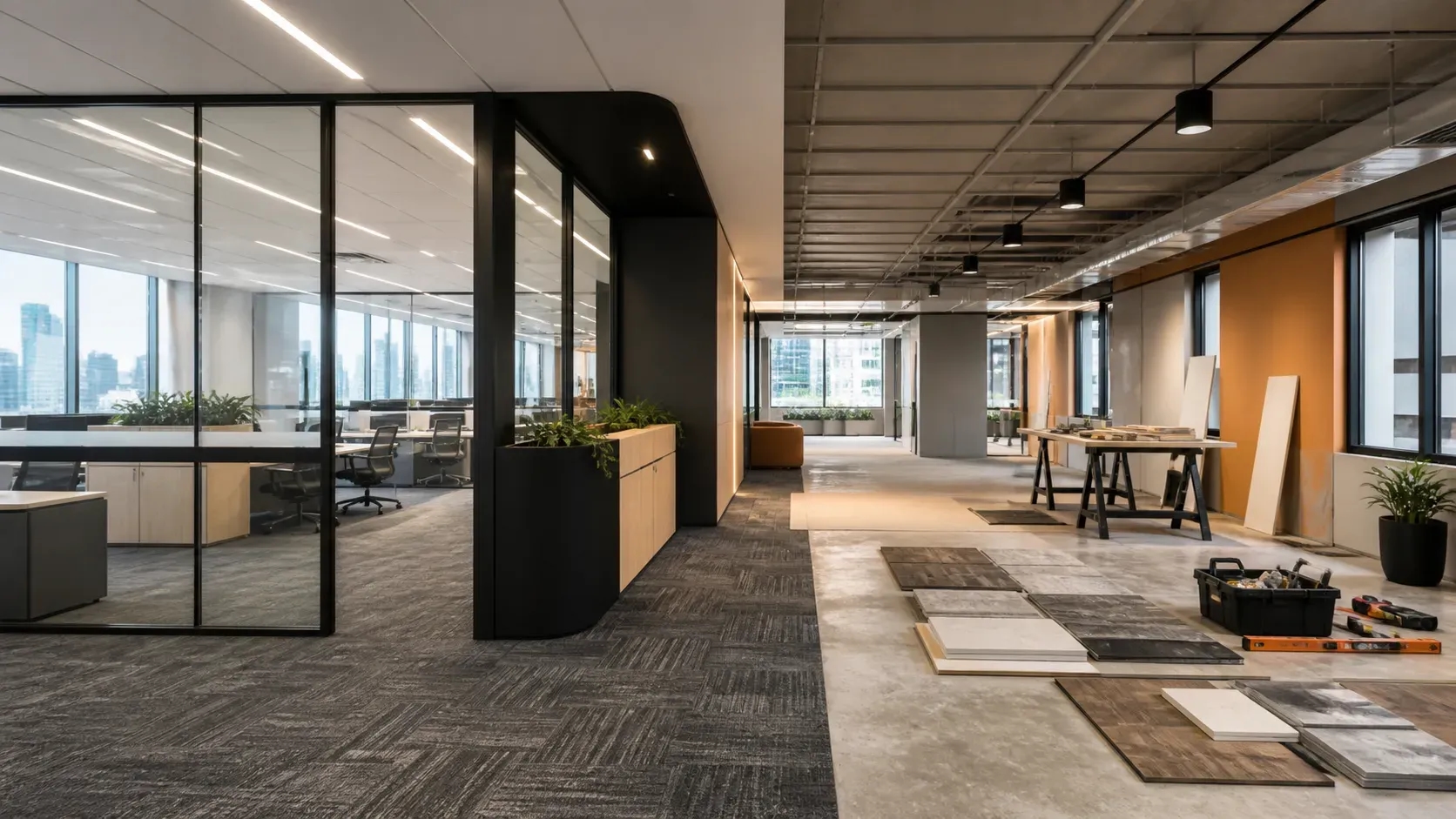
Choosing the wrong project description can lead to incomplete quotes and unexpected costs. You may request a refurbishment when your space needs a full fitout.
The difference depends on your starting point and desired outcome. It does not depend on finishes alone.
Fast Facts
- Fitout: Creates an interior that supports a specific business, team, or customer experience.
- Refurbishment: Repairs, renews, or modernises an existing fitted commercial space.
- Cost: Neither option is always cheaper. Site condition, services, finishes, and staging shape the budget.
- Approvals: Check permits, landlord consent, lease conditions, and hazardous materials before work begins.
- Best approach: Some Melbourne spaces need refurbishment and new fitout work within one coordinated project.
Fitout vs refurbishment: the short answer
A commercial fitout adapts an interior to suit a specific business. It turns an empty or unsuitable tenancy into a functional workplace.
A refurbishment improves an existing fitted space. It renews worn areas, updates its appearance, or improves how the space performs.
The two scopes can overlap. A refurbishment may retain existing rooms while a fitout creates a new reception or meeting area.
An empty Melbourne office may need a complete fitout. A functioning clinic with dated finishes may only need refurbishment.
The project name does not decide whether permits apply. The actual work, building classification, and proposed use determine the approval pathway.
What is a commercial fitout?
A fitout creates the internal environment your team, customers, or patients need. It can start with an empty tenancy or an existing layout.
Its scope commonly covers the interior partitioning, floors, ceilings, mechanical and electrical services needed by the occupants.
🔸 Internal walls, doors, and glazed partitions
🔸 Floors, ceilings, painting, and wall finishes
🔸 Lighting, power, data, and security systems
🔸 Heating, cooling, ventilation, and fire services
🔸 Kitchens, bathrooms, storage, and custom joinery
🔸 Furniture, signs, branding, and accessibility upgrades
A new office may need workstations, meeting rooms, and quiet areas. A retail fitout may require displays, counters, lighting, and storage.
Clinics often need specialised rooms, plumbing, privacy, and accessible facilities. Warehouse projects may include offices, amenities, partitions, and mezzanine areas.
Services can shape the layout and budget. Confirm electrical capacity, ventilation, plumbing, fire systems, and access before finalising the design.
What is commercial refurbishment?
A commercial refurbishment improves a space that already has usable elements. The goal is to repair, renew, or modernise those elements.
A light refurbishment might replace carpet, repaint walls, and update lighting. A larger project may alter rooms, services, ceilings, and amenities.
Businesses often choose refurbishment when the current layout still works. It can also help refresh a customer-facing space without rebuilding every area.
However, refurbishment is not always simple. Existing walls and ceilings can hide damaged materials or outdated services.
Older Melbourne properties can also contain asbestos. Responsible parties must identify asbestos that the proposed work could disturb before refurbishment starts.
A condition assessment helps separate reusable elements from items needing replacement. This process creates a clearer scope and reduces unexpected variations.
Key differences at a glance
The main difference is the project’s starting point. Fitouts create an interior for specific occupants. Refurbishments improve an interior that already exists.
🔸 Starting condition: Fitouts often begin with empty or unsuitable space. Refurbishments begin with an existing fitted area.
🔸 Main objective: Fitouts create a new operational layout. Refurbishments restore, modernise, or improve current areas.
🔸 Existing elements: Fitouts may replace most internal elements. Refurbishments usually retain useful rooms, finishes, or services.
🔸 Cost risk: Fitouts carry design and services costs. Refurbishments can carry hidden-condition and demolition risks.
🔸 Disruption: A new-tenancy fitout may happen before occupation. Refurbishment often requires staging around an operating business.
🔸 Typical result: Fitouts produce a space tailored to its occupant. Refurbishments extend the useful life of an existing space.
Neither option is automatically cheaper. A simple fitout can cost less than a complex refurbishment with hazardous materials and service upgrades.
Tenants should check the lease before approving designs. Most changes need written landlord approval, and make-good clauses may create future costs.
A building permit may also be needed. Exempt work may still need to meet applicable construction requirements.
A planning permit is separate from a building permit. It could apply when the use, external works, or approved plans change.
Which does your Melbourne space need?
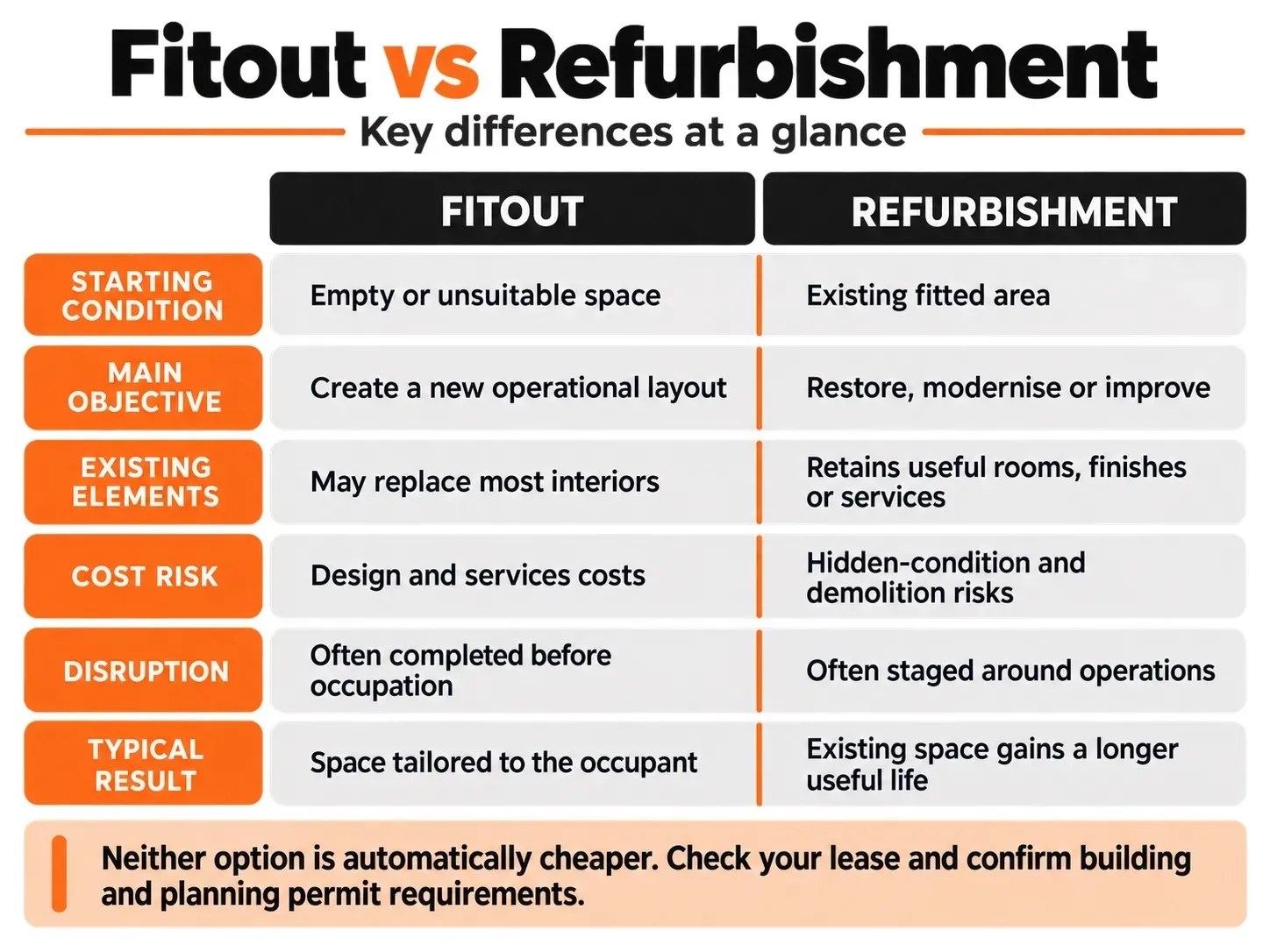
Six key differences between commercial fitouts and refurbishments, including project scope, risks and operational impact.
Choose a fitout when the space cannot support your business in its current form. This often applies to empty tenancies and major layout changes.
A fitout may suit you when:
🔸 You are moving into an empty commercial tenancy
🔸 The current layout does not support your workflow
🔸 Your business needs specialised rooms or services
🔸 Accessibility, fire, electrical, or mechanical systems need integration
🔸 Your brand and customer experience require a new environment
Choose refurbishment when the existing layout remains useful. It can target worn, dated, or poorly performing areas.
Refurbishment may suit you when:
🔸 Most walls and services can remain
🔸 Finishes or amenities have reached the end of their useful life
🔸 Your workplace needs better lighting, acoustics, or comfort
🔸 You want to improve selected areas while retaining others
🔸 Staged work can reduce disruption to operations
Some spaces need a combined approach. You might refurbish the main office while fitting out new meeting rooms and amenities.
Before deciding, document your operational problems and future needs. Review the lease, survey the site, and confirm possible approvals.
Then establish one scope covering design, construction, services, furniture, and handover. Include a contingency for existing-site risks.
Plan staging before work begins if the business will remain open. Identify temporary work areas, noisy periods, access routes, and safety controls.
Plan your project with clarity
The right choice depends on what you have, what you can retain, and what your business needs next.
A detailed site assessment can reveal whether fitout, refurbishment, or a combined project offers better value. It also supports clearer pricing and scheduling.
Finex Fitouts can coordinate design, construction, and project management for Melbourne commercial spaces. The process starts by defining a practical scope around your operations, property, and budget.
Frequently Asked Questions
What is the difference between a fitout and refurbishment?
A fitout adapts a commercial interior for a specific business and its operations. A refurbishment improves an existing fitted space by repairing, replacing, or modernising selected elements. Some Melbourne projects combine both approaches.
Is refurbishment cheaper than a new commercial fitout?
Refurbishment can cost less when the layout, services, and finishes remain usable. However, hidden damage, hazardous materials, service upgrades, and staged construction can increase costs. A site assessment provides a more reliable comparison.
Do commercial fitouts and refurbishments need permits in Melbourne?
A building or planning permit may be required, depending on the proposed work, property, and business use. Structural changes, essential safety measures, accessibility, and external works can affect the requirements. Tenants should also obtain landlord approval before construction.
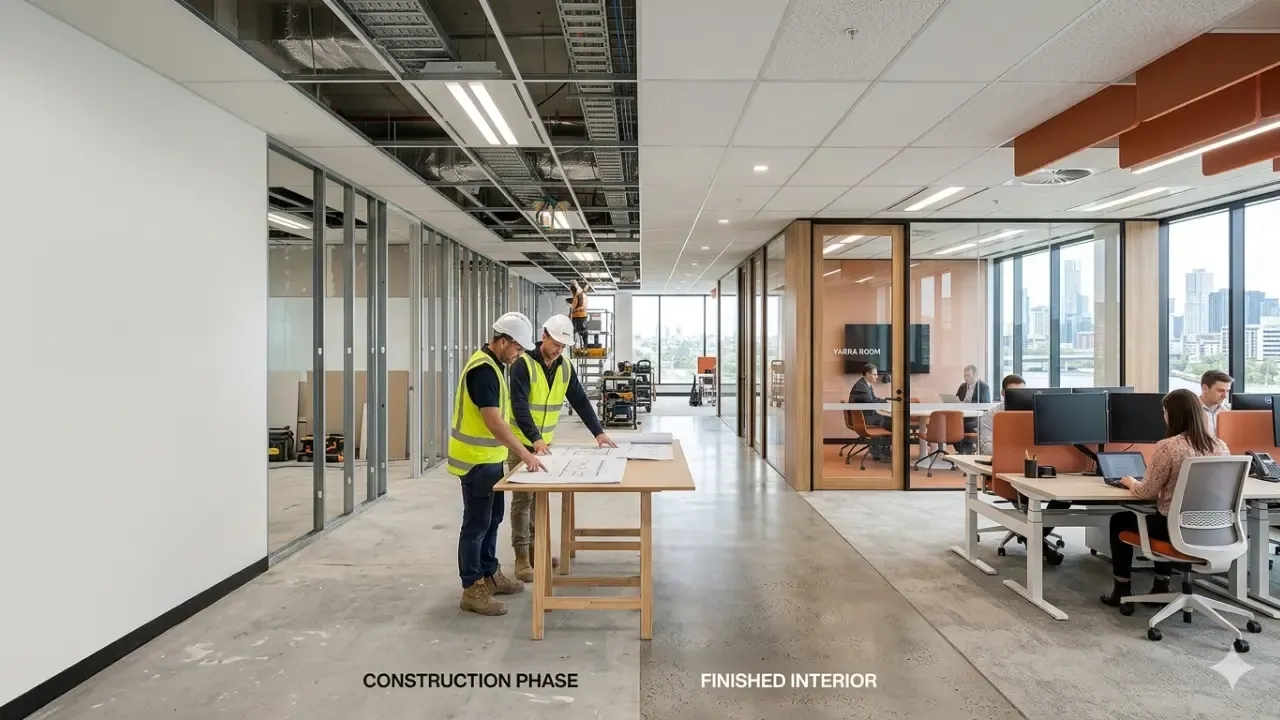
Learn turnkey fitout costs in Australia 2026. Melbourne pricing, timelines, hidden costs, and how to avoid budget blowouts.
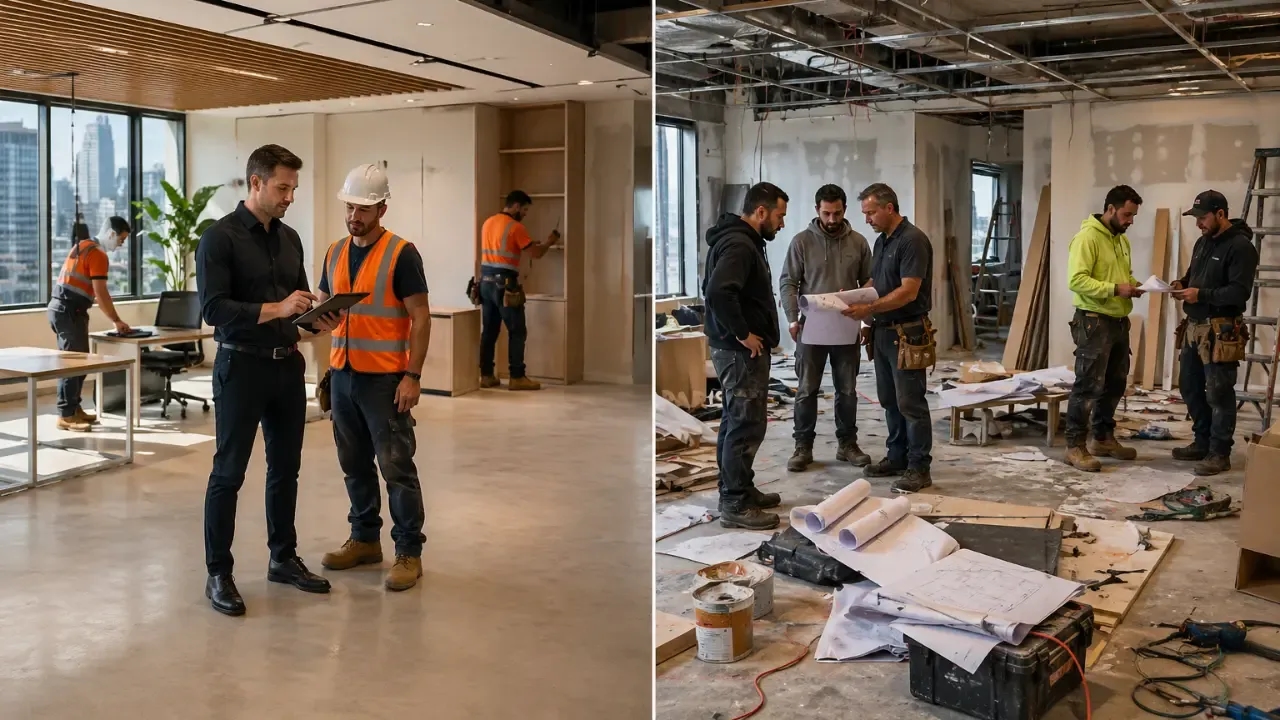
Compare turnkey fitout vs traditional fitout in Melbourne. Learn cost, timeline, and risk differences to choose the right option for your business.