
Tenant Improvement Costs: What Australian Businesses Need to Budget For
Date Published
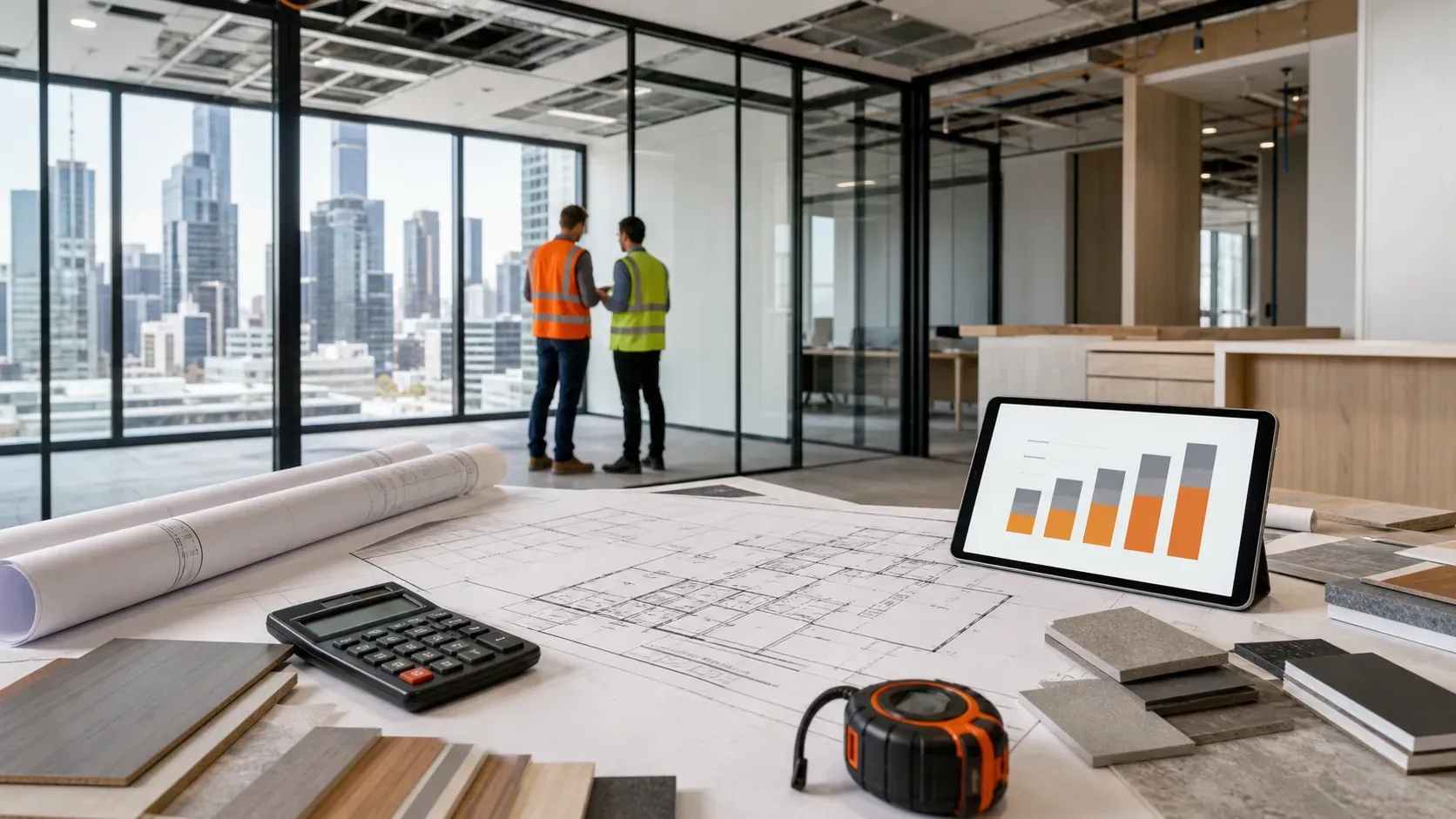
Tenant improvement costs cover the work needed to make leased premises suitable for your business. Australians commonly call this work a commercial fitout.
The scope may include partitions, ceilings, flooring, lighting, joinery, furniture and signage. It can also include electrical, data, plumbing, ventilation and fire-safety changes.
First, identify what the landlord will provide. Then separate those items from the work your business must fund.
Fast Facts
- Melbourne benchmark: Current office fitout data indicates about $2,535 per square metre.
- Complete budget: Include design, services, furniture, technology, approvals, relocation and GST.
- Contingency: Allow 10% to 15% as a starting buffer for changes and concealed conditions.
- Lease review: Confirm incentives, ownership, landlord approvals and make-good obligations before signing.
- Cost control: Complete investigations and design before comparing fixed construction prices.
What should businesses budget in Melbourne?
There is no reliable flat rate for every tenant improvement project. However, current office data provides a useful starting point.
A current Melbourne office fitout benchmark places the average cost at $2,535 per square metre. A separate Australian benchmark places a moderate office fitout at $3,011 per square metre.
Those figures use different scopes and methods. The difference highlights the risk of treating one rate as a complete budget.
At those rates, a 250-square-metre office indicates approximately $633,750 to $752,750. Your actual cost may sit outside that range.
Retail stores may require detailed displays, shopfronts and security systems. Clinics need specialised plumbing, hygiene finishes and private rooms. Warehouses may need power upgrades, offices, amenities or mezzanine structures.
Ask whether each estimate includes furniture, consultants, technology, approvals and GST. A low rate becomes misleading when important items remain excluded.
Which costs sit outside the building quote?
Construction is only one part of the investment. JLL’s Australian breakdown allocates about half of the total to building work.
Mechanical and electrical services represent another 20%. Security, IT and audiovisual work account for 14%. Furniture and equipment represent 11%.
Your complete budget may also need allowances for:
🔸 Design, engineering, surveys and project management
🔸 Council applications, building permits and certification
🔸 Landlord reviews, inductions and building access charges
🔸 Workstations, loose furniture, appliances and storage
🔸 Data cabling, internet, security and audiovisual equipment
🔸 Relocation, storage, cleaning and temporary premises
🔸 Lost trading or reduced productivity during the work
🔸 GST and the timing of available input tax credits
🔸 End-of-lease removal and make-good work
Victorian businesses may need permits for internal fitouts, signage, shopfront changes or a new use. Check these requirements before finalising the lease.
What causes tenant improvement costs to rise?
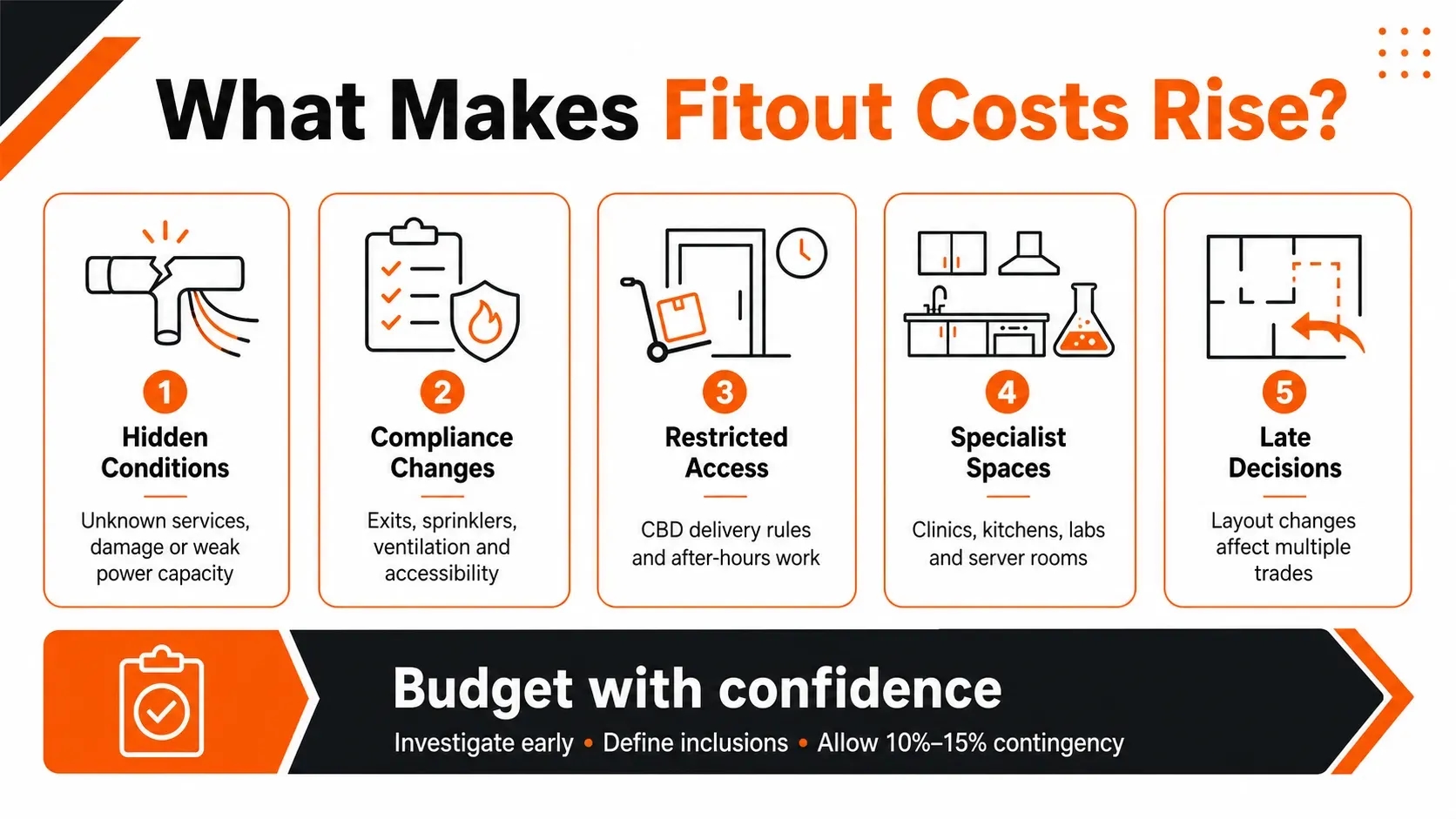
Hidden conditions, compliance changes, restricted access, specialist spaces and late decisions can increase tenant improvement costs. Early planning and a 10% to 15% contingency can reduce budget risks.
Existing conditions create many budget surprises. Old drawings may not show hidden services, damaged surfaces or inadequate electrical capacity.
Compliance can also change the scope. New partitions may affect exits, sprinklers, lighting, ventilation and accessibility.
Melbourne CBD projects can carry strict delivery rules and limited loading access. Some buildings require noisy work outside normal business hours.
Specialist areas also cost more. Treatment rooms, commercial kitchens, laboratories and server rooms need more services than open work areas.
Late decisions create another risk. A changed layout can affect walls, power, lighting, furniture and approval documents.
Complete investigations and design before requesting a fixed construction price. Keep a clear inclusions schedule beside every quote.
A 10% to 15% contingency provides a practical starting allowance. Older or poorly documented premises may need a larger buffer.
How do incentives and tax affect the budget?
A landlord may offer cash, completed work, rent-free time or a contribution toward the fitout. Treat that incentive as funding, not as proof that the project is affordable.
Confirm the amount, payment date, approved uses and required evidence. Also check ownership, repayment clauses and what happens if the lease ends early.
The ATO explains that GST treatment can change with fitout ownership and the lease arrangement. This can affect invoices, credits and short-term cash flow.
Some fitout items may also qualify for depreciation or capital works deductions. The applicable treatment depends on the asset and agreement.
Ask a commercial leasing lawyer and tax adviser to review the documents. Complete this review before relying on an incentive within your budget.
The Victorian Small Business Commission recommends budgeting for fitout, moving and make-good costs. These obligations should appear in your whole-of-lease forecast.
Plan your fitout with fewer surprises
Start with measured plans, a condition inspection and a written brief. Confirm your operational needs before developing the design.
Request an itemised cost plan covering construction and non-construction expenses. Compare contractor quotes against the same drawings and inclusions.
Finex Fitouts can coordinate design, construction and project management for Melbourne commercial spaces. Early planning helps identify scope gaps before they become expensive variations.
Discuss your premises, programme and budget before committing to the work. A clear feasibility review can provide greater cost certainty from the beginning.
Tenant Improvement Cost FAQs
Practical answers for Australian businesses planning a commercial fitout.
How much should a business budget for tenant improvements in Melbourne?
A current Melbourne office fitout benchmark is about $2,535 per square metre. A moderate Australian fitout benchmark is around $3,011 per square metre.
A 250-square-metre office could therefore indicate $633,750 to $752,750. Obtain a project-specific estimate before approving your budget.
Which tenant improvement costs are commonly overlooked?
Businesses often overlook design fees, permits, furniture, technology, relocation, landlord charges, GST and temporary operating costs.
The budget should also cover business disruption and end-of-lease make-good work. Check every quote against a detailed inclusions schedule.
How can businesses reduce the risk of fitout cost overruns?
Inspect the premises, verify existing services and complete the design before requesting a fixed construction price.
Confirm permits, landlord requirements and lease obligations early. Keep a 10% to 15% contingency for changes and concealed conditions.
Learn how Melbourne businesses can reduce fitout costs by reusing existing infrastructure safely, avoiding delays, and planning smarter.
Learn which permits medical fitouts need in Melbourne, approval timelines, hidden costs, and how to avoid delays.