
What Affects Fitout Costs in Australia (Full Breakdown)
Author
Shawn Vandersay
Date Published
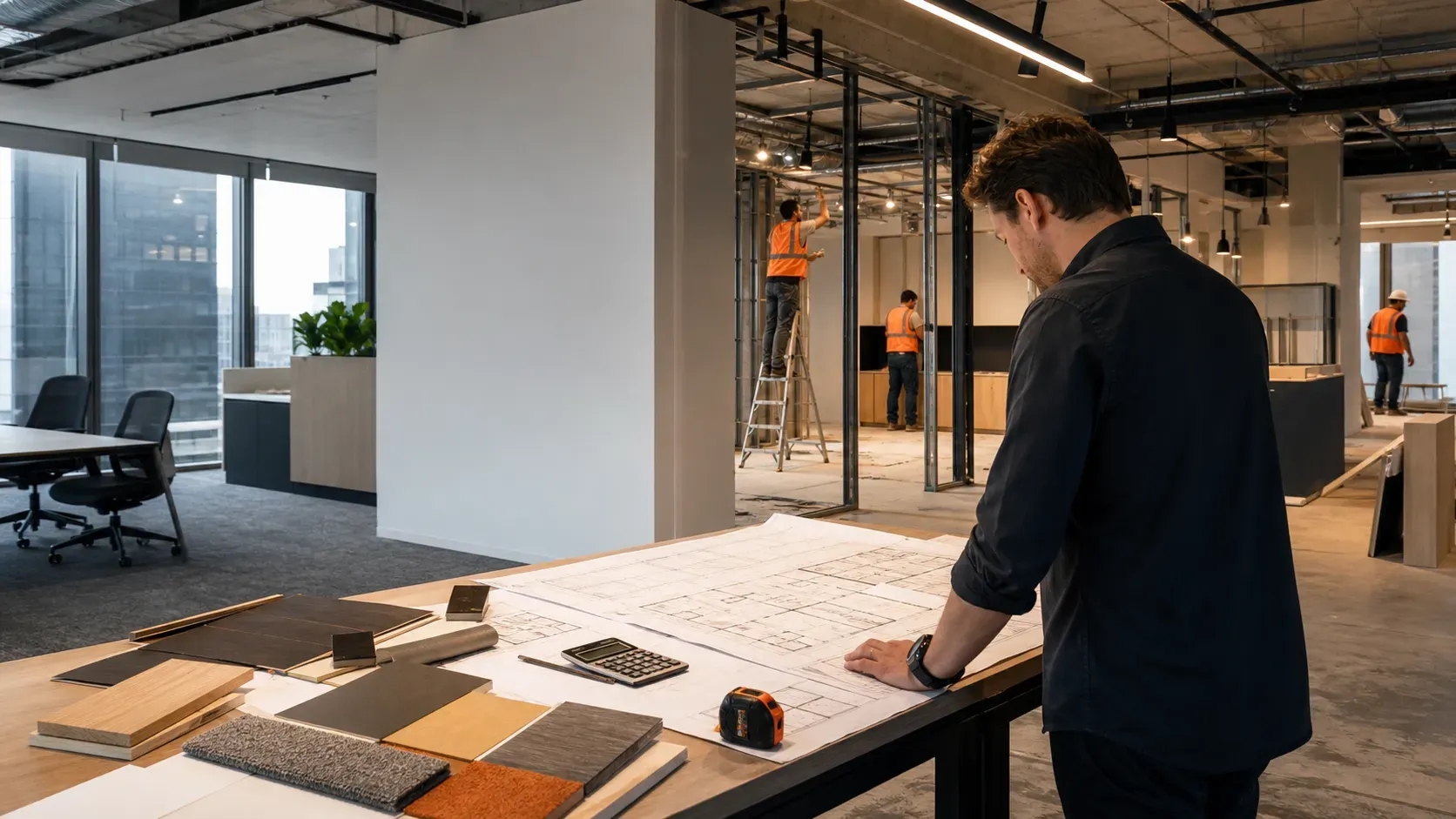
Fitout costs in Australia depend on scope, site conditions, services, compliance, finishes, location and project timing.
A cost-per-square-metre figure is useful for early planning. However, it rarely tells the whole budget story.
Two spaces of equal size can have very different costs. One may reuse existing services. The other may need new plumbing, ventilation and fire protection.
Understanding each cost driver helps you set a realistic budget. It also makes contractor quotes easier to compare.
Fast Facts
- Main cost drivers: Scope, existing conditions, services, compliance, finishes, access and timing shape the final price.
- Planning benchmark: A current office benchmark places Melbourne at about $2,535 per square metre.
- Common exclusions: Furniture, technology, professional fees, permits, relocation, GST and make-good work may sit outside the quote.
- Major risk: Hidden defects, unsuitable services and late compliance changes can create variations and delays.
- Cost-control step: Complete site due diligence and define the full scope before final pricing.
How Much Does a Commercial Fitout Cost in Australia?
A current office benchmark places Melbourne at about $2,535 per square metre. Major capital-city averages range from $2,406 to $2,938.
Treat these figures as planning guides. They cannot price every office, shop, clinic or warehouse.
A basic refresh may reuse most existing elements. A complete fitout can include construction, services, furniture, technology and specialist equipment.
Your full project budget may include:
🔸 Construction and demolition
🔸 Electrical, lighting, data and mechanical services
🔸 Furniture, joinery and equipment
🔸 Design, engineering and project management
🔸 Permits, reports and approval fees
🔸 Moving, storage and temporary workspace
🔸 Contingency and GST, where applicable
🔸 End-of-lease make-good work
Always check what a quoted square-metre rate includes. A lower rate may simply contain fewer items.
How Scope and Existing Conditions Change the Price
Scope has the greatest direct effect on fitout costs. Painting and replacing carpet costs less than rebuilding the entire tenancy.
Enclosed rooms also increase costs. Each room may need walls, doors, ceilings, lighting, power, ventilation and fire-service changes.
Small projects can cost more per square metre. Fixed expenses must be spread across a smaller area. These include permits, supervision, deliveries and site setup.
The existing premises can create savings or risks. Suitable ceilings, flooring, lighting and air conditioning may remain in place. Damaged or unsuitable systems need replacement.
Older buildings require careful investigation. Contractors may discover water damage, unsafe wiring or uneven floors after demolition begins.
An asbestos register should also be reviewed before relevant refurbishment work. Testing and licensed removal can change both the cost and programme.
Services, Compliance and Specialist Requirements
Building services often separate a simple fitout from a complex one. Layout changes can affect more systems than expected.
Important services include:
🔸 Power, lighting, data and security
🔸 Heating, cooling and ventilation
🔸 Plumbing, drainage and hot water
🔸 Fire detection, sprinklers and emergency systems
🔸 Audio-visual and communications equipment
A new use may also change the building classification. That change can introduce further fire, access, amenity or engineering requirements.
A clinic may need clinical sinks, resilient finishes and specialist equipment. Food premises can require exhaust, grease management and extra plumbing.
Warehouses may need structural engineering for storage systems or mezzanine floors. Retail spaces often require shopfront, signage and landlord approvals.
Melbourne businesses may need a planning or building permit for some internal works. Accessibility requirements can also affect doors, counters, toilets and paths of travel.
Confirm these matters before finalising the design. Late compliance changes often cause variations and programme delays.
How Finishes, Location and Timing Affect Costs
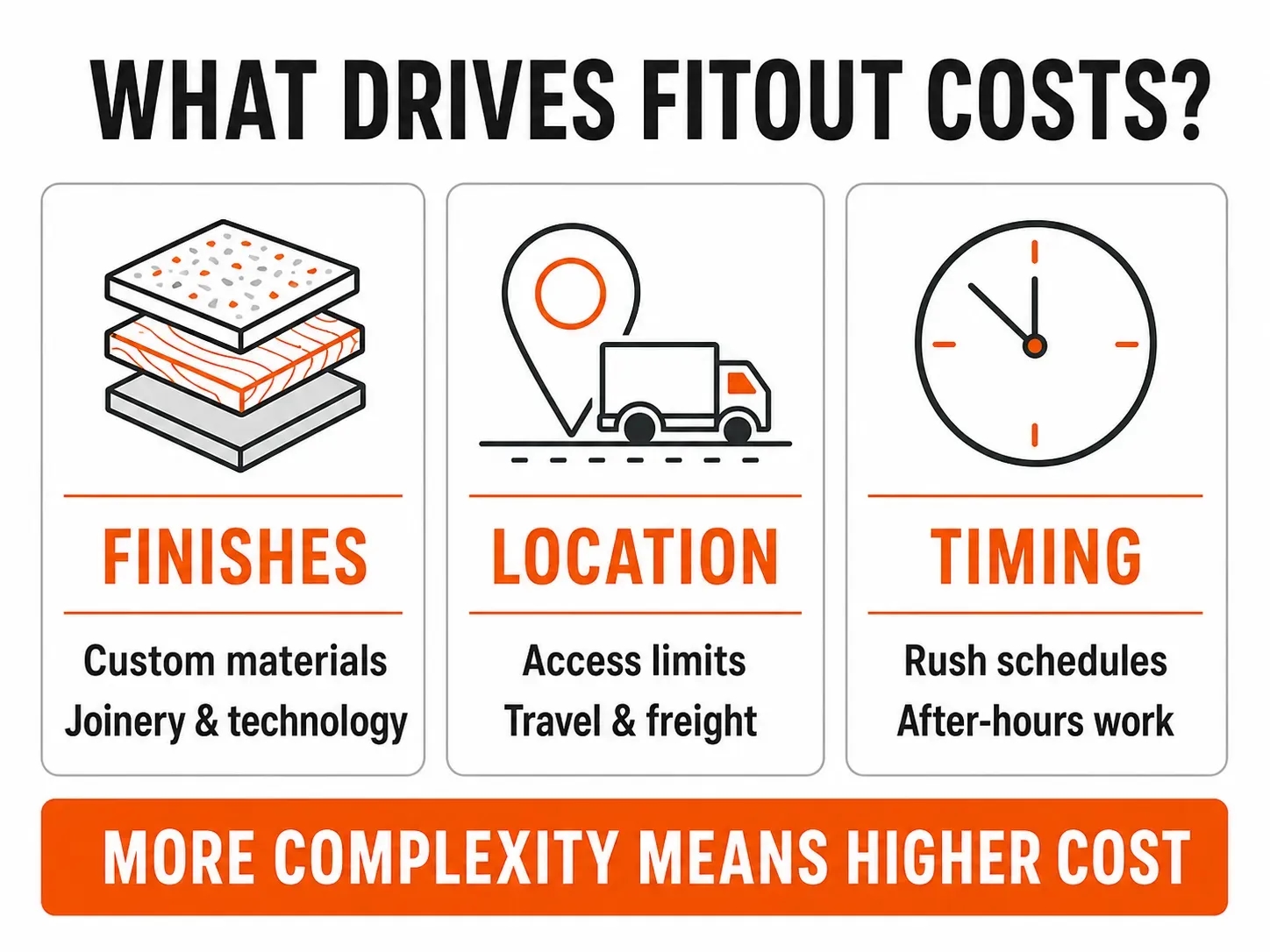
Custom finishes, site constraints and rushed schedules add complexity and can increase the total cost of a commercial fitout.
Material selection has a visible effect on price. Standard finishes usually cost less and arrive sooner than custom products.
Bespoke joinery, stone, curved walls and extensive glazing require more labour. Acoustic treatments and feature ceilings can also increase costs.
Furniture and technology need separate attention. Workstations, meeting-room systems, access control and data equipment can form a significant budget category.
Location affects delivery and working conditions. Melbourne CBD projects may face loading limits, lift bookings and restricted working hours.
Occupied buildings can require noise controls and staged construction. Contractors may need to work at night or during weekends.
Regional projects may add travel, accommodation and freight. Limited local trade availability can also affect tender competition.
A rushed programme usually costs more. It may require overtime, express freight or several trades working together.
Market conditions still matter. Labour shortages and elevated material prices continue to influence non-residential construction costs.
Hidden Costs That Belong in the Full Budget
The construction contract is only one part of the financial commitment. Several supporting costs sit outside visible building work.
Professional fees may cover design, engineering, surveying and project management. Approval fees and specialist reports may also apply.
Site preliminaries include supervision, insurance, temporary protection, cleaning and waste removal. These costs increase when access is difficult.
A suitable contingency protects the budget from genuine unknowns. It should reflect the design stage and condition of the building.
Provisional sums require attention. They are allowances, not guaranteed final prices. Confirm them as the design develops.
Business disruption also has a cost. Consider lost trading, reduced productivity, temporary premises, storage and moving expenses.
Lease terms can change the net cost. A landlord contribution may fund part of the work. However, the lease may also include make-good obligations.
Compare quotes line by line. Check inclusions, exclusions, allowances, GST, programme assumptions and responsibility for approvals.
How to Keep a Fitout Budget Under Control
Start due diligence before signing a lease. Check the permitted use, existing services, building rules and landlord requirements.
Create a clear brief with essential and optional items. This helps the team protect priorities when costs change.
Develop the estimate alongside the design. Recheck it after concept design, documentation and supplier pricing.
Resolve uncertain services and compliance matters early. Record every inclusion, exclusion and responsibility in writing.
Finex Fitouts can coordinate design, construction and project management for Melbourne commercial spaces. Early planning can produce a clearer budget before work begins.
Frequently Asked Questions
Clear answers to common questions about commercial fitout costs in Australia.
How much does a commercial fitout cost in Australia?
Costs vary by location, building condition, business type and project scope. A 2026 office benchmark places Melbourne at about $2,535 per square metre, but this is not a universal fitout rate.
What has the greatest effect on fitout costs?
Project scope and existing site conditions usually have the greatest effect. Services, compliance, custom finishes, restricted access and a rushed programme can also increase the final cost.
How can a business prevent a fitout budget blowout?
Complete site due diligence before final pricing. Define the scope, investigate existing services, confirm approvals and compare every quote using the same inclusions, exclusions and allowances.
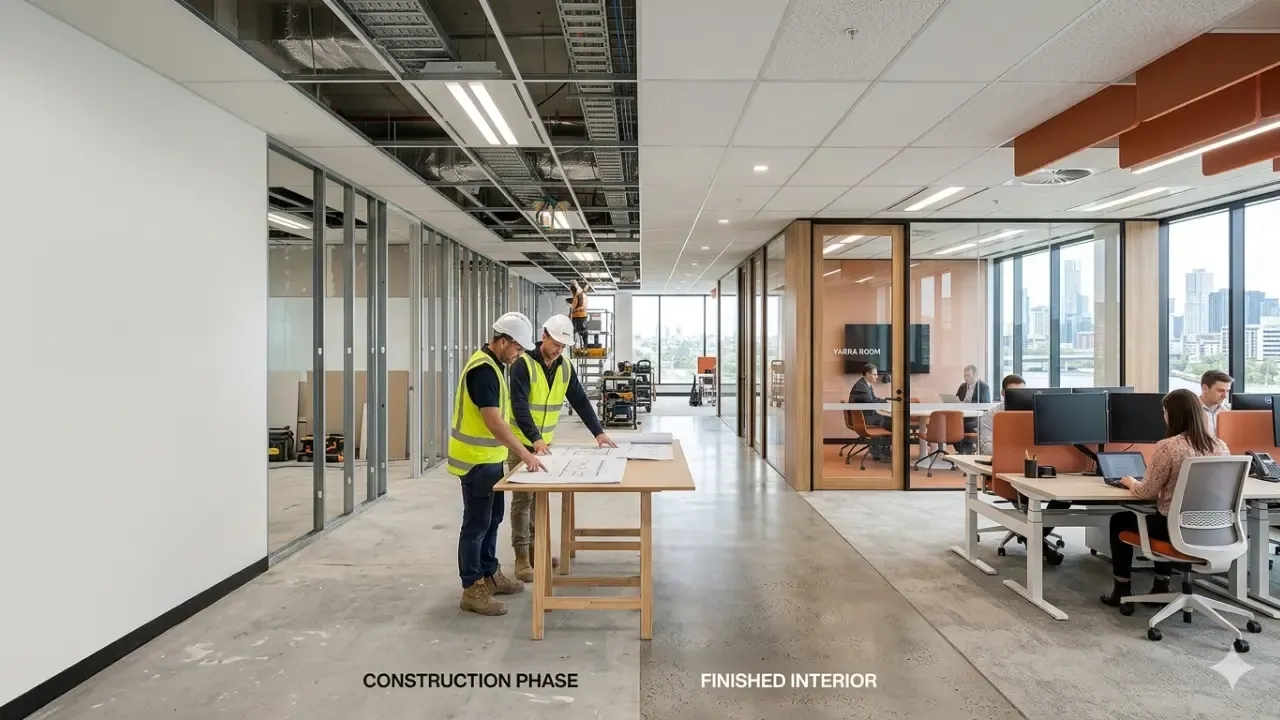
Learn turnkey fitout costs in Australia 2026. Melbourne pricing, timelines, hidden costs, and how to avoid budget blowouts.
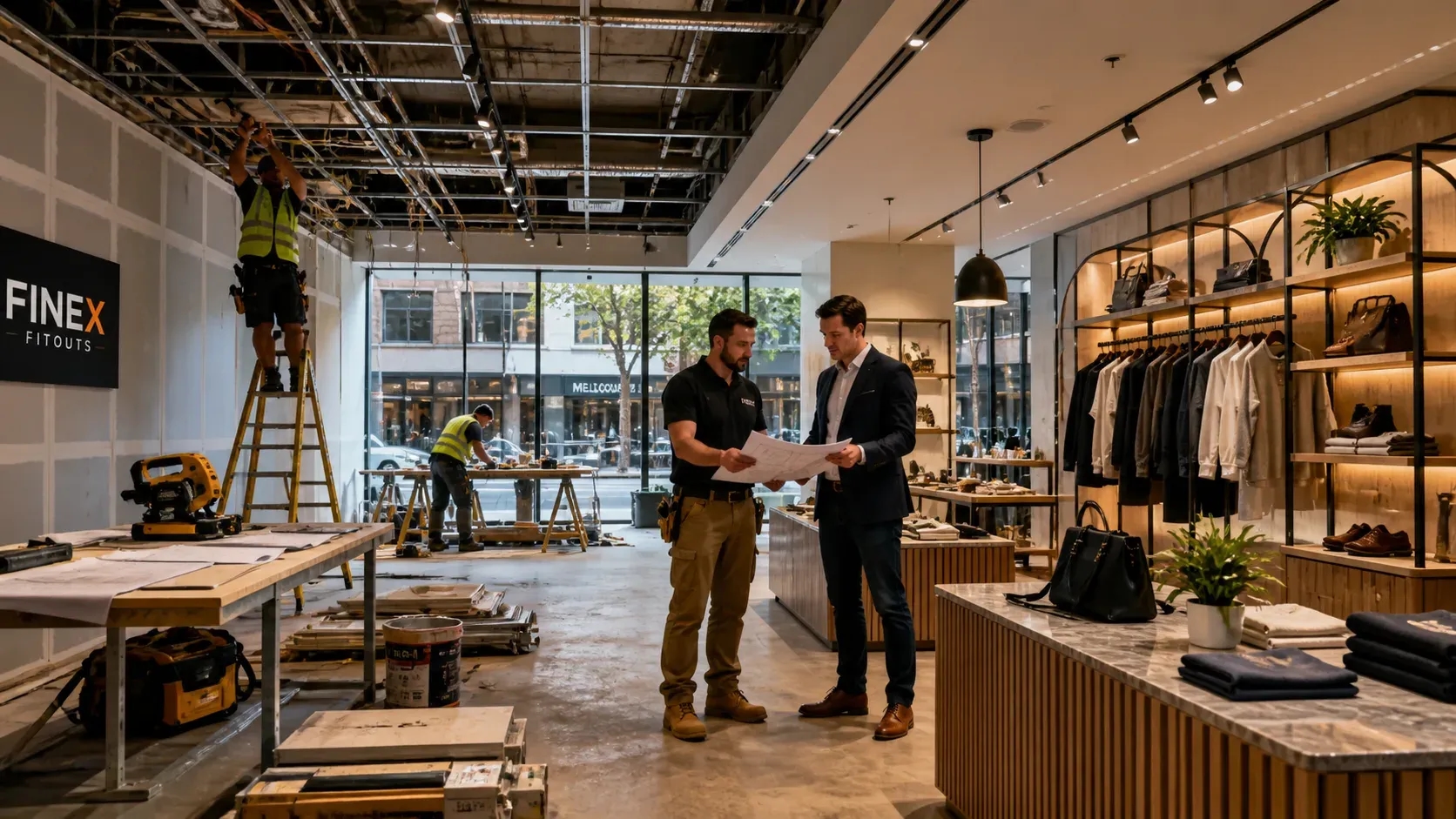
Retail fitout cost Australia guide for 2026. Learn real prices, timelines, risks, and how Melbourne businesses can avoid costly mistakes.